Practices to be avoided by dog owners
The relationship between owners and dogs is one of the richest and most rewarding, but it is often marked by misconceptions that, although well-intentioned, can compromise the health, well-being and behavior of the animal. The quest to offer the best to your furry companion is natural, however, the lack of information or adherence to persistent myths lead to practices that should be avoided. This in-depth guide aims to demystify such habits, offering a clear overview of the behaviors that negatively impact the lives of dogs and, most importantly, how to replace them with conscious and beneficial choices.
Food: Myths, Risks and the Right Choice
Feeding is a fundamental pillar of canine health, and errors in this area can have serious consequences.Many common practices derive from excessive humanization or lack of knowledge about the physiology of dogs.
Share Human Food: Risks and Exceptions
Offering human food scraps is one of the most widespread and dangerous practices.A dog's diet should be balanced to their specific needs, and many foods that are harmless to us are toxic or harmful to them.Obesity, gastrointestinal problems, pancreatitis and even poisoning are real risks.
- Strictly prohibited foods:
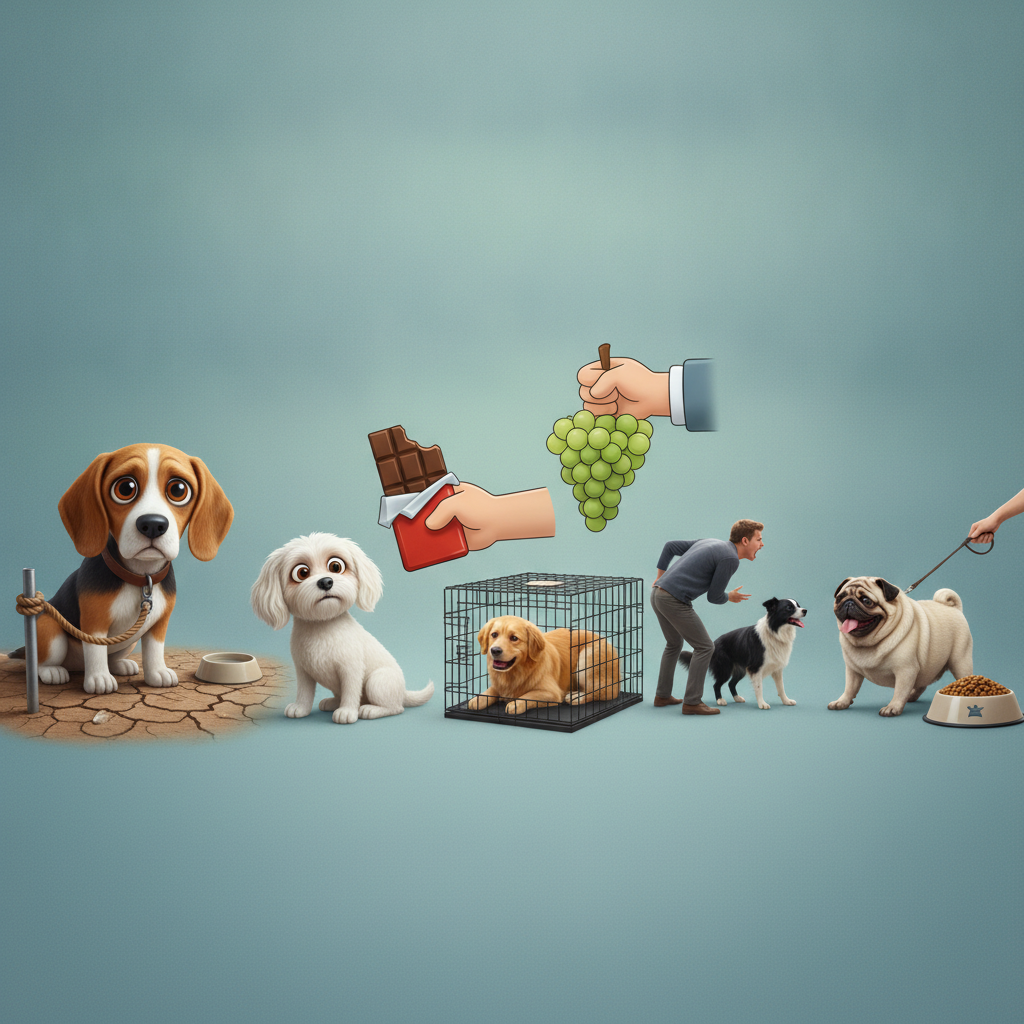
- Chocolate: Contains theobromine, toxic to dogs, affecting the heart and nervous system.
- Grapes and raisins: May cause acute renal failure.
- Onion and garlic: They contain thiosulfates that damage red blood cells, leading to anemia.
- Xylitol: A common sweetener in gum and diet products, it can cause a rapid drop in blood sugar and liver failure.
- Avocado: It contains persin, which in large quantities can be toxic.
- Macadamia nuts: They can cause weakness, vomiting, tremors and hyperthermia.
- Alcohol: Extremely toxic, even in small amounts.
- Bones cooked: They become brittle and can chip, causing internal punctures.
- Raw doughs with yeast: They can ferment in the stomach, causing bloating and alcohol production.
- Exceptions (in moderation and proper preparation): Small portions of cooked vegetables (carrots, broccoli, pumpkin) or fruits (seedless apple, banana, seedless watermelon) can be offered as snacks occasionally, provided they do not represent more than 10% of the dog's daily diet. Slim proteins cooked without seasoning (chicken, beef) are also safe, but always consult a veterinarian or zootechnician to avoid nutritional imbalances.
Choice of Feed: Beyond Price
Dry food is the basis of the diet of most dogs.However, choosing the right food goes far beyond the price or advertising.The quality of ingredients and nutritional formulation are crucial.
- What to see on the packaging:
- Ingredients: Look for animal protein sources (chicken, meat, fish) listed as the first ingredients. Avoid rations with many unspecified byproducts, artificial dyes and preservatives.
- Protein and fat level: It should be appropriate to the age, size, activity level and health condition of your dog. Puppies need more protein and fat than sedentary adult dogs, for example.
- Guarantee seal: In Brazil, the seal of the Ministry of Agriculture, Livestock and Supply (MAPA) ensures that the product meets minimum standards, but the quality varies between categories (Standard, Premium, Super Premium).
- Trade-off: Trade ration vs. Natural food (home): Natural feeding is an excellent option, but it requires strict monitoring from a veterinary nutrition specialist to ensure the correct balance of all essential nutrients. Poor formulation of the homemade diet can lead to dangerous deficiencies or excesses. High-quality commercial feed, on the other hand, already comes balanced, but it is essential to choose a reliable and specific brand for your dog's needs. Avoid homemade diets “-you-yourself” without professional guidance.
Socialization and Training: Fundamentals for a Balanced Dog
A well-trained, socialized dog is a happy and safe dog. Mistakes in these areas can result in serious behavioral problems such as aggression, fear, separation anxiety, and difficulty living together.
Ignoring Early Socialization
The socialization window of dogs is a critical period, usually between 3 and 16 weeks of age.It is at this time that the puppy learns to properly interact with the world around him.
- Practices to avoid: Isolate the puppy, deprive him of contact with different people, vaccinated dogs and diverse environments.
- What to do: Exposing the puppy to a variety of stimuli in a positive and controlled way:
- People: Different ages, genders, appearances (with hat, glasses, etc.).
- Dogs: Supervised interactions with vaccinated and good-tempered adult dogs.
- Environments: Sounds of the house, street, different surfaces (grass, asphalt, smooth floor), short walks (after the initial cycle of vaccinations).
- Handling: Accustoming the dog to having paws, ears and mouth touched, essential for veterinary visits and hygiene.
Use Punishment Instead of Positive Reinforcement
Many tutors still resort to physical or verbal punishment to correct unwanted behaviors. This practice, besides being ethically questionable, is ineffective in the long term and harmful to the bond.
- Why avoid punishment: Punishment can cause fear, anxiety, aggression, suppressing behavior without teaching what to do, and damage trust between tutor and dog.The dog may associate punishment with the tutor, rather than the behavior itself.
- Alternative: Positive reinforcement: Reward desired behavior.
- Decision criteria: Identify the behavior you want the dog to do (e.g., sit, lie down, come when called).
- Step by step: When the dog performs the behavior, even minimally, reward him immediately (ticket, praise, affection, toy). Timing is crucial.
- What to observe: Watch for signs that your dog is trying to please. Be consistent. Over time, the behavior will be associated with the reward and will become more frequent.
- Common mistakes: Reward the dog late (he does not associate the reward with correct behavior), be inconsistent, give up too soon.
Humanizing Too Much of the Dog: Limits and Consequences
Loving the dog as a family member is natural, but treating it exactly as a human can distort your perception of the world and its role in family structure, generating behavioral problems.
- Practices to avoid: Dressing the dog in clothes that restrict its movements or cause constant discomfort, do not set limits (eg, let the dog climb the table, eat from its food on the floor), do not offer opportunities to express natural canine behaviors (smelling, exploring, digging, barking within the reasonable).
- Consequences: Anxiety, aggression for possession of resources (tutor, toys), difficulty coping with frustration, inability to interact appropriately with other dogs or people, confusion about their position in the familiar”.
- Honest trade-off: It is possible to love and care for your dog deeply, providing comfort and affection, while respecting his canine nature.This means understanding that he is not a human baby and that his emotional and behavioral needs are different, requiring discipline, socialization and appropriate mental stimulation for a dog.
Health, Hygiene and Well-Being: Beyond the Basics
A dog's health depends on a preventive approach and constant attention to his vital and behavioral signs.
Disregard the Preventive Veterinary Routine
Many owners take the dog to the vet only when he is already visibly ill.Preventive veterinary medicine is the key to a long and healthy life.
- Practices to avoid: Do not vaccinate or de-mix annually, skip routine check-ups, self-medicate the animal.
- Decision criteria and step by step:
- Vaccination: Follow the protocol recommended by the veterinarian, usually with annual boosters for diseases such as rabies, distemper, parvovirus and leptospirosis.
- Vermifugation: Perform it regularly, every 3 to 6 months, as directed by the veterinarian, to control intestinal parasites.
- Control of ectoparasites (fleas and ticks): Use effective and continuous products, especially in endemic regions.These parasites can transmit serious diseases.
- Annual check-ups: Even apparently healthy dogs should undergo a thorough physical examination and, depending on their age, blood and urine tests to detect problems early.
- What to observe: Any change in appetite, thirst, energy level, weight, behavior, coat, cough, sneeze, vomiting, or diarrhea should be reported to the veterinarian.
Inadequate Hygiene: Bath and Tosa, Dentistry
Hygiene is not just aesthetic; it is vital to prevent skin diseases, infections and dental problems.
- Frequency of baths: Excessive bathing can remove natural oil from the skin, causing dryness and irritation. The optimal frequency varies by breed, coat type and activity level, but usually every 15 to 30 days is enough. Always use specific products for dogs.
- Pelage brushing: Essential to remove dead hair, prevent knots and distribute natural oils, especially in long-coated breeds. Frequency may be daily for some breeds.
- Oral hygiene: Lack of tooth brushing is one of the most common causes of periodontal disease in dogs, which can lead to serious infections and affect vital organs.
- Step by step: Brush your dog's teeth daily (or at least 3 times a week) with a brush and veterinary toothpaste.
- What to observe: Bad breath, yellow tartar on the teeth, reddened or bleeding gums are signs of periodontal disease that require professional evaluation and cleaning.
- Nails: Too long nails can cause pain, leg deformities and difficulty walking. Regular trimming is key.
Sedentarism and Lack of Mental Stimulation
Dogs are active and curious animals.The lack of physical and mental exercise leads to a number of health and behavioral problems.
- Consequences of lack of exercise: Obesity, joint problems, boredom, destruction of objects, excessive barking, hyperactivity in the home.
- Decision criteria: The amount of exercise varies greatly by breed, age, and size.Breeds and young dogs need more activity than older or small dogs.
- Step by step:
- Daily tours: Minimum of twice a day, with adequate duration to the need of the dog. Not enough just pee and poop in the yard.
- Jokes: Provide play that stimulates the dog physically, such as fetching the ball or tug of war (with limits).
- Environmental enrichment: Offer interactive toys (which release treats), appropriate teethers, training sessions or new smells on walks to stimulate the dog's mind.
Tours and Confinement: Ensuring Safety and Controlled Freedom
The way the dog is exercised and the environment where he spends most of his time are crucial to his well-being.
Using Inadequate Collars and Guides
The correct choice of collar and guide is critical to the safety and comfort of the dog during walks.
- Practices to avoid:
- Hanger or claw collars (spike): They cause pain, injuries to the windpipe and neck, and are based on aversive methods of training that impair the bond and do not teach the dog to walk properly.
- Retractable guides (flexible): Although they give the impression of more freedom, they offer little control in emergency situations, can cause accidents (friction burns, falls), and do not teach the dog to walk with ease on the guide, because the tension is constant.
- Tight or very wide collars: Tight ones cause discomfort and injury; wide ones allow the dog to escape easily.
- What to use:
- Anti-pull pectoral: Options that hold the guide on the front of the chest discourage gentle pulling, redirecting the dog.
- Collars of adequate width: A simple collar with two fingers off for identification and, if necessary, smooth control.
- Fixed guides of suitable length: Usually between 1.5 to 2 meters, they offer control without excessively restricting the movements of the dog.
Insufficient or Poorly Driven Tours
Walks are more than just physiological needs; they are opportunities for exploration, socialization, and energy expenditure.
- Practices to avoid: Very short walks, just to “make the needs”, do not allow the dog to smell the environment, do not vary the places of walking.
- Decision criteria: The duration and intensity of the walk should be adjusted to the profile of the dog (age, breed, health).
- Step by step for a quality tour:
- Duration: Minimum 30 minutes per walk for most adult dogs, ideally two to three times a day.
- Exploration: Allow the dog to smell and explore the environment.Sniff is a crucial sense for them and the “farejar” is a mental enrichment.
- Safety: Keep the dog always on the tab and use identification collar with your contact. Take bags to collect the feces.
- Interaction: If the dog is well socialized, allow brief, supervised interactions with other dogs or people, if appropriate.
Dogs Loose in Dangerous or Overly Confined Areas
Ensuring a safe environment is a primary responsibility of the tutor.
- Risks of letting the dog loose:
- Leaks: You may get lost, run over, attacked by other animals, or be the victim of mistreatment.
- External hazards: Ingestion of garbage, toxic plants, poisons.
- Legal problems: Liability for accidents or bites.
- Excessive confinement:
- Dogs that live in chains, isolated in small kennels or with very little social contact develop serious behavioral problems, such as aggression, depression, self-harm and stereotypies (repetitive behaviors and no apparent function).
- What to observe: Signs of boredom, destruction of objects, excessive vocalization, apathy. A dog needs adequate space, access to the house (if the family allows), and especially social interaction.
Frequently Asked Questions from Dog Tutors
Q: Can I give bones to my dog?
R: Most cooked or small bones are dangerous as they can chip, cause choking, obstructions or punctures in the digestive tract. Large raw bones and marrow, under supervision and in moderation, may be acceptable for large dogs, but there are still risks. Ideally, opt for sturdy rubber toys or synthetic recreational bones specific for dogs, which are safe and satisfy the need to chew.
Q: My dog scratches a lot, is it normal?
R: Occasional itching is normal, but if the itching is frequent, intense, causes redness, sores, hair loss or the dog licks or bites the same region constantly, it is not normal. It may indicate allergies (food, environmental, to fleas), parasites (fleas, ticks, scabies), fungal or bacterial infections. A visit to the veterinarian is essential for diagnosis and treatment.
Q: Is it right to let the dog sleep in my bed?
R: From a behavioral point of view, there is no single, rigid rule.If the dog does not demonstrate problems of aggression due to possession, jealousy or exacerbated separation anxiety, and if everyone in the house feels comfortable, it can be a way to strengthen the bond. However, it is crucial that the dog has its own bed and understands that the human space is not exclusively his. From the point of view of hygiene and health, it is necessary to ensure that the dog is always clean, dewormed and under control of ectoparasites to avoid the transmission of diseases or parasites.
Q: Should I castrate my dog?
R: Castration is highly recommended for both males and females unless there is a specific veterinary reason not to. For females, it prevents breast cancer (if done before the first heat), pyometra (severe uterine infection) and pseudocyesis (psychological pregnancy). For males, it prevents testicular tumors, prostate problems and reduces unwanted behaviors such as territory marking, aggressiveness (in some cases) and escapes in search of females. In addition to the health benefits, castration contributes significantly to population control and reducing abandonment of animals.
The journey to be an exemplary tutor is continuous and requires dedication and learning. By avoiding the practices listed here and adopting a proactive posture regarding the health, behavior and well-being of your dog, you not only guarantee a fuller life for him, but also strengthen a bond of love and mutual respect. Remember, quality information and the monitoring of trained professionals are your greatest allies in this beautiful mission.