Understand jealousy in dogs: a look at canine emotion
The relationship between humans and dogs is one of the richest and most complex, punctuated by affection, loyalty and sometimes behaviors that we interpret in the light of our own emotions.What many tutors describe as “iume” in their dogs is one of these phenomena, generating doubts and sometimes frustrations. Understanding whether dogs really experience jealousy in the same way as we do and, more importantly, how to deal with the behavioral manifestations that we associate with this emotion, is crucial for a harmonious coexistence and for the emotional health of your pet.
This article seeks to demystify what we observe as canine jealousy, offering a practical and reasoned guide to identify its causes and implement effective strategies. Our goal is to provide concrete information so that you, the reader, can interpret the signals of your dog more accurately and act constructively.
What We Really Observe: Behaviors We Call “Ciume”
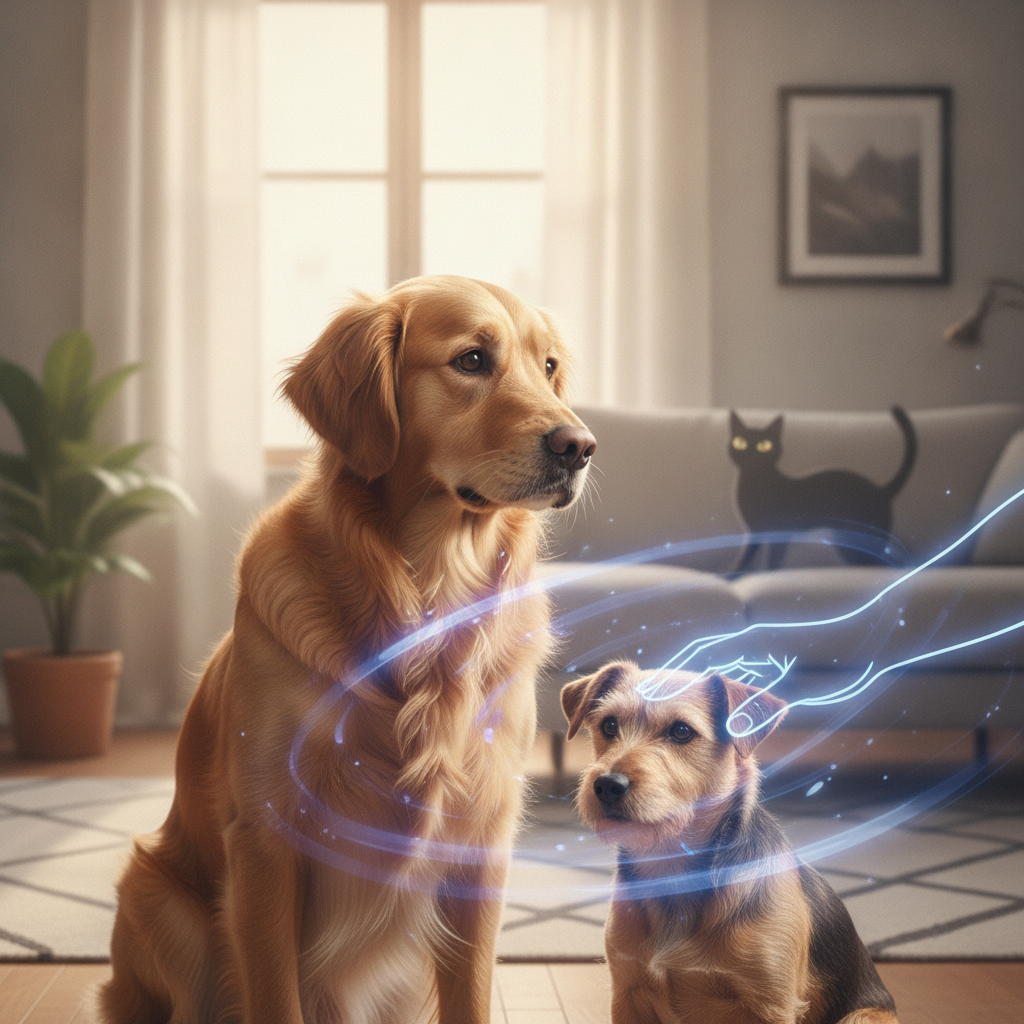
When a tutor reports that his dog is jealous, he usually describes a number of specific behaviors that arise in certain situations. Although science still debates the canine ability to experience an emotion as multifaceted as human jealousy (which involves complex social cognitions and self-reflection), there is no doubt that dogs exhibit remarkable behavioral reactions when they perceive a threat to their attention, resources or social position.
The most common situations that trigger these reactions include:
- The guardian interacts with another pet (another dog, a cat, etc.).
- The tutor devotes attention to a new person (partner, friend, newborn baby).
- Another animal or person approaches the tutor while he is receiving affection.
- The arrival of a new member to the family (human or animal).
Observable behaviors that can be interpreted as “iume” include:
- Physical Interruption: The dog stands between the tutor and the “rival” (whether it be another animal or person), pushing, poking or squeezing.
- Excessive Vocalization: Barking, growling, whining or groaning directed at the tutor or at the “rival” to get attention.
- Search for Intense Attention: Jump on the tutor, lick incessantly, stick the muzzle in the hands of the tutor, bring toys repeatedly.
- Regressive Behaviors: In some cases, especially with the arrival of a baby, the dog may return to puppy behaviors, such as making needs at home, whining or destroying objects.
- Agitation and Anxiety: Walking in circles, panting, shaking, becoming noticeably restless when the tutor interacts with the “rival”.
- Aggression (Rare and Severe): Grow, grit, advance or even bite the “rival” or the tutor. This is an alarm signal that requires immediate intervention.
It is critical to look at the context and consistency of these behaviors to understand what the dog is trying to communicate.
The Roots of Behavior: Behind the Canine “Ciuum
Rather than a complex sense of jealousy, ethologists and behavioral veterinarians tend to interpret these behaviors from more primary but equally powerful causes that shape the social lives of dogs:
1. Resource Guard (Resource Guarding)
This is one of the pillars to understand the canine “ium”. Dogs are animals that instinctively protect valuable resources for their survival and well-being.It is not just about food, toys or a favorite resting place; for many dogs, the guardian (and the attention/affection it provides) is a resource of very high value.When this resource is perceived as threatened or disputed by another individual, the dog can react to protect it.
- Tutor as a Resource: Your lap, your caresses, your voice ALL this can be seen as a limited resource that the dog needs to ensure for itself.
- Social Advantage: In social groups, preferential access to the” “leader (the tutor) can mean access to other resources and security.
2. Social Bonding and Attachment
Dogs establish deep bonds with their owners. This bond, similar to child attachment, causes the dog to seek safety and comfort in the presence of the guardian. An interruption or threat to this connection can generate anxiety and anguish. The “iume” would then be a manifestation of this attachment anxiety.
- Fear of Loss: The dog may fear losing attention, affection or even the presence of the tutor to an “rival”.
- Insecurity: A dog unsure about his place in the family or the solidity of his bond with the guardian may be more likely to exhibit attention-guard behaviors.
3. Learned Behavior and Reinforcement
Dogs are masters at associating causes and effects. If a dog learns that by barking at another animal while the tutor caresses it, the tutor stops petting the other and scolds him (giving him attention, albeit negative), he can repeat this behavior. If he squeezes in the middle and receives a caress to “acalmar”, he learns that this is an effective way to get what he wants.
- Accidental Positive Reinforcement: The dog does something to get attention and the tutor, even to scold, gives attention, reinforcing the behavior.
- Context Association: The dog associates the presence of an “rival” with loss of attention and reacts preventively.
Distinguishing the “Ciume” from Other Behavioral Problems
It is essential to differentiate what appears to be jealousy from other behavioral issues that may have similar manifestations but require distinct approaches.
Checklist: What to Look for to Understand Canine Behavior
- Which Trigger is Specific? Behavior occurs only when does the tutor interact with another person or animal? Or is it more generalized.
- If yes, strong indication of attention guard/resource.
- If not, it could be generalized anxiety, boredom, or lack of training.
- What is Frequency and Intensity? Is it an isolated or constant event?The dog just pokes or even growls/advances?
- Mild behaviors can be managed with training.
- Intense or aggressive behavior requires immediate professional intervention.
- What is Body Language of the Dog?
- Relaxed/Friendly: Wagging the tail loosely, relaxed body, semi-closed eyes, may indicate playful attention seeking.
- Tense/Agressive: Rigid body, tense tail (up or between legs), ears back or forward, tight lips, growls, dilated pupils, may indicate fear, anxiety or aggression.
- Anxious: Puffing, licking your lips, yawning excessively, looking away, scratching, shaking, can indicate stress.
- How Does the Dog React to Intervention? If you call him or try to distract him, does he respond promptly or is“fixated” in behavior?
- If you answer, there is room for redirection.
- If not, the emotional state is stronger and may indicate a deeper problem.
- Are There Other Signs of Stress or Anxiety? Destruction of objects, self-harm (excessively licking the paws), peeing/pooping in inappropriate places, loss of appetite when the guardian is not present (separation anxiety).
- If so, the problem may be more complex than “iume” and require a veterinary evaluation.
Practical Strategies for Dealing with the CANine “Ciume”
The most effective approach involves a combination of training, environmental modification and, above all, a lot of patience and consistency.The goal is to teach the dog that the tutor's attention is abundant and that he does not need to compete for it.
1. Establish a Calm and Consistent Leadership
Be your dog's “porto seguro”. Clear rules and predictable routines help reduce anxiety. Avoid attitudes that reinforce the dog's insecurity about its position or access to resources.
2. Alternative Behaviors Training
Teach your dog to do something specific and compatible when you interact with another person or animal.
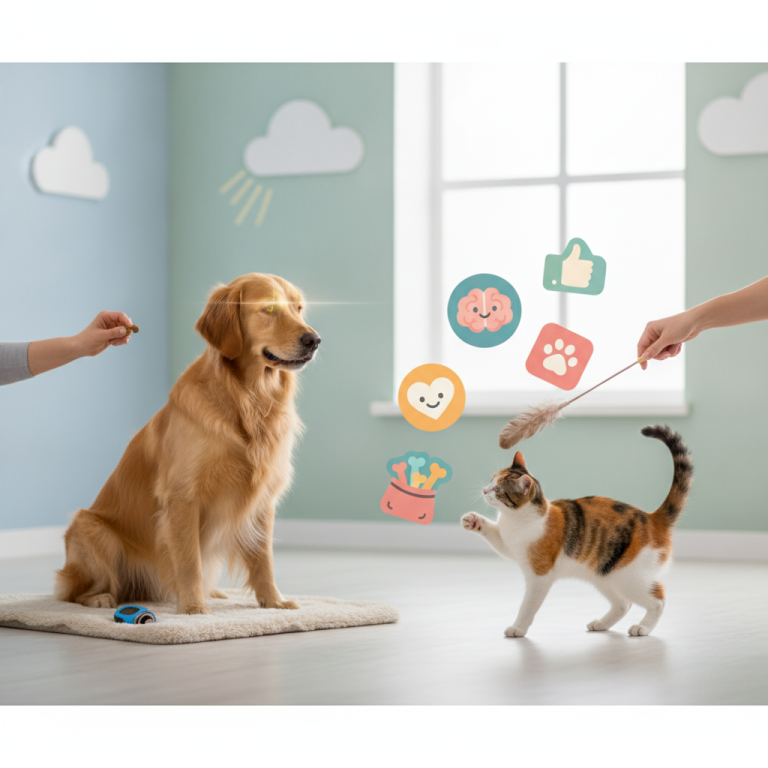
- “Ficar” or “Ir for Bed/Tapet”: Ask the dog to go to a specific location and stay there while you interact with the“rival”. Reward him generously for staying calm and obeying.
- “Sent and Wait”: Teach him to sit quietly and wait in turn to receive affection or treats.
3. Equitable and Proactive Distribution of Resources
Show your dog that there is no shortage of affection or resources.Distribute attention fairly, and preferably, give attention to your dog before he needs to ask or compete.
- Divided Attention: When petting another animal or person, call your dog, praise him, give him a small snack.Show that the arrival of “rival” can mean good things for him too.
- Individual Sessions: Make sure you have quality moments alone with each of your pets, even if they are short.
- Abundant Resources: Have enough toys and beds for everyone, to avoid unnecessary competitions.
4. Ignore Light Unwanted Behaviors (with caution)
If the dog is just seeking attention in a non-aggressive way (poking, whining), try to ignore the behavior at the moment when it occursthe second he calms down or walks away, call him and reward him for being calm.This teaches that calm attracts positive attention, while restlessness does not.
- Important: Never ignore signs of aggression or severe anxiety.In these cases, active intervention is necessary.
5. Socialization and Gradual Exposure
Expose your dog to different people, animals and environments early on (safely and always under supervision). This helps build social confidence and resilience, reducing fear or insecurity in new situations.
6. Environment Management
In some cases, especially at the beginning, it may be necessary to manage the environment to prevent the behaviors of “.
- Separate Spaces: Use baby gates or transport boxes (kennel) to create safe, separate spaces for each animal during meals, moments of rest, or when you are interacting with a “rival”.
- Constant Supervision: Never leave dogs with a history of severe “iume” or aggression unattended with “rival”.
Common Mistakes and Sincere Trade-offs
Dealing with the canine “iume” requires a careful approach.Making certain mistakes can aggravate the problem.
Common Mistakes to Avoid:
- Punish the Dog: Screaming, hitting or punishing the dog for expressing the “iume” does not solve the root of the problem. This only increases anxiety, breaks trust and can lead to aggression out of fear. The dog will not understand “por that” is being punished, it will only associate the presence of “rival” with punishment.
- Reinforce Inadvertently: Giving attention (even if negative, such as a “No!”) while the dog exhibits jealousy behavior validates the behavior as an effective way to get what it wants.
- Not Dealing with the Root Cause: Focusing only on symptoms without understanding whether it is resource guarding, attachment anxiety or learning, will lead to palliative and ineffective solutions.
- Compare Dogs: Each dog is an individual with his own personality, history, and needs.What works for one may not work for another.
- Force Interactions: Forcing closeness between dogs that are fighting for attention can lead to aggression. Integration should be gradual and always positive.
Trade-offs Sincere:
- Time and Patience: Behavioral modification takes time.Do not expect results overnight. Consistency is more important than the intensity of sporadic exertion.
- Family Consistency: For strategies to work, all members of the household must be aligned and follow the same rules and approaches. Lack of consistency can confuse the dog and nullify progress.
- The Need for a Professional: In cases of intense”, with signs of aggression, severe anxiety or when home strategies have no effect, the intervention of a professional trainer or a behavioral veterinarian is essential. The cost and time invested in a qualified professional can be a significant trade-off, but it is an investment in the safety and well-being of everyone in the home. Ignoring these signals can lead to bigger and harder problems to solve in the future.
Frequently Asked Questions about Canine Jealousy
Does my dog really feel jealous or is it just a lack of education?
Although dogs do not experience jealousy with the same cognitive complexity as humans, they do feel insecurity, fear of loss of resources (including their attention) and attachment anxiety. These feelings may manifest in behaviors we associate with jealousy. The “lack of” education enters when the dog has not been taught to control these impulses or behave in an alternative way.Often, it is a matter of emotional training and management, not of “maldade on the part of the dog.
Does the arrival of a baby always cause jealousy in the dog?
The reaction of the dog depends on its personality, socialization and the way the transition is managed by the tutors. Dogs well socialized and accustomed to novelties, who receive proper attention and training during the arrival of the baby, tend to adapt better. The key is to prepare the dog for changes, introduce the baby gradually and ensure that the dog continues to receive attention and affection, but in a structured way.
Should I punish my dog when he shows jealousy?
No. Severe physical or verbal punishment can worsen behavior, making the dog more anxious or even aggressive.He may associate punishment with the presence of the person or animal“rival”, developing aversion or fear. Instead, the focus should be on redirecting unwanted behavior to something acceptable, reinforcing calm behaviors, and modifying underlying causes (such as insecurity or resource guarding).
Is it possible to have several pets without one feeling “iume” from the other?
Yes, it is perfectly possible and common. The key to a multi-pet home is effective resource management (space, food, toys, tutor attention) and ensuring that all animals feel safe and valued. Individualized training, separate walks, moments of caring alone and the equitable distribution of resources are key. In some cases, group dynamics may require the intervention of a professional to ensure harmony.
Understanding “ciume” in dogs is ultimately an exercise in empathy and observation.It is not a transposed human emotion, but a set of complex behaviors rooted in their needs for safety, attachment and access to resources. By watching your dog carefully, identifying triggers and applying consistent and positive training strategies, you will not only solve a behavioral problem, but also strengthen the bond of trust and affection with your canine companion.