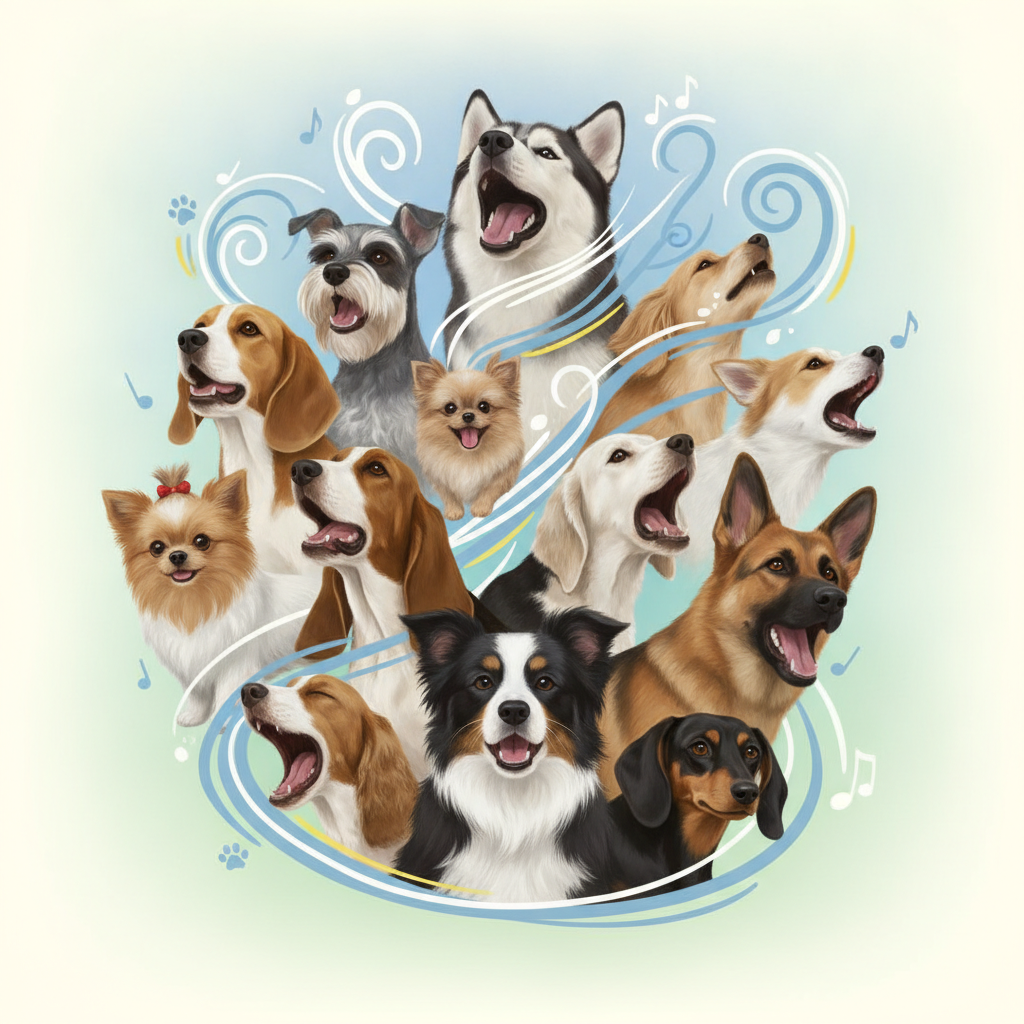
The 11 Most Vocalizing Dog Breeds
The arrival of a dog in the family is invariably a cause for great joy and expectations. However, the reality of living does not always align perfectly with idealization, especially when the vocal behavior of the animal becomes a challenge. The bark, howling, greed and other vocalizations are natural forms of canine communication, essential to express emotions, warn of dangers or simply draw attention. However, when this communication becomes excessive and uninterrupted, it can generate stress for the guardian, problems with neighbors and, above all, indicate a discomfort or an unmet need of the animal itself.
This article, written by an expert in animal behavior, aims to be a deep and practical guide for tutors and future tutors who seek to understand and manage vocalization in dogs. It is not about silencing your four-legged friend, but understanding why some breeds have a greater predisposition to vocalize, what it really means, and how to create an environment of harmony and mutual respect. If you have ever caught yourself questioning “ why does my dog bark so much?” you are in doubt about which breed to choose to avoid vocal surprises, this is your starting point.
Understanding Canine Vocalization: Why Do Some Dogs Bark More?
Vocalization is a fundamental communication tool for dogs, as natural as meowing for cats. However, the intensity and frequency of this vocalization vary enormously between individuals and, crucially, between breeds. The key to understanding why some breeds vocalize more lies in their original history and purpose.
Historically, dogs were developed for specific tasks, and many of them required vocalization.Hunting dogs, for example, bark or howl to indicate the location of prey. Herding dogs use barking to guide the herd and warn of predators. Guard dogs vocalize to warn of the presence of intruders. Others, such as terriers, have been bred to be vigilant and alert their guardians to any unusual movement or sound. This genetic predisposition to vocalize is an ingrained personality trait, and although socialization and training can shape it, it is unrealistic to expect a genetically-silentered dog to be “vocal.
Common reasons for vocalization include:
- Alert: Barking to warn of someone's arrival, the presence of an animal, or a strange sound.
- Anxiety/Boredom: Bored or anxious dogs may vocalize to release energy or express their discomfort.
- Search for Attention: Barking to ask for food, play or for the tutor to interact.
- Fear/Frustration: Barking in response to threatening situations or when the dog does not get what it wants.
- Pain/Discomfort: A dog in pain may groan, howl, or bark unusually.
- Excitement: Vocalization during play, watching the tutor or during exciting events.
Understanding the origin of vocalization is the first step in managing it. It is not a” or malcreation“birra, but a form of communication that needs to be interpreted and, if excessive, directed.
Criteria for Classifying a Dog as “” Localizer
The classification of a breed as “vocalizadora” is not based only on the volume of bark, but rather on a combination of observable and consistent factors over generations. A vocalizing dog is one that has a natural and frequent predisposition to use its voice for various situations, going beyond what would be considered a sporadic communication.
The criteria we use to list the following breeds include:
- Frequency: The tendency of the breed to vocalize repeatedly, even in everyday situations that other breeds might ignore.
- Duration: The ability to maintain a vocalization for an extended period (continuous barking, extensive howling).
- Intensity: The volume and penetration of the dog's voice, which can be high pitched, severe, shrill or a deep howl.
- Variety of Sounds: The range of vocalizations beyond the bark (howls, ganidos, “” conversations, warning growls).
- Common Triggers: The ease with which they are provoked to vocalize by stimuli such as the bell, the passage of people or animals, external noises, or the absence of the tutor.
- Historical Purpose of the Race: Genetic inheritance linked to functions that required vocalization (hunting, herding, guarding, alerting).
Importantly, genetic predisposition is a starting point. The environment, socialization, training and individual personality of each dog will always influence vocal behavior.A dog of a”-trained“vocalizadora” that receives adequate training, sufficient mental and physical stimulation and lives in a calm environment may bark less than a dog of a”-silent“ breed that suffers from boredom or separation anxiety.
The 11 Most Vocalizing Dog Breeds: Profile and What to Expect
Know the breeds most prone to vocalization and prepare for their unique traits.Each profile includes the reasons for vocalization and honest trade-offs.
1. Beagle: The Vocal Hunter
Originally bred for hunting hares, Beagles are famous for their characteristic barking and howling, known as “baying”. This deep, melodious sound was used to alert hunters to the location of prey. At home, this tendency manifests itself in howls of excitement, boredom or to draw attention.They are friendly, energetic dogs, which need a lot of exercise and olfactory stimulation trade-off it is that your vocalization can be persistent if there is no good management of your energy and intelligence.
2. Basset Hound: The Deep Voice Sniffer
Like the Beagles, the Basset Hounds are hunting dogs with a keen sense of smell. Their “baying” is even deeper and melancholic.They can howl for hours if they are bored, lonely or smell interesting.They are calm and affectionate, but extremely stubborn and vocal when they want something or are focused on a trail. The challenge here is to manage the volume and duration of their howls.
3. Cairn Terrier: Small, Alert and Audible
Scottish working terriers, the Cairn Terriers were bred to hunt pests in burrows, and for this they needed to be brave and vocalize intensely to signal the location of the prey.They are small dogs, but with a giant personality and a sharp and persistent bark. They bark at everything they consider “out of the”: doorbells, mailmen, other animals.They are intelligent and loyal, but require consistent training to control their vocal impetus.
4. Chihuahua: The Tiny Watchdog
Chihuahuas are known for their fierce loyalty to their guardians and their miniature” guard-“ nature. They often bark to warn of anything they consider a threat or novelty, including strangers, other dogs, and even subtle external noises. Their bark is high pitched and can be very persistent. Despite their size, they require early socialization to prevent them from becoming overly reactive and vocal.
5. Shetland Sheepdog (Sheltie): The Watchful Shepherd
Bred to herd sheep in the Shetland Islands, Shelties are extremely intelligent and vigilant dogs. Their vocalization was used to guide the flock and warn the shepherd about dangers. At home, this characteristic translates into sharp and frequent barking, especially when excited, anxious or notice something new. They are excellent family dogs, but their alert and sensitive nature makes them prone to bark for a variety of stimuli.
6. Miniature Schnauzer: The Farmer Alert
Miniature Schnauzers were developed to hunt rats and guard property, which required a vigilant and vocal temperament.They possess a robust bark for their size, and are prone to barking to warn of strangers, other dogs, and unexpected noises. They are dogs full of energy, intelligence, and loyalty, but require consistent training and socialization to direct their vocal and protective nature.
7. Fox Terrier (Slick and Hard Hair): Energy and Voice Hunting
Both varieties of Fox Terrier are intrepid hunting dogs, bred to sniff and disentangle foxes. This task required a dog with a lot of energy and a powerful voice to signal their location. They possess a vibrant, persistent bark and can vocalize by excitement, boredom or when chasing something. They are intelligent, playful and require a lot of physical and mental activity to avoid excessive barking.
8. Siberian Husky: The Nordic Howler
Unlike most breeds on this list, Siberian Huskies are better known for their howls and a variety of vocalizations that resemble “conversas” or “grritos” by continuous barking.They howl to express boredom, loneliness, excitement or simply to “phalar”.Their social nature and pack heritage contribute to this form of communication trade-off it is her beauty and adventurous personality versus the need to deal with a unique and sometimes noisy vocalization.
9. Yorkshire Terrier: The Little Lion with Big Voice
The Yorkies may be small in stature but not in personality or volume. Originally rat hunters in mills, they were developed to be alert and audible. They possess a sharp and persistent bark, used to warn of anything they perceive as different or threatening: bells, people passing by, other animals. Their loyalty and bravery come with the tendency to be very vocal dogs.
10. Jack Russell Terrier: The Dynamic and Expressive
Another hunting terrier, the Jack Russell is a well of energy and intelligence. Created to hunt small prey and indicate their location, they have a sharp, energetic and persistent bark. They bark out of excitement, boredom, to draw attention, or when they chase something. Their high energy and need for mental and physical stimulation mean that without proper handling, they can become problematic vocalizers.
11. German Shepherd: The Vocal Guardian
One of the most versatile working breeds in the world, the German Shepherd is known for his intelligence, loyalty and protective instinct. His vocalization is robust and authoritative, used to alert, guard property and, in some lines of work, for herding. They can bark at strangers, external noises or in response to perceived threats. It is crucial to socialize them and train them from an early age to manage their reactivity and direct their strong guarding instinct in a positive way.
Managing Excessive Vocalization: A Practical Guide
Dealing with excessive vocalization is not about punishing your dog, but rather about understanding the cause and providing appropriate alternatives and training.The goal is to reduce unwanted barking while maintaining the dog's ability to communicate.
1. Identify the Cause of Vocalization
Before acting, note: when the dog barks? For whom? In what situations? The most common causes are boredom, separation anxiety, attention seeking, alertness (territorial or danger), fear or excitement. The management strategy will depend on this identification.
2. Provide Proper Physical and Mental Stimulation
Dogs of vocalizing breeds are often intelligent and have high energy levels. Lack of stimulation can lead to boredom and, consequently, excessive barking.
- Physical Exercise: Daily walks (twice a day at least depending on the breed), runs, games to get the ball. A tired dog is a calmer dog.
- Mental Stimulation: Interactive toys, food puzzles, short obedience training sessions, smell games (“nose work”). This keeps them engaged and prevents boredom.
3. Obedience Training and Impulse Control
Invest in basic and advanced commands, focusing on “Silence” and “Fica”.
- “Silencio” command: When your dog barks at something, let him bark a few times and then, with a treat near his nose, say “Silence” The moment he stops barking to smell the treat, reward him. Repeat until he associates “Silence” with the bark stopping and reward.
- Socialization: Expose your puppy to a variety of people, other dogs, places, and sounds early on. This helps build confidence and reduce barking out of fear or anxiety.
- Trigger Management: If your dog barks at the doorbell, for example, train him to go to bed or a specific rug and stay there when the doorbell rings, rewarding calm behavior.
4. Avoid Common Mistakes
- Scream: Yelling at the dog while it barks can be interpreted as you “latindo along”, which can reinforce the behavior.
- Reinforce Indirectly: If your dog barks for attention and you listen to him (look, talk, caress), he learns that barking works. Ignore the attention-seeking bark and reward silence.
- Lack of Consistency: Training will only be effective if it is consistent. Everyone in the house should follow the same rules and commands.
- Leave the Dog Alone for Long Periods: Especially for social and energetic races, this can lead to separation anxiety and boredom, resulting in excessive vocalization.
5. When to Seek Professional Help
If the bark is constant, seems excessive, causes distress to the dog or if your attempts at handling do not have an effect, consider:
- Veterinarian: Discard any health problems or pain that may be causing the vocalization.
- Certified Dog Trainer: For guidance on training techniques and behavior modification.
- Animal Behaviorist: For more complex cases, such as severe separation anxiety or aggression, a specialist can offer a personalized management plan.
Frequently Asked Questions About Vocalizing Dogs
My dog barks at everything. Is it normal?
It is normal for dogs to bark to warn about something unusual or to communicate. However, if your dog barks persistently for minimal stimuli or for no apparent reason, this may indicate boredom, anxiety, lack of socialization or that he has learned that barking attracts his attention.
Can spaying my dog decrease vocalization?
Castration can in some cases reduce barking related to sexual behaviors, such as barking at a female in heat or marking territory. However, for vocalizations caused by boredom, separation anxiety, attention seeking or guarding instinct, castration usually has no direct impact. Vocalization is more linked to behavioral and genetic factors than hormonal in most cases.
Are anti-bark collars effective?
Anti-bark collars (which emit ultrasound, citronella spray or mild electric shock) can temporarily inhibit barking.However, they treat the symptom, not the cause. If the dog barks out of anxiety or fear, the collar can increase stress.In addition, if used incorrectly, it can generate negative associations and traumas.It is advised to use such tools only under the guidance and supervision of a professional and as part of a comprehensive training plan.
Should I scold my dog when he barks?
Verbally reproaching (screaming “to!”) can be counterproductive. For the dog, your loud voice can be interpreted as you “participating” barking, or it can generate fear and anxiety, making the problem worse. Ideally ignore unwanted barking (if it is for attention seeking) and reward silence. For alert barking, teach a “Silence COMMAND and redirect the behavior to something more appropriate, such as lying in bed.
Living with a vocalizing dog is above all an exercise in patience, understanding and commitment.The breeds listed in this article are wonderful, with rich and complex personality traits.Their tendency to vocalization does not make them “mas” choices, but choices that require a conscious and prepared tutor.
By understanding the roots of vocal behavior, implementing consistent training strategies, and ensuring that your dog's physical and mental needs are met, you will be on track to build a harmonious relationship.Remember, the goal is not to silence your friend, but to teach him to communicate in a way that fits his life and his environment, providing well-being to all. The search for knowledge and, when necessary, for professional support, are the pillars for responsible and successful tutoring.