Dogs that pick up objects: understanding behavior
The scene is common: you return home and find your favorite shoe chewed, the TV remote control in pieces, or a roll of toilet paper scattered around the room. For many tutors, the behavior of dogs that pick up and often destroy objects is a source of frustration, confusion and sometimes even concern for the safety of the animal. More than a simple “arteirice”, this complex habit is a reflection of natural instincts, unmet needs or even emotional and health issues.
Understanding why your dog adopts this behavior is the first and most crucial step to manage it effectively and build a more harmonious coexistence.This guide is designed to demystify the habit of picking up objects, offering concrete information, practical strategies and a clear path for tutors seeking lasting solutions, based on understanding and respect for their canine companion.
Deciphering Behavior: Why Do Dogs Take What They Shouldn't?
The mouth is, for dogs, as essential a tool as the hands for humans.They use it to explore the world, play, communicate and even to relieve discomfort.When a dog picks up an object, it is satisfying one or more of its basic needs, whether instinctive or learned.
Instinct and Basic Need
- Exploration and Sensory World: Puppies and young dogs explore the environment with their mouths. Smelling, licking and biting provide crucial information about textures, flavors and functionality of objects.
- Hunting/Running Behavior: In their ancestral past, dogs needed to find, carry and process their prey. This instinct manifests itself today in the search and transport of objects.
- Dentition Relief: Puppies, especially between 3 and 7 months of age, feel pain and itching in the gums due to the birth and exchange of teeth. Chewing offers relief, and any available object can become a teether.
Boredom and Lack of Stimulation
Dogs are intelligent and active animals.When they do not receive enough physical and mental stimulation, boredom can lead to destructive behaviors.Catching and chewing objects can be a way to create their own” fun or release accumulated energy.
- Lack of Physical Exercise: Dogs with plenty of energy need rides, runs and games that tire them.
- Poor Environmental Enrichment: An environment without appropriate toys, mental challenge activities, or opportunities for exploration becomes monotonous.
Search for Attention
Dogs are astute observers.If they notice that picking up an object (especially a forbidden one) results in an immediate tutor reaction - even if it is a scream or a run to pick up back from the A. I. They may associate this behavior with getting attention. For some dogs, any attention is better than none.
Anxiety, Stress and Fear
The act of picking up and chewing can be a form of self-soothing for dogs suffering from anxiety, such as separation anxiety. Chewing releases endorphins, which can have a calming effect.
Health Issues
In some cases, the sudden increase in the habit of picking and chewing may indicate a health problem. Oral pains, gastrointestinal problems (which can lead to pica, the habit of ingesting non-food objects), nutritional deficiencies or other medical conditions may be the cause. Pica is particularly dangerous and always requires veterinary evaluation.
Observing and Analyzing: Understanding Your Dog's Context
To intervene effectively, it is critical to understand the“why” of your dog's behavior.This requires close observation and an analysis of the context.
What to Watch: A Practical Guide
Create a small mental or physical journal. Write down the following information whenever your dog picks up something he should not:
- When he picks it up? (When you are alone, when you are distracted, right after you leave the house, during a game, etc.)
- Where's he pick up? (In the living room, bedroom, garbage, backyard, etc.)
- What's he get? (Shoes, socks, remote controls, papers, toys of it, food scraps, plants, stones, etc.)
- How does he behave after catching? (Does he run with the object? Chew quietly? Tear? Hide? Look at you with a full mouth? Wag your tail?)
- What's your reaction? (Do you scream? Run after him? Ignore?)
Differentiating Motivations
The above observations will help differentiate motivation:
- Play and Exploration: Usually associated with puppies, young dogs, or dogs seeking interaction.The dog can bring the object to you, inviting to play, or simply gnaw without great initial destruction, but with great interest.
- Destruction by Boredom/Anxiety: Often occurs when the dog is alone or underestimated.The destruction is more intense and the dog may seem more focused on “remembering the object.
- Search for Attention: The dog picks up the object and often makes eye contact, expecting a reaction.
- Ingestion (Pica): The dog chews and swallows parts of the object.This is a warning sign and requires immediate veterinary evaluation, as it may indicate serious health or behavioral problems and risk of intestinal obstruction.
Management and Training Strategies to Redirect Behavior
The solution for dogs picking up objects usually involves a combination of environmental management, enrichment and training.
Optimizing the Environment: Prevention is Key
The simplest way to prevent your dog from picking up forbidden objects is to make them inaccessible.
- Save valuables: Shoes, remote controls, glasses, electronics, books and documents should be stored in cabinets or elevated places.
- Safe garbage: Use trash cans with firm lids or that can be stored in closets.
- Clothes and personal items: Keep laundry baskets out of reach and do not leave clothes scattered on the floor.
- Toxic plants: Remove or put out of reach any plants that could be dangerous if ingested.
- Cleaning products and medicines: Keep in locked cabinets.
Effective Environmental Enrichment: Fighting Boredom
A stimulated dog is a dog less likely to create its own fun with its belongings.
- Suitable toys: Offer a variety of toys of different textures and materials (resistant rubber, ropes, plushies). Turn the toys regularly to keep them interesting.
- Interactive toys/tidbits dispensers: Kongs, balls that drop feed, puzzles for dogs. They keep the dog mentally busy, forcing him to “work” for the reward.
- Safe bones and teethers: Offer safe and long-lasting options for gnawing under supervision. Consult your veterinarian about the best options for your dog's age and size.
- Tours and exercises: Make sure your dog gets physical exercises that are appropriate to his breed, age and energy level. Regular walks, play in the park, jogging.
- Training and socialization: Training classes and controlled interactions with other dogs or people can be an excellent source of mental and social stimulation.
Essential Training: Commands That Make a Difference
Teaching basic commands is crucial for your dog's safety and for his control over the situation.
Teaching the “Solta” or “Larga” (Step by step)
This command is vital.It allows your dog to drop what is in his mouth, whether it is a toy or a dangerous object.
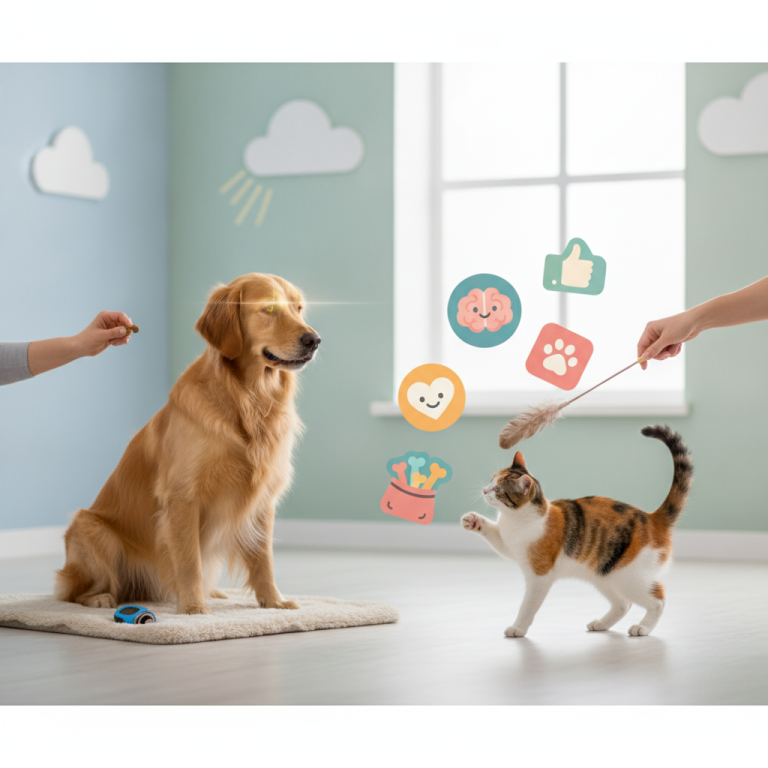
- Start with toys: Hold an attractive toy in front of your dog.When he picks it up, show a very tasty treat near his snout.
- Wait for curiosity: As soon as he releases the toy to smell the snack, say “Solta” (or “Larga”) and immediately give the snack.
- Always reward: After giving the snack, take the toy, wait a second and offer it back. This teaches that letting go does not mean losing.
- Repetition and generalization: Repeat in different environments and with different (safe) objects until the dog associates the word with the act of letting go. Never use the command to take something by force that he does not want to release.
- Don't run behind: If he takes something forbidden and runs away, do not run. This becomes a hunting prank. Instead, crouch, call him enthusiastically and show him something much more interesting (a favorite toy, an irresistible snack). When he approaches, command “Release” and reward.
The “Pega” Command and Redirection
Encourage your dog to pick up only the allowed toys. When he is playing with a toy of his, praise and play along. If he tries to pick up a forbidden object, immediately redirect him to an appropriate toy with a “Pega command (the toy)”.
What to Do When He Catch Something Forbidden
Avoid screaming or physically punishing, as this can generate fear, anxiety and cause him to associate his presence with something negative, or that he hides the object or swallows it quickly to avoid being caught.
- Keep calm: A quiet voice and soft gestures are more effective.
- Offer an exchange: Always have a high-value snack or favorite toy on hand. Swap the forbidden object for the most desirable item.
- Use“Solta”: If he already knows the command, apply it.
- Positive reinforcement: As soon as he drops the object, eloquently praise and reward.
Common Mistakes That Aggravate the Problem and How to Avoid them
How the tutor reacts to the behavior can reinforce it or help correct it.
The Inadequate Reaction of the Tutor
- Chasing the dog: It transforms the act of picking up the object into a chase game, reinforcing the behavior.
- Shouting or physically punishing: This causes fear, anxiety and can damage the relationship of trust.The dog may learn not to pick up objects in front of you, but will continue to do so when you are not around or will hide the object and even ingest it to avoid being punished.
- Offering negative attention: Even scolding serves as attention.If the dog seeks attention, a scolding may be enough to reinforce the behavior of picking up objects.
The Failure in Consistency
If one day you allow him to take an old slipper and the next you scold him for picking up a new one, the dog will be confused. Consistency is key in any canine training. Everyone in the house should follow the same rules and use the same commands.
Underestimating the Needs of the Dog
Ignoring your dog's needs for exercise, mental stimulation, and social interaction will inevitably lead to behavioral problems. A bored or anxious dog will find ways to release his energy, and it won't always be the way you want it to be.
When to Seek Professional Help: Identifying Warning Signs
Although many situations can be resolved with consistent management and training, there are times when professional intervention is required.
Severe Behavioral Problems
- Excessive and persistent destruction: If, despite all efforts, the dog continues to destroy the entire house or objects of great value.
- Severe separation anxiety: If the behavior of picking up objects is just one of the symptoms of a broader picture of anxiety when left alone (howls, excessive barking, making needs in inappropriate places, attempts to escape).
- Aggressiveness in possession: If the dog growls, bites or exhibits aggression to defend an object it has picked up (reserved feature).
Animal Health Risk
- Pica (ingestion of non-food objects): If the dog not only catches, but tries to swallow or actually swallows objects such as stones, tissues, earth, feces. This is dangerous and can lead to veterinary emergencies (obstructions, intoxications).
- Sudden changes in behavior: If a dog that never picked up objects suddenly starts doing so intensely, this can be a sign of pain, illness or stress.
In such cases, look for:
- Veterinary Doctor: To rule out any underlying medical cause.
- Animal Behaviorist or Veterinary Behaviorist: To evaluate behavior in a broader context and develop a personalized behavioral modification plan.
- Positive Adestrator: To assist in training specific commands and redirecting behavior using ethical and effective methods.
Frequently Asked Questions
Does my dog challenge me when picking up objects?
It is rare that a dog is acting by “defio” in the human sense. Dogs act to satisfy their needs and instincts, or because they have learned that certain behaviors bring results (attention, relief from boredom). Assigning human intentions such as “defio” or “vengean can lead to punitive and ineffective responses.The most likely is that he is seeking attention, relieving boredom or following an instinct.
Do puppies stop picking up things on their own with age?
Partially. The teething phase (up to 6-8 months) naturally decreases, reducing the need to gnaw to relieve pain. However, oral exploratory behavior and the need to chew may persist into adulthood if not properly directed to appropriate toys. Without proper training and management, adult dogs can continue picking up and destroying objects out of boredom or anxiety.
How do I make him drop the object without running away or swallowing?
Avoid running behind, screaming or trying to take the object by force. This will make him run away, swallow or even growl to defend the “” feature. The best strategy is to offer an exchange. Present a high-value snack or an even more interesting toy. When he releases the forbidden item to pick up the reward, use the “Release” command and praise profusely. Repeat this consistently so that he associates the command with something positive and understands that letting go is not losing, but gaining something better.
Are some breeds more “pegadorAS”?
Yes. Breeds with strong hunting instinct, such as Retrievers (Labrador, Golden), Cocker Spaniels and Terriers, may have a greater predisposition to pick up and carry objects, given their work history. Herding dogs may also exhibit behaviors of “joining” objects. However, any dog can develop this habit if their needs are not met. Genetic predisposition only indicates a greater propensity, not an inevitable fate.
Driving a dog that catches objects in an unwanted way is a process that requires patience, consistency and, above all, understanding. Instead of seeing behavior as a problem to be “corrected”, consider it as a way of communicating your dog about his needs and instincts. With the right environmental management strategies, a good enrichment program and a training based on positive reinforcement, you will not only solve the behavior, but also strengthen the bond with your canine companion. Remember, the ultimate goal is not only to have a dog that does not pick up objects, but a happy, balanced and safe dog next to you.