Hydration in dogs and cats: an essential factor for health
Proper hydration is essential for the health of your pets, ensuring the proper functioning of the body and preventing various diseases.
Silent Hydration: Why Water Is More Than Simply Water For Your Pets
In the universe of health and well-being of dogs and cats, some pillars are so fundamental that their importance can go unnoticed by the apparent simplicity. Hydration is one of these pillars. Far from being just an act of quenching thirst, water acts as the main biological solvent and vehicle for numerous vital processes, being an invisible but essential component in maintaining the life and vitality of our four-legged companions.
On average, the body of a dog or cat is composed of 60% to 70% water. This colossal proportion is not for nothing. Water is indispensable for the transport of essential nutrients to cells, such as vitamins, minerals and oxygen, and for the removal of toxic metabolic waste, which is excreted through urine and feces. In addition, it plays a crucial role in regulating body temperature, a vital mechanism that prevents overheating or hypothermia, especially in hot environments or during intense physical activities.
Proper hydration is also critical for the health of vital organs. In the kidneys, water is essential to filter the blood and concentrate urine, preventing the formation of stones and optimizing kidney function.In the digestive system, it helps in the breakdown of food and absorption of nutrients, in addition to facilitating intestinal transit and preventing constipation. The lubrication of joints and cushioning impacts also depend on good water status, ensuring mobility and comfort, especially in older animals or those predisposed to orthopedic problems.
Lack of attention to hydration can generate a cascade effect.Dehydration, even mild, can compromise cell functioning, reduce energy, affect concentration (yes, pets can also have cognitive changes related to dehydration) and, in more severe cases, lead to organic failures. Understanding water not as an accessory, but as a preventive and continuous drug, is the first step to ensure a long and healthy life for our pets.
Deciphering the Formula: How Much, How and Where to Offer Water to Your Pet
The question “how much water does my pet need to drink?” does not have a single answer, but rather a guideline that adapts to multiple variables.The general rule states that dogs and cats need approximately 50 to 60 ml of water per kilogram of body weight per day. However, this is an average that adjusts dramatically according to the species, age, activity level, diet and the environment in which they live.
For dogs, factors such as breed, size and intensity of daily exercise directly influence water demand. A Labrador who practices agility or runs in the park will need much more water than a Pug who spends most of the day sleeping.Cats, by their nature, represent a distinct challenge. Inheritors of desert ancestors, they have developed a lower sense of thirst, extracting much of their hydration from their prey. This means that if fed predominantly with dry food, which has low moisture content, many cats can live in a chronic state of mild dehydration without the guardian noticing, predisposing them to urinary and kidney problems.
Diet is a key modulator: animals that consume moist foods (pates, pates, natural foods) naturally ingest more water through food, decreasing the need to drink directly. The climate is also crucial; hot and humid days, common in much of Brazil, increase the loss of liquids by evaporation and respiration, requiring greater replacement.
Offering water properly goes beyond filling the bowl. It is essential to have multiple water sources scattered around the house, in places easily accessible and that the pet feels safe. The quality of the container also matters: stainless steel or ceramic bowls are the most recommended, as they are easy to clean and do not release chemicals. Avoid plastic, which can scratch, accumulate bacteria and in some cases release bisphenol A (BPA). The daily cleaning of the bowls with soap and water is non-negotiable to prevent the proliferation of algae and bacteria, which can ward off the pet or cause gastrointestinal problems.
Silent Signs of Dehydration: An Alert That Should Not Be Ignored
Detecting dehydration in dogs and cats, especially in the early stages, can be challenging. Our pets instinctively often mask discomforts, and the signs of mild dehydration are subtle but crucial for early intervention. Ignoring these alerts can lead to a rapid worsening of the condition, making the condition a veterinary emergency.
One of the simplest and most effective tests is that of skin elasticity. Gently pull the skin over your pet's shoulder, forming a “tenda” In a well-hydrated animal, the skin should quickly return to its normal position.If it takes to return or remains lifted for a few seconds, it is an indication of dehydration. Another important sign is the gums. Healthy gums are moist, smooth and light pink in color. If they are dry, sticky to the touch, or pale in color, it may be a sign that your pet needs more fluids.
The appearance of the eyes can also be a thermometer.Slightly deep or more opaque eyes may indicate loss of fluid volume. The observation of urine is equally relevant: less urine volume, or urine with a very dark yellow color and strong odor, suggests that the body is retaining fluids and that the pet is dehydrated. On the other hand, a well-hydrated animal produces clear urine and at an appropriate volume.
Changes in behavior are another point of attention.Lethargy, excessive tiredness, decreased interest in playing or in their usual activities, lack of appetite or wheezing may be signs that something is not right with hydration.Dried cats may hide more, vocalize less and present a rougher coat. It is essential to remember that in cases of persistent vomiting, severe diarrhea, high fever or any suspicion of moderate to severe dehydration, consultation with a veterinarian should be immediate. Severe dehydration can lead to hypovolemic shock and multiple organ failure, being a life-threatening condition that requires urgent intravenous fluid therapy.
Strategies for One Goal More: Practical Tips and Where to Find Support
Stimulating water consumption, especially in animals that do not show great thirst (looking at you, cats!), requires creativity and consistency. More than simply keeping the bowl full, you need to make hydration an attractive experience.
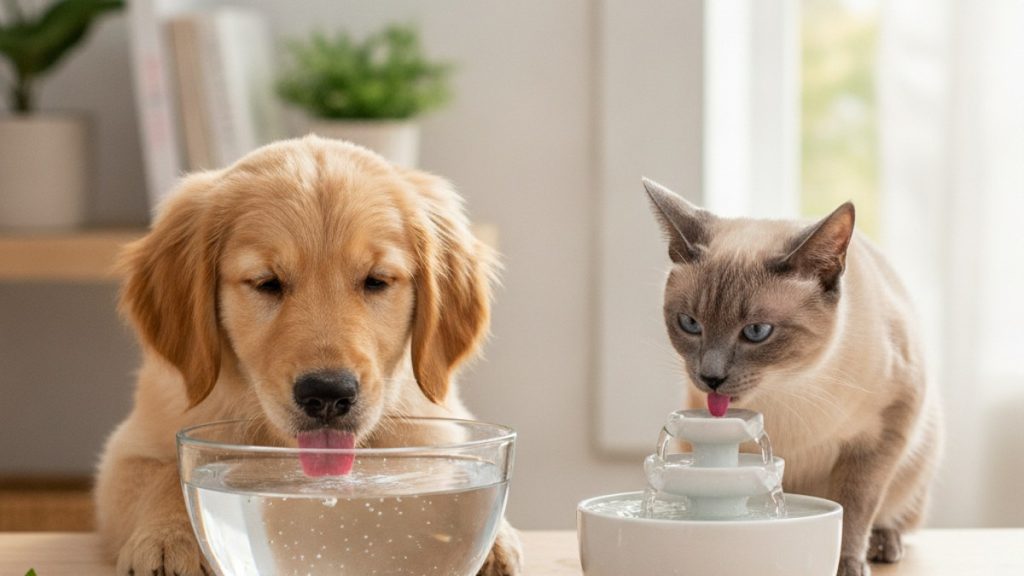
For many cats and some dogs, moving water is irresistible. Electric drinking fountains (water fountains) are an excellent tool, because the sound and movement of running water mimic the fresh water of nature, which is perceived as safer and cleaner. There are several models available in the Brazilian market, from simpler plastic options to more robust designs in ceramic or stainless steel, which can be found in physical or online pet shops such as Petz, Cobasi, Amazon and Mercado Livre. Maintenance is crucial: regular cleaning and changing of filters are essential to ensure the effectiveness and hygiene of the appliance.
Wet diet is undoubtedly one of the most efficient strategies, especially for cats. Sachet or can foods have a high moisture content (usually between 70% and 85%), which contributes significantly to daily hydration without the animal having to drink large volumes of water separately. Incorporating wet foods into the food routine, even if it is only one serving per day, can make a big difference. In the case of dogs and cats that consume dry feed, add a little warm water to the feed can make it more palatable and increase water intake. Meat or chicken broths (without salt, garlic are also being offered as a toxic agent.
Another tip is to disperse several bowls of water around the house, in quiet and easily accessible places. Some pets may prefer to drink water in more isolated places or in containers of different materials. Trying glass bowls, ceramic, metal or even large cups can reveal a preference that you did not know. For dogs, adding ice cubes in the water can be an attraction on hot days, turning hydration into a joke. However, for cats, ice is usually not as effective.
With regard to the origin of water, tap water, provided that it is drinkable for human consumption in your region, is generally safe. Filtered water, through household filters, is a great alternative that removes impurities and improves taste. Already mineral water, although it seems a premium option, usually does not offer superior benefits and may even have disadvantages. Some mineral waters have a mineral profile that, in excess, may not be ideal for the continuous consumption of pets, especially those with preexisting renal conditions. Therefore, our honest editorial advice is: do not spend extra money with mineral water for your pet. Invest in a good water filter and in clean and affordable containers.
Continuous Commitment: The Role of the Tutor and Veterinary Consultation
Hydration is a daily and continuous commitment that is reflected in the general health of the pet. The tutor plays an irreplaceable role in observing and implementing proactive strategies to ensure that your dog or cat is always well hydrated. This involves not only constant monitoring of water consumption habits, but also the ability to adapt strategies according to the age, climate, diet and health status of the animal.
Any significant change in water consumption (polydipsia) or a worrying decrease (oligodipsia) SHOULD be a sign to seek medical advice. Excessive thirst may be a symptom of serious conditions such as diabetes, kidney disease, hyperthyroidism (in cats) or Cushing's syndrome (in dogs). Similarly, persistence in low water intake, even after applying all stimulus strategies, deserves investigation as it may indicate an underlying health problem or a pain that prevents you from approaching the bowl.
During routine appointments, your veterinarian will assess your pet's hydration status, which includes physical exams and, if necessary, laboratory tests. This is the ideal opportunity to discuss your pet's specific water needs, especially if your pet has pre-existing medical conditions that require special management, such as chronic kidney disease, heart problems, or a history of urinary stones. The veterinarian may recommend specific diets with high moisture content or supplements that help maintain electrolyte balance.
In short, hydration is not a detail, but a manifestation of the integral care we dedicate to our animals. It is an act of love and responsibility that directly impacts longevity, quality of life and the prevention of various diseases. Being attentive, offering the best conditions and not hesitate to seek professional guidance are the pillars to ensure that your dogs and cats enjoy a full and healthy life, sipping every drop of well-being.