Hazardous food for dogs and cats
Protecting the health of your pets is critical, and knowing which foods are toxic to dogs and cats is the first step to avoiding emergencies and ensuring their well-being.
The relationship between humans and their pets is above all a demonstration of love and care. We want to offer the best for them, and this often manifests itself in the way of sharing our food. However, what is a harmless treat for us can be a dangerous poison, even fatal, for dogs and cats. The real problem lies in the lack of information and the belief that “a little does not hurt”. Our goal, as responsible guardians, should be to protect our four-legged pets from the invisible dangers that lurk in our own kitchens.
Understanding Toxicity: Why Do Our Pets React Differently?
Digestion and metabolism of dogs and cats are fundamentally different from humans.What is digested and processed easily by us can be extremely difficult, or impossible, for them. These metabolic differences reside in specific liver enzymes, in the ability to process certain substances, and, of course, in the size of the animal, which directly influences the toxic dose. For example, a compound that an adult human can tolerate without problems can be lethal to a small dog or a cat, due to its lower body mass and the inability of its body to quickly detoxify the substance.
It is crucial to understand that toxicity is not a matter of “yes or non” for all foods. It can vary in:
- Dose: The amount ingested in relation to the body weight of the animal.
- Individual Sensitivity: Just like us, each pet can react differently.
- Accumulation: Some toxic substances can build up in the body over time, causing chronic problems.
- Health Condition: Pets with preexisting diseases (renal, liver, heart) are more vulnerable.
The Hidden Enemies: Common Foods and Their Specific Risks
The list of dangerous foods is extensive, but some items stand out for the frequency of accidents and the severity of their effects. Knowing each is the first step to prevention.
Chocolate and Caffeine
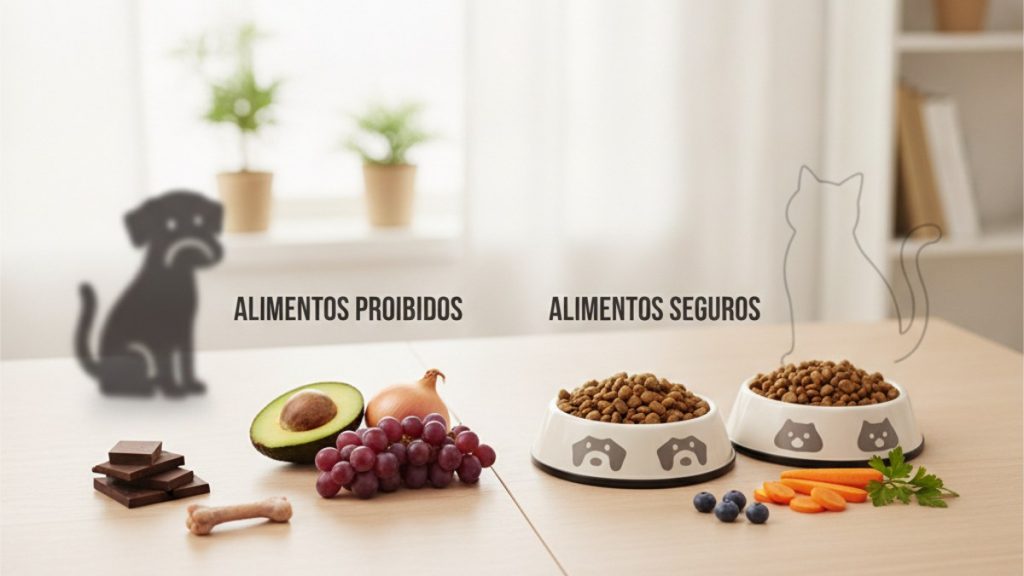
One of the most well-known poisons for dogs and cats, chocolate contains theobromine and caffeine, substances that pets metabolize much more slowly than humans.The darker and purer the chocolate (e.g., dark chocolate, cocoa powder), the higher the concentration of these toxins and, consequently, the greater the risk.
- Vomiting and diarrhea.
- Increased thirst and urination.
- Hyperactivity, restlessness and muscle tremors.
- Increased heart rate and blood pressure.
- Seizures and, in severe cases, cardiac arrhythmias, coma or death.
Careful: Cookies, cakes and other sweets containing chocolate are also dangerous. Caffeinated drinks (coffee, teas, energy drinks) also pose a risk.
Grapes and Raisins
Although the exact substance responsible for the toxicity is not yet fully understood, ingestion of grapes (fresh or dried, such as raisins) can cause acute kidney failure in dogs. Even small amounts are sufficient to trigger the reaction.Cats appear to be less affected or less likely to ingest them, but the risk exists
- Vomiting and diarrhea (may occur within the first 6-12 hours).
- Lethargy and weakness.
- Abdominal pain.
- Decreased or no urination (sign of advanced kidney failure).
Decision Criterion: There is no safe dose of grapes or raisins for dogs. Any intake should be considered an emergency.
Xylitol (Artificial Sweetener)
Xylitol is an artificial sweetener found in a growing variety of dietary and sugar-free products such as chewing gum, candies, toothpaste, some baked goods and even peanut butters.For dogs, it is extremely toxic, causing a rapid and potent release of insulin by the pancreas, resulting in:
- Hypoglycaemia (dangerous drop in blood sugar).
- Vomiting, lethargy and weakness.
- Loss of coordination, collapse.
- Seizures.
- Severe liver damage at higher doses.
Common Error: Many tutors do not read the labels of “diet” or “sem sugar”. Xylitol is a silent hazard.
Onion, Garlic and Puerro (Allium spp.)
All members of the Allium family (onions, garlic, puerum, chives) contain thiosulfate compounds, which are toxic to dogs and cats. These substances damage red blood cells, leading to hemolytic anemia. Cats are generally more sensitive. Toxicity can be cumulative, which means that small repeated intakes over time can be as dangerous as a large single dose. All forms are dangerous: raw, cooked, dehydrated, powdered or present in processed foods.
- Lethargy and weakness.
- Pale gums.
- Dark or reddish-colored urine (due to damaged red blood cells).
- Vomiting and diarrhea.
- Increased respiratory and heart rate.
What to observe: Symptoms may take 2 to 5 days to appear after ingestion.
Avocado
Avocado contains a toxin called persin, which is dangerous for some animal species (such as birds and rabbits), causing respiratory and heart problems.For dogs and cats, the risk of persin poisoning is generally considered low. However, the avocado seed presents a significant risk of:
- Gastrointestinal obstruction: Especially in smaller dogs, the lump can get stuck in the esophagus, stomach, or intestines.
- Gagging.
Honest trade-off: While the fruit itself rarely causes serious toxicity in dogs and cats, the lump and bark can be problematic.It is best to avoid full access or offer the pulp in small quantities and with caution, always removing the lump and the peel.
Alcohol
Alcoholic beverages, foods containing alcohol (such as some sweet or fermented) and even raw bread dough that ferments in the stomach are extremely dangerous. The liver of dogs and cats does not process alcohol efficiently, and they are much more sensitive to its effects. The symptoms are similar to human intoxication, but with much lower doses:
- Vomiting and diarrhea.
- Disorientation, depression of the central nervous system.
- Coordination problems, tremors.
- Respiratory difficulty.
- Hypothermia (fall in body temperature).
- Eat and death.
Bones Cooked
Although the image of a dog gnawing at a bone is iconic, cooked bones (whether chicken, beef or pork) are a serious danger.Baking makes them brittle and susceptible to splintering into sharp pieces that can:
- Puncture the esophagus, stomach or intestines.
- Causing gastrointestinal obstructions.
- Damage teeth.
- Causing severe constipation.
Comparison: Raw bones, although they present risks of bacterial contamination and can still cause damage if they are too large or hard, are less likely to shatter than cooked ones.However, the supply of bones, raw or cooked, should always be supervised and ideally discussed with a veterinarian.
Dairy
Many dogs and especially adult cats are lactose intolerant as they lose the enzyme lactase (required to digest milk sugar) after weaning. Ingestion of milk, cheese and other dairy products can cause:
- Vomiting and diarrhea.
- Abdominal gas and discomfort.
Careful: Small amounts of some cheeses may be offered as a treat for dogs that tolerate it, but should not be a regular part of the diet.
Macadamia Nuts
Although the exact cause of the toxicity is unknown, eating macadamia nuts (even in small amounts) can cause symptoms in dogs:
- Weakness, especially in the hind legs.
- Vomiting.
- Tremors and ataxia (lack of coordination).
- Abdominal pain.
- Fever.
They are usually not fatal, but they cause great discomfort and require veterinary attention.
Raw Pasta with Yeast
Raw bread dough or other yeast doughs pose a double danger: in the warm, moist environment of the pet's stomach, yeast can:
- Expand: Causing severe and potentially fatal stomach swelling (volvulogastric dilation), which requires emergency surgery.
- Producing alcohol: Leading to alcohol poisoning, with the symptoms already described.
Seeds and Fruit Lumps
Many fruits are safe for pets (seedless apple, banana, seedless watermelon). However, seeds and fruit pits like apples, cherries, peaches, apricots and plums contain cyanide, a toxin. Although the seeds need to be chewed to release cyanide, they also pose risks of choking and gastrointestinal obstruction.
Excess Fat and Fried Foods
High-fat foods, such as fatty meat leftovers, bacon, chicken skin, and fried foods, can cause pancreatitis (inflammation of the pancreas) in dogs and cats, a painful and potentially serious condition.
- Persistent vomiting.
- Diarrhea.
- Intense abdominal pain.
- Lethargy.
- Fever.
Excess Salt
Ingestion of large amounts of salt can lead to sodium poisoning. This can happen with salty foods (fried potatoes, snack foods, pretzels) or even sea water. Symptoms include:
- Excessive thirst and frequent urination.
- Vomiting and diarrhea.
- Lethargy, tremors.
- Seizures, coma and, in severe cases, death.
Immediate Action and Prevention: A Practical Guide
Knowing the dangers is essential, but knowing how to act in an emergency and, more importantly, how to prevent it, is the real value.
What to Watch for: Warning Symptoms
Many symptoms of intoxication are nonspecific, but the presence of one or more of these, especially after a suspected ingestion, should light the warning sign:
- Persistent vomiting and diarrhea.
- Lethargy, weakness, disorientation.
- Tremors, convulsions.
- Increased thirst and/or urination.
- Excessive salivation.
- Pale or yellow gums.
- Respiratory difficulty.
- Abdominal swelling or pain to the touch.
- Behavior changes (agitation, depression).
Step by Step in Case of Suspicious Ingestion
Time is crucial in cases of intoxication. Follow these steps:
- Keep Calm: Panicking can make it difficult to make decisions.
- Identify the Problem:
- What did your pet eat? (Food name, ingredients).
- How much was ingested? (Approximate amount).
- When did it happen? (Time of ingestion).
- The size and weight of your pet?
- Call the Veterinarian immediately: Always have the number of your trusted veterinarian or an emergency clinic on hand 24h. Be as specific as possible with the information collected in step 2.
- DO NOT Induce Vomiting without Professional Guidance: Inducing vomiting can be dangerous in some situations (if the pet is breathing hard, has ingested corrosive substances, or has spent a long time of ingestion). Only a veterinarian can assess whether it is safe and appropriate.
- Get Ready to Take the Pet: You may be instructed to take your pet to the clinic.If possible, take a sample of the ingested food or the original packaging to help identify ingredients and evaluate toxicity.
Prevention is the Best Strategy
Prevention is always easier and safer than treating an emergency:
- Store Food Safely: Keep all human foods, especially dangerous ones, out of the reach of pets, in closed cabinets or high shelves.
- Unaccessible Garbage: Use trash cans with a secure lid or that cannot be dropped. Remains of food and packaging can be a dangerous temptation.
- Care in the Kitchen: Never leave dangerous food on countertops unsupervised, even for a brief period.
- Educate Visits and Children: Make sure everyone in your home and visitors are aware of foods that cannot be given to your pets.
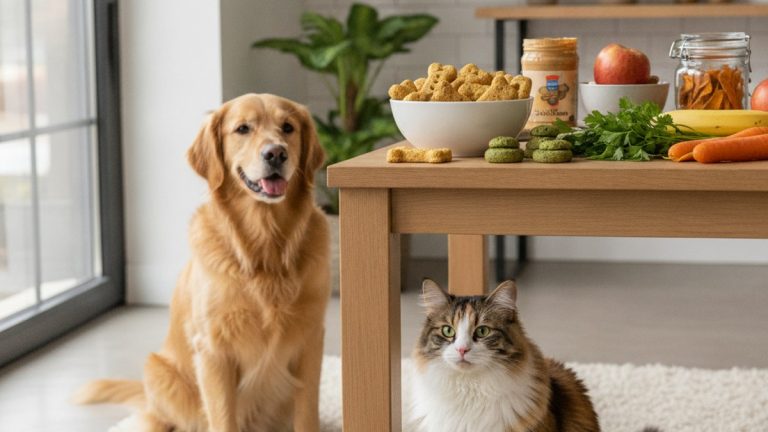
- Safe Snacks: Always opt for commercial snacks formulated specifically for dogs and cats, or for vegetables and fruits safe in moderation (eg carrots, boiled pumpkin, apple without seeds).
- Balanced Diet: Offer a quality feed, balanced for the age and species of your pet. It already contains all the necessary nutrients, and the addition of human food is rarely beneficial and often harmful.
Demystifying Common Myths and Doubts
Many misconceptions can lead to dangerous situations.Let's clarify some.
Common Myths
- “Only a little does not hurt”: The dose depends on the type of food, the toxic substance and the weight of the pet. For xylitol, grapes and dark chocolate, even small amounts can be dangerous.
- “My pet always ate this and nothing ever happened”: Toxicity can be cumulative, and some damage can be silent until the disease is advanced.The absence of immediate symptoms does not mean absence of damage.
- “Induce vomiting at home with salt or hydrogen peroxide resolves”: This can cause further harm, such as salt poisoning or severe gastrointestinal irritation, and delay proper veterinary treatment.
- “Cats don't eat chocolate, so it's not a” problem: Cats are less likely to be interested in sweets due to their taste buds, but if they do eat, chocolate is just as toxic to them as it is to dogs, or even more sensitive depending on the dose and type.
- NATURAL and homemade foods are always better for” pets: While a balanced home-cooked diet can be excellent, it requires formulation by a veterinary nutritionist. Offering human foods randomly or unknowingly can lead to nutritional deficiencies or toxicity.
Frequently Asked Questions
Q: My pet ate a tiny piece of milk chocolate.Should I worry?
A: The risk depends on the type of chocolate (milk chocolate has less theobromine than bitter), the amount and weight of your pet. However, the ideal is always to call your veterinarian for a risk assessment. They can advise if monitoring at home or a visit to the clinic is necessary.
Q: Can I give raw bones to my dog to gnaw?
A: There is a debate among tutors. Raw bones are less likely to shatter than cooked ones, but still pose risks: bacterial contamination (Salmonella, E. coli), tooth damage, choking and gastrointestinal obstruction.If you choose to offer raw bones, do so under strict supervision and with veterinary guidance, choosing bones appropriate for your dog's size.
Q: What if my pet ate something forbidden and has no immediate symptoms?
A: Some symptoms of poisoning can take hours or even days to appear. For example, kidney failure by grapes can take days. Toxicity can be “silent”. It is critical to contact the veterinarian immediately, even if the pet looks fine, so that he can assess the risk and, if necessary, initiate preventive measures.
Q: What treats are safe and recommended for dogs and cats?
A: The safest snacks are those formulated specifically for pets and sold in pet shops or veterinary clinics, as they are balanced and safe. As natural alternatives in moderation, one can offer: carrots (raw for dogs, cooked for cats), boiled pumpkin, apple without seeds and crumb, banana, watermelon without seeds, boiled sweet potato.
A Commitment to Love and Informed Care
The protection of our dogs and cats against dangerous food is an ongoing responsibility and an act of love. The information contained in this article aims to empower you to make conscious decisions and avoid accidents. Remember, your veterinarian is your main ally in this journey.Do not hesitate to consult you whenever you have questions about the feeding of your pet or in case of any suspicious intake.
By keeping your kitchen and pantry safe, educating yourself and acting quickly in emergencies, you ensure that your faithful companions enjoy a long, healthy and happy life by your side.