Natural diet for dogs and cats: nutritional aspects
Explore the benefits of a natural diet for your dogs and cats, learning how to transition safely and ensuring complete and balanced nutrition with the accompaniment of a professional.
The growing search for a more natural life for ourselves inevitably extends to our four-legged companions.Many tutors, motivated by the desire to offer the best, question the suitability of commercial diets and consider the transition to a natural diet.The real problem, however, lies in the complexity inherent in this choice: how to ensure that a homemade diet, whether raw or cooked, is truly balanced and meets all the specific nutritional needs of dogs and cats, without falling into traps of harmful deficiencies or excesses?This article aims to be a deep and useful guide, demystifying the natural diet and providing the foundations for informed and safe decisions.
Understanding Natural Diets: What Does It Really Mean?
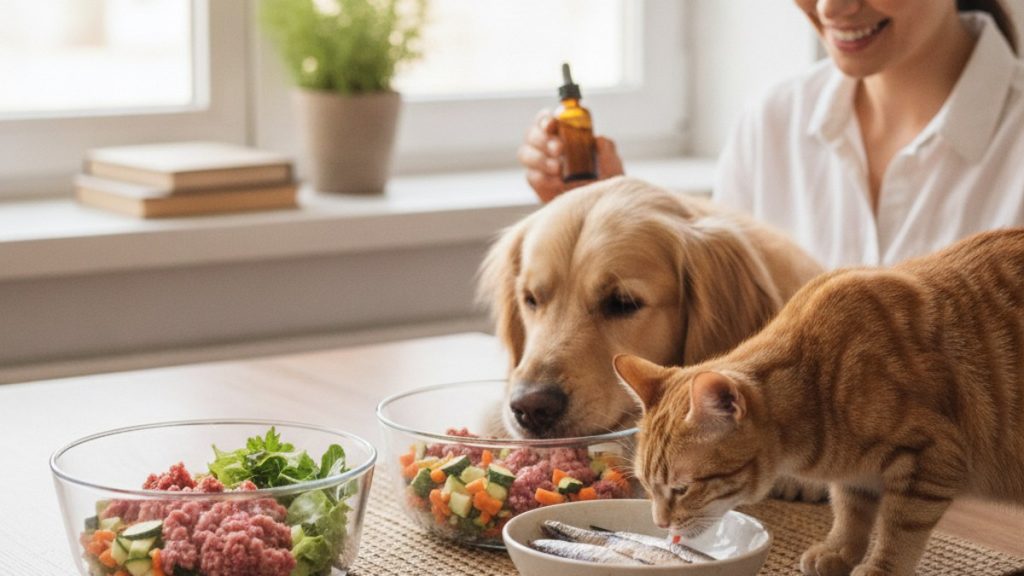
When we talk about “dieta natural” for pets, we usually refer to a food plan formulated with fresh, minimally processed ingredients, prepared at home. Far from being just “pot food”, as far as possible and with adaptations to the home environment, the types of foods that would be consumed by these animals in a wild environment, or at least move away from industrialized ultra-processed foods.The two main strands are the BARF Diet (Biologically Appropriate Raw Food or Bones And Raw Food) and the Homemade Cooked Diet.
The appeal is understandable: tutors seek greater control over the quality and provenance of ingredients, avoid artificial additives, dyes, preservatives and low-quality by-products often found in commercial feed. Many report improvements in the coat, energy, digestion and overall health of their pets. However, it is critical to understand that the success and safety of a natural diet depend entirely on its nutritional balance. A poorly formulated natural diet can be more harmful than a good quality commercial feed.
Essential Nutritional Pillars for Dogs and Cats on Natural Diets
For a natural diet to be complete, it must provide all macronutrients (proteins, fats, carbohydrates) and micronutrients (vitamins, minerals) in the correct proportions.The needs vary significantly between dogs and cats, and even between individuals of the same species, depending on age, activity level, health condition and breed.
Proteins: The Building Blocks
- Dogs: They need a good amount of high quality protein for muscle maintenance, tissues and various metabolic functions.Sources include lean meats (chicken, beef, pork, fish), eggs and some organs.
- Cats: They are obligate carnivores and rely on animal proteins in higher amounts than dogs. Taurine, an essential amino acid for cats, is found exclusively in animal tissues and is vital for heart and visual health.
Fats: Energy and Essential Nutrition
- Essential for concentrated energy, absorption of fat-soluble vitamins (A, D, E, K) and for skin and coat health.
- Sources include animal fats, oils like olive oil, coconut oil, fish oil (rich in omega-3).
- The balance between omega-3 and omega-6 fatty acids is crucial for anti-inflammatory health.
Carbohydrates: Source of Energy (and Complexity)
- Dogs: They can digest and use carbohydrates effectively as an energy source, although they are not essential in large quantities.Sources include brown rice, sweet potatoes, pumpkin, various vegetables.The fiber present in carbohydrates is also important for digestive health.
- Cats: They have a limited ability to digest and utilize carbohydrates.Their diet should be very low in carbohydrates, focusing mainly on animal proteins and fats.
Vitamins and Minerals: The Critical Micronutrients
- The complexity lies in ensuring the correct ratio of all micronutrients.
- Calcium and Phosphorus: The optimal balance between these two minerals is vital for bone health.Home-made diets that use only muscle meat without ground bones or calcium supplements can lead to serious deficiencies.
- Vitamins of B Complex: Essential for energy metabolism.Present in meats, eggs and viscera.
- Vitamin D: Important for the absorption of calcium.Present in fatty fish and egg yolk.
- Others: Potassium, sodium, magnesium, iron, zinc, copper, manganese, selenium, iodine all play specific and essential roles.
Water: The Essence of Life
Natural diets, because they have a higher moisture content, contribute to water intake, which is particularly beneficial for cats, prone to kidney and urinary problems.
The Two Main Paths: Raw Diet (BARF) vs. Home Cooked Diet
The choice between raw and cooked diet is one of the first and most important decision points, each with its own merits and challenges.
BARF Diet (Biologically Appropriate Raw Food)
It is based on the premise that dogs and cats should eat what their wild ancestors ate: raw meat (muscle, organs, bones), vegetables and fruits.It is designed to be rich in protein, fats, vitamins and minerals in its most natural form, without the denaturation that can occur with cooking.
- Advantages:
- High digestibility and bioavailability of nutrients.
- Improves coat, energy and body condition.
- Reduction in stool volume and odor.
- Improved dental health (especially with appropriate recreational bones).
- Challenges and Risks:
- Bacterial Contamination: The main risk is the presence of bacteria such as Salmonella, E. coli and Listeria in raw meats, which can affect both the pet and the humans who handle the food.
- Nutritional Imbalance: If not carefully formulated by a specialist, it can lead to severe deficiencies, especially calcium/phosphorus.
- Choking/Perforation Risk: Whole or unsuitable bones, especially cooked (which become brittle), can cause choking, internal injury, or impaction. Raw fleshy bones are generally safer, but the size and type should be appropriate for the animal.
- Parasites: Proper freezing is crucial for killing parasites in raw meats.
Homemade Cooked Diet
It involves preparing fresh ingredients (meat, vegetables, grains) through cooking (boiling, baking, steaming), which eliminates most concerns about bacterial contamination. This diet is often more palatable for some pets and more comfortable for owners who care about handling raw meat.
- Advantages:
- Lower risk of bacterial contamination for pets and humans.
- Greater acceptance for pets with demanding palates or specific health problems.
- Perception of greater safety and ease of handling for some tutors.
- Challenges and Risks:
- Nutrient Loss: Cooking can degrade some vitamins (especially those of the B complex and vitamin C) and alter the bioavailability of minerals. This requires an even more precise formulation and often greater supplementation.
- Nutritional Imbalance: Just like at BARF, the lack of a professional formulation leads to deficiencies. It is a common mistake to think that “any food from cooked” people will do.
- Preparation and Time: It takes daily or weekly time to prepare food.
- Storage: Requires adequate refrigerated or frozen storage.
How to Start and Maintain a Safe and Balanced Natural Diet: A Practical Guide
Transitioning to a natural diet should be a well-planned and gradual process, never an impulsive decision.
1. Consult an Animal Nutrition Specialist
This is the most critical step. A veterinary nutritionist is the only professional qualified to formulate a complete and balanced natural diet for your pet. He will consider the species, age, weight, activity level, health history, allergies and food sensitivities of your animal. A recipe “generic” or found on the internet can be dangerous.
2. Customized and Detailed Formulation
The veterinarian's prescription nutrologist should specify:
- The exact types and proportions of meats (muscle, organs), vegetables, fruits, bones (if BARF), grains (if cooked), oils.
- Precise preparation instructions (grinding, cooking, etc.).
- The dosage and type of vitamin and mineral supplements required (Calcium/Phosphorus, Taurine for cats, etc.).
- The daily portion for your pet.
3. Selection of Quality and Safe Ingredients
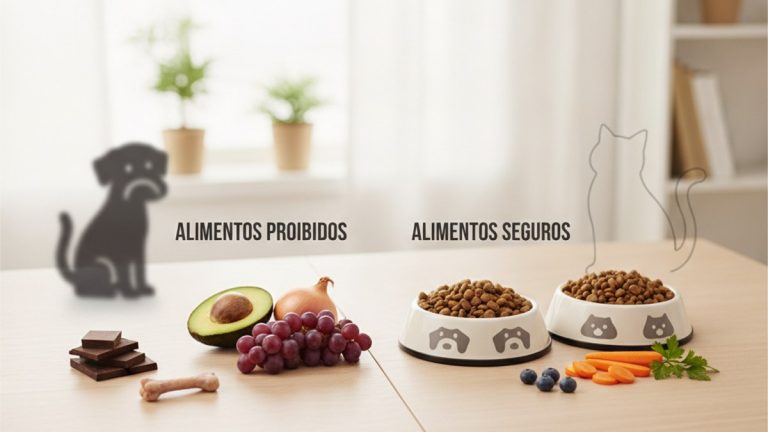
Opt for fresh ingredients, good origin, suitable for human consumption. Meats should be from reliable suppliers. Vegetables and fruits well washed. Avoid seasonings, onions, garlic, grapes, chocolate, avocado, sweeteners (xylitol), which are toxic to pets.
4. Strict Preparation and Hygiene
- For BARF: Use surfaces, utensils and bowls unique to the preparation of raw meat.Wash your hands thoroughly. Freeze raw meat for at least 72 hours to minimize the risk of parasites.Serve and remove what is not consumed in 30 minutes.
- For Cooked Diet: Cook food thoroughly. Separate the portioned foods into airtight jars and freeze what you do not consume in 2-3 days.
5. Gradual Transition
Introduce the new diet slowly, over 7 to 14 days, mixing small amounts with the current food and progressively increasing the proportion of the natural diet.
6. Continuous Monitoring and Reassessments
Observe your pet carefully in the first months and continuously:
- What to observe: Energy level, weight (neither gaining nor losing excessively), coat condition, stool quality (color, consistency, frequency), feeding behavior, signs of digestive discomfort.
- Warning signs: Unexplained weight loss, chronic diarrhea, frequent vomiting, lethargy, skin or coat problems, changes in appetite. In these cases, contact the veterinarian immediately.
- Reassessments: Schedule periodic consultations with the veterinarian to adjust the diet as the pet's needs change throughout life. Blood tests may be needed to check the balance of vitamins and minerals.
Checklist for Tutors Responsible for Natural Diets
Consultation with veterinarian experienced nutrologist in natural diets held?
Personalized and detailed recipe in hand, with all ingredients and supplements specified?
Established and reliable sources of fresh, safe and quality ingredients?
Strict hygiene plan for food preparation and storage implemented?
Acquired necessary supplements, and dosage and form of administration understood?
Schedule for periodic re-evaluations and follow-up examinations with the veterinarian?
Daily monitoring of ongoing pet health, weight, stool and behavior?
Understanding the time and financial costs associated with maintaining the diet?
Common Mistakes and Honest Trade-offs
Adopting a natural diet for pets is a serious commitment, and it is important to be aware of the challenges and trade-offs.
Common Mistakes to Avoid:
- “Internet recipe”: The biggest trap is to follow generic recipes or tips from lay people without professional evaluation for your pet.
- Monodiets: Feeding the pet only one type of meat and one or two vegetables leads to serious deficiencies.
- Excess/Lack of Bones: In the BARF diet, excess bones can cause constipation and mineral imbalances; lack of them causes calcium deficiency.
- Forget Supplements: Even the most varied diets may need specific supplementation, especially in cats (taurine) and in calcium/phosphorus balance.
- Inadequate Hygiene: Underestimating the risk of bacterial contamination.
- Abrupt Transition: Changing the diet at once can cause serious gastrointestinal problems.
- Ignore Warning Signs: Thinking that health problems are “normal” adaptation without seeking veterinary help.
Honest Trade-offs:
- Time and Effort: Preparing a natural diet is significantly more time consuming than opening a pack of feed.It requires discipline and daily or weekly dedication.
- Cost: Fresh, quality ingredients, along with supplements and consultations with the nutrologist, can make the natural diet more expensive than premium commercial feed.
- Risk: Although controllable, the risks of bacterial contamination (BARF) or nutritional deficiencies (both, if poorly formulated) are real and need to be actively managed.
- Logistics: Travel, pet hosting, and the need for freezer space for storage are important considerations.
- Peace of Spirit vs. Anxiety: For some, total control over food brings immense satisfaction.For others, complexity and constant responsibility can generate anxiety and stress.It is critical to be honest with yourself about your ability to maintain the necessary rigor.
In short, the natural diet for dogs and cats, when formulated and supervised by a veterinary nutritionist, prepared with hygiene and quality ingredients, can be an excellent option for the health and well-being of your pet. However, it is not a path to be followed without knowledge, dedication and an unwavering commitment to nutritional excellence and food safety. The health of your pet is your primary responsibility, and this requires a solid partnership with qualified professionals.