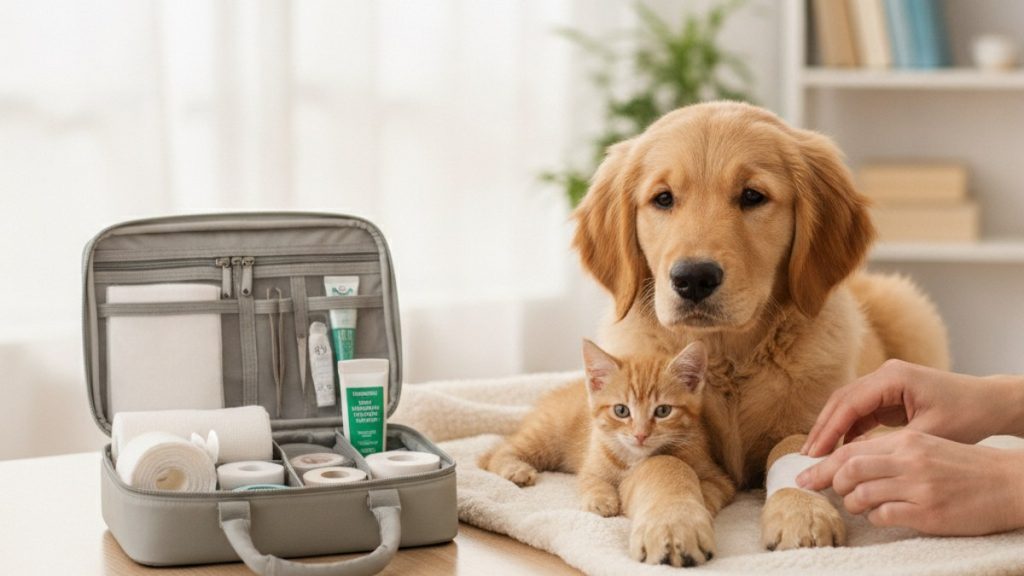
First aid for dogs and cats: basic procedures
Preparing for emergencies and knowing basic first aid can make all the difference in your pet's life, ensuring a quick and effective response at critical times.
The Moment of Truth: Why Being Ready Saves Lives Pet
No one expects your dog or cat to have an accident, but the reality is that unforeseen events happen. An unexpected fall, a sudden choking, a foreign object ingested or a cut during play ^ SCENeries like these require a quick and effective response from the tutor. This is where knowledge about first aid becomes a game changer. Far from replacing the attention of a veterinarian, basic emergency procedures are a crucial bridge between the moment of the incident and arrival at the office or clinic.
Many tutors feel powerless and panic in these situations, which is natural. However, preparation and calm can literally save a life. Knowing how to stop bleeding, assist a choking animal or identify signs of shock can prevent serious complications, reduce the pain of the pet and even be decisive for full recovery.It is not about having a degree in veterinary medicine, but rather having a set of tools and practical knowledge that allow you to act confidently in the most critical minutes.
The goal of first aid in animals is not to cure the condition, but to stabilize the patient, minimize suffering and prevent the condition from worsening while transportation to professional care is provided. It is a temporary action, but invaluable. The absence of an adequate response can turn a controllable problem into a fatal emergency. Therefore, understand what to do &, just as important, what not to do & what not to do is an investment in the safety and well-being of your four-legged companion.
The Essential Kit and the Art of Quick Assessment in Critical Scenarios
Preparation begins with the assembly of a suitable first aid kit, which must be accessible and periodically reviewed.There is no room for improvisation when every second counts. Include items such as:
- Bandages and sterile gauze: To cover wounds and control bleeding.
- Medical adhesive tape or tape: To attach bandages.
- Mild antiseptic (diluted chlorhexidine or saline): Avoid pure alcohol, iodine, or hydrogen peroxide in high concentrations, as they can irritate or damage tissues.
- Disposable gloves: For your safety and hygiene.
- Tweezers: To remove small objects, such as barbs or thorns.
- Blunt-tipped scissors: To cut bandages or hair around wounds.
- Digital rectal thermometer: The normal temperature of dogs and cats varies between 37.5°C and 39.3°C.
- Fabric gag or muzzle: Even the most docile pet can bite for pain or fear. Have one of proper size.
- Blanket or clean towel: To warm the animal, immobilize it or improvise a stretcher.
- Syringe without needle or dropper: To administer liquids or solutions if directed by the veterinarian.
- Emergency contact list: Your trusted veterinarian, 24-hour clinics and poison control centers.
With the kit in hand, the next step is the quick evaluation of the animal. The priority is its safety. An injured animal can react unpredictably. Approach it calmly, speak gently and, if necessary and possible, put the gag before any manipulation.
Then check the vital signs, following the order ABC (Airway, Breathing, Circulation):
- Airways (Airway): Is the animal breathing? Is there a visible obstruction in the mouth or throat.
- Breathing (Breathing): Count breaths per minute (usually 15 to 30 at rest).
- Circulation (Circulation): Check the pulse (on the inner thigh) and the color of the mucous membranes (gums). Pink gums indicate good circulation; pale, bluish or very red can indicate serious problems. The time of capillary filling (press the gum and note how long it takes for the color to return) should be up to 2 seconds.
Look for visible bleeding, swelling, bone deformities, signs of severe pain (crying, aggression, excessive licking of an area), or any change in behavior. This initial evaluation should take no more than one or two minutes, providing vital information for the next steps and to pass on to the veterinarian.
Hands to Work: Guiding You Through the Most Common Emergencies
Knowing the procedures for common emergencies can be decisive. Remember: these are first aid, not definitive treatment.
- Bleeding (Bleeding):
In case of external bleeding, apply direct and firm pressure on the wound with a sterile gauze or a clean cloth. If possible, raise the part of the body that bleeds above the level of the heart (with care not to cause more pain or injury). Keep the pressure for 5 to 10 minutes without lifting the gauze to check. If the blood soaks the gauze, add more hard layers on top without removing the previous ones. Tourniquets (torniquets) are solutions of last resort and should only be applied for short periods (maximum 15-20 minutes) and in cases of uncontrollable bleeding they can cause complex abdominal damage to the extremities to the extremities.
- Gagging:
If the animal is coughing, choking or trying to vomit, check if you can see the object in the mouth. Carefully open your mouth and try to remove the object with blunt-tipped tweezers, if it is visible and accessible. Be careful not to push the object further. If it is not possible, and the animal is conscious, position yourself behind it and perform the adapted Heimlich maneuver: hug the animal from behind, position your hands (closed like a fist) in the soft region just below the last ribs (diaphragm region) and perform quick compressions and give firm to the animal and forward, in it can be firm, in animals-up and can come to the animal-up.
- Fractures and Traumas:
Signs include lameness, severe pain, swelling, deformity or inability to use the limb. The goal is to immobilize the affected area and transport the animal with as little movement as possible. Avoid handling it excessively. If you need a temporary splint, use rolled newspapers, cardboard or something rigid, fixing with bandages or adhesive tape, covering a joint above and one below the fracture. The most important thing is to prevent the animal from moving and aggravating the injury during transportation. Use a board or a firm blanket as a stretcher to move the pet.
- Intoxications:
Vomiting, diarrhea, tremors, seizures, lethargy or hyperexcitation are common signs. If you suspect intoxication (by ingestion of toxic plants, cleaning products, human medications, inappropriate foods), identify the substance if possible, and immediately call the veterinarian. He will guide whether or not to induce vomiting, as in some cases (for example, corrosive substances or petroleum products) this can cause further damage to the esophagus on the back. Do not try “curas homemade” or administer antidotes without professional guidance. Time is crucial.
- Burns:
They can be thermal or chemical. For thermal burns (hot water, fire), cool the area immediately with cold running water (not cold) for 10-15 minutes. Do not apply ice directly, nor butter, oils or ointments without veterinary guidance. For chemical burns, wash the area abundantly with running water for at least 20 minutes, protecting yourself with gloves. Cover the clean area with wet sterile gauze and seek the veterinarian.
After the First Rescue: Transporting the Pet and the Veterinary Doctor's Emergency
Once basic first aid has been administered, the next and most crucial step is the safe and immediate transport of your pet to a veterinary clinic.First aid is a palliative measure; professional evaluation and treatment are indispensable to ensure full recovery and to identify injuries or internal problems that are not visible to the naked eye.There is no room for the “let us wait to see” an emergency. Even if the animal seems to improve, only a veterinarian can give the correct diagnosis and initiate appropriate treatment.
For transportation, the safety of the animal and the guardian is paramount. If the animal is injured or suspected of fracturing, use an improvised stretcher (a board, firm blanket or piece of rigid cardboard) to move it, minimizing the movement of the spine or injured limbs. Smaller animals can be transported in rigid transport boxes, ensuring that there are no excessive swings. If the pet is conscious and cooperative, a guide and a seat belt adapted to the car can be useful to prevent it from moving too much and aggravating the situation.
It is vital to always have in hand the contacts of your trusted veterinarian and clinics 24 hours in your region. When calling, describe the situation clearly and concisely: what happened, the signs that the animal presents and what first aid was performed. This allows the veterinary team to prepare for your arrival and can guide on the best way. In Brazil, emergency veterinary care can be found in veterinary clinics and hospitals, which are regulated by regional veterinary medicine councils. There is no legal first aid“ expertise for the tutor, but rather a practical knowledge that aims to stabilize until professional care.
Finally, the best “first aid” is prevention. Maintaining a safe environment, free of small objects that can be swallowed, toxic products and poisonous plants, is essential. Leash and guide rides, constant supervision and regular visits to the veterinarian for check-ups, vaccination and deworming are the most effective attitudes to ensure the health and longevity of your pet, reducing the likelihood of accidents and emergencies. Information and preparation are the best tools a tutor can have.