Tennis balls for dogs: risk analysis and safe use guidelines
The scene is classic: a dog running happily behind a tennis ball, bringing it back with enthusiasm. It is a ubiquitous toy in parks, backyards and homes, loved for its bouncing ability, its familiar texture and its low cost. However, what seems to be a harmless item and source of joy can in reality present a number of significant risks to the health and safety of your canine companion.Many tutors, at best, offer these balls without full knowledge of the potential dangers they hide. This article aims to unravel these risks and provide a complete guide to a safe use, helping you to make informed decisions to the fun of your pet.
The Attractiveness of Tennis Balls and Their Hidden Dangers
Tennis balls are popular for a number of reasons: they are easily found, relatively inexpensive, and their texture and bounce are irresistible to many dogs.However, the composition and design of these balls, originally made for human sport, are not ideal for prolonged or unsupervised canine use. The risks can range from chronic dental problems to acute veterinary emergencies.
Dental Abrasion: The Silent Enemy of Enamel
One of the most underrated dangers of tennis balls is dental abrasion.The felt that coats the ball, especially when mixed with sand, dirt and saliva, acts as sandpaper on the dog's teeth.With time and frequent use, this constant friction can wear away the tooth enamel, the outer protective layer of the tooth. Once the enamel wears out, the dentin (underlying layer) and even the pulp (where the nerves and blood vessels are) are exposed. This can lead to:
- Pain and sensitivity: Exposed teeth are painful, especially when eating or drinking something cold/hot.
- Infections: Exposed pulp is a gateway for bacteria, which can cause abscesses and serious infections that can spread to other parts of the body.
- Dental fractures: Weakened teeth are more prone to fractures.
- Extractions: In advanced cases, the only solution may be the extraction of the affected tooth.
Dogs that chew intensely or carry the ball in their mouth for long periods are the most susceptible. Note the presence of flattened, darkened or furrowed teeth as signs of wear.
Risk of Choking and Gastrointestinal Obstruction
The size and durability of standard tennis balls are not universal for all dogs.A large dog can easily swallow a regular-sized ball, resulting in:
- Asphyxia: The ball can get stuck in the throat, blocking the airways.This is a medical emergency that requires immediate intervention.
- Esophageal obstruction: The ball can get stuck in the esophagus, preventing the passage of food and water and causing great discomfort and risk of tissue necrosis.
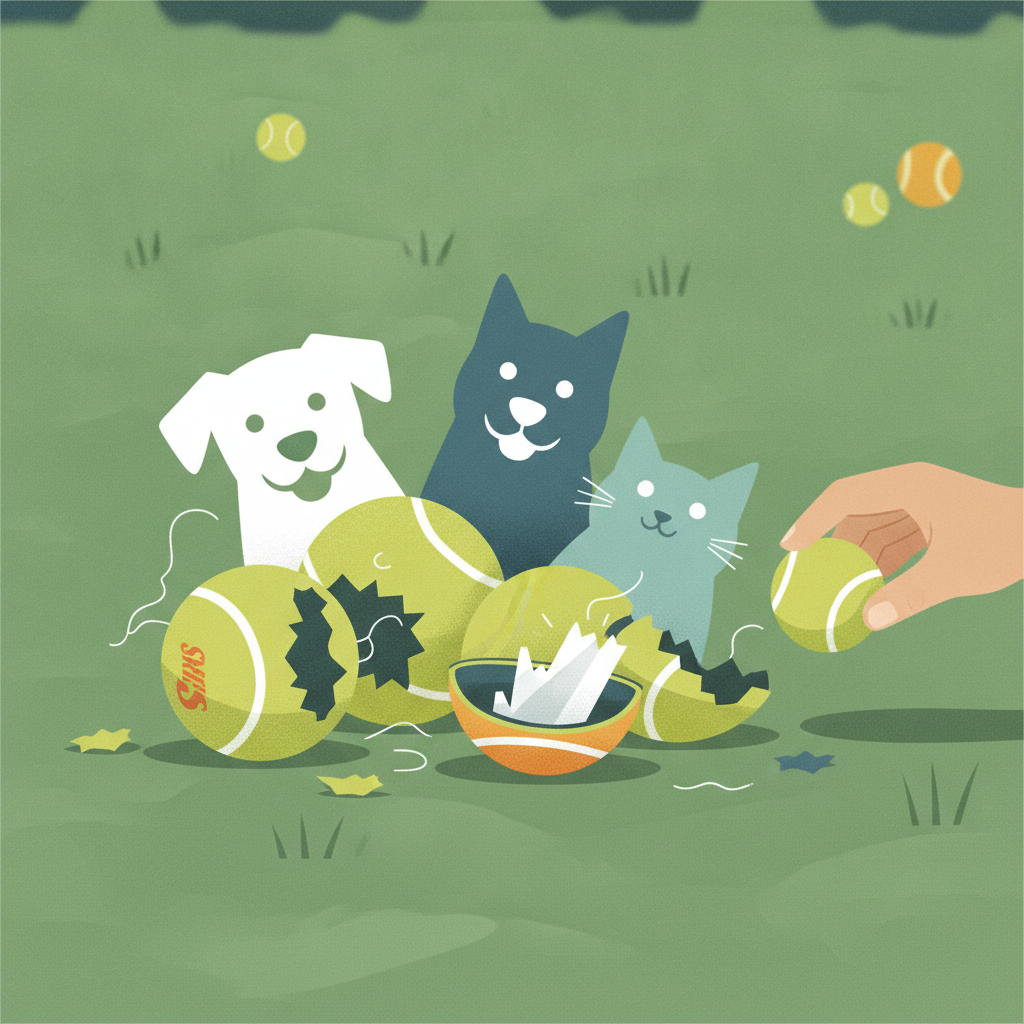
In addition to the risk of swallowing the whole ball, dogs with a strong chewing instinct can tear and ingest pieces of felt or inner rubber.These fragments are not digestible and can cause:
- Intestinal obstruction: The pieces can build up and block the intestine, preventing the passage of stool and causing vomiting, abdominal pain and lethargy.
- Gastrointestinal irritation: Even if they do not cause a complete obstruction, the fragments can irritate the digestive tract, leading to gastroenteritis.
Chemical Components and Unwanted Materials
Ordinary tennis balls are not manufactured for the purpose of being chewed or ingested.They may contain:
- Glues and paints: Used in manufacturing, they can be toxic if ingested in significant amounts.
- Lead and phthalates: Some older or dubious-made toys may contain these elements. Lead is a neurotoxic heavy metal, and phthalates are endocrine disruptors, both of which are dangerous to long-term health.
- Low quality rubber: It can easily fragment and lack the resilience needed to resist canine chewing.
Continuous exposure to these components, especially if the dog has a habit of destroying and ingesting parts of the toy, is a real concern.
Choice Criteria: No Every Ball Is Equal
For the tutor who wants to offer balls to your dog, it is essential to understand that there is a crucial difference between “bolinhas de tennis” and “bolinhas para dogs”.
Tennis Polka Dots vs. Dog Dots
The distinction is simple:
Tennis balls
they are made for the sport of tennis.
Dumplings for dogs
they are toys designed specifically for safety and durability in canine use. Dog balls of reputable brands are usually manufactured with non-toxic and durable materials, designed to resist chewing and reduce the risk of dental abrasion.
Proper Size: A Matter of Life or Death
This is the most critical safety criterion.The ball needs to have a size that:
- Cannot be swallowed: The general rule is that the ball should be large enough so that the dog can not fully put it in the mouth and swallow it at once.
- Be comfortable to carry: Although it should not be too small, it should also not be so large that it forces the dog to open its jaw in an uncomfortable way or that it causes injury.
- Grow with the dog: Puppies will need smaller balls, but these should be replaced with larger sizes as the dog grows.
For dogs of large breeds such as Labradors, Golden Retrievers or German Shepherds, standard tennis balls (6.7 cm in diameter) are dangerously small.There are balls for dogs on the market with larger diameters, of 7.5 cm, 8.5 cm or even more, designed specifically for large and giant breeds.
Material and Durability: Less Abrasion, More Resistance
When choosing a ball for your dog, consider:
- Felt (in dog balls): Some dog balls mimic the felt of tennis balls, but are made with less abrasive materials.Always check the product description to ensure it is safe for teething.
- Solid Rubber: Balls made of high-quality natural or synthetic rubber are excellent alternatives.They are durable, easy to clean and generally less abrasive than felt.Brands like Kong and Chuckit! are known for the quality of their rubber balls.
- Free of Harmful Components: Look for labels that ensure the ball is “non-toxic”, “BPA-free”, “without phthalates” or “without lead”.
Visual Inspection and Smell
Before buying and before each use, inspect the ball:
- Smell: Avoid balls with a strong chemical smell, which can indicate the presence of toxic substances.
- Integrity: Check for cracks, tears or loose felt. A damaged ball is a higher risk of ingestion.
Safe Use and Supervision: Minimizing Risk
Even with the choice of the ball “perfeita”, safety largely depends on how it is used. The supervision and education of the tutor is irreplaceable.
Constant and Active Supervision
Never leave your dog alone with a tennis ball (or similar), especially if he is an avid chewer. The risk of him destroying it and ingesting pieces, or swallowing it whole, is high. The play with the ball should be an interactive activity, such as the game of “pegar and bring”, where you are actively involved.
Toy vs. Chew Toy
A ball, even one designed for dogs, should be seen as a
interactive play toy
, not as one
chew toy
if your dog tends to chew on the ball instead of just picking it up, remove it after play and offer an appropriate and safe chew toy for him.
Regular Inspection and Disposal
Make a habit of inspecting the ball
before and after
from each play session. Look for:
- Cracks or dents in the rubber.
- Loose or torn felt.
- Missing pieces.
- Dirt or sand embedded in the felt.
Dispose of any ball that shows signs of significant damage or wear immediately. A worn ball is a high risk of fragmentation and ingestion.
Ball Hygiene
Dog balls can accumulate saliva, dirt, bacteria and even parasites.Wash them regularly with water and soap neutral for pets, rinsing well.Most rubber balls can be washed in the dishwasher (on the top shelf) or simply with soap and water.
Basic Command Training
Commands like“last” and“larga” are crucial for safety.They allow you to retrieve your dog's ball at any time, whether to inspect it, to end the game or in an emergency.
Safer Alternatives and When to Consider them
If you are concerned about the risks of tennis balls, or if your dog is a very potent chewer, there are many excellent and safe alternatives on the market.
Solid and Durable Rubber Balls
This is the most recommended alternative. Balls made of high quality natural or synthetic rubber, such as those of the brand Kong (extreme or Classic lines) or Chuckit!, are designed to be extremely durable, bouncy and safe for teething. They come in various sizes and resistances, often with a hole for snacks, adding an element of mental enrichment.
- Advantages: Highly durable, non-abrasive, easy to clean, float (some models), many are non-toxic.
- Disadvantages: Generally more expensive than regular tennis balls, they can be heavier.
Balls Dispenser-Petisks
They are balls with openings where you can insert snacks or feed. As the dog plays with the ball, the snacks fall, encouraging movement and reasoning. They are excellent for mental and physical enrichment.
- Advantages: They stimulate the brain, promote physical activity, fight boredom.
- Disadvantages: They are not ideal for intense throwing games, they can be noisy.
Dog Specific Chewing Toys
If the goal is to allow the dog to chew, offer chew toys for this. There are options such as:
- Nylabone (and similar): Durable nylon toys with different hardness levels for different types of chewers.
- Natural bones and horns (with caution): They offer a satisfying chewing experience, but should be supervised and chosen carefully to avoid dental fractures or choking hazards.
- Edible chewable sticks: Make sure they are of good quality, digestible and suitable for your dog's size.
Strings and Frisbees (with restrictions)
Rope toys can be great for pulling and interacting, but the dog should never be left alone with them as they can shred and be ingested, causing obstructions.Frisbees for dogs (not the hard plastic ones for humans) are excellent for throwing and catching, but should also be used under supervision to prevent them from being chewed to pieces.
Frequently Asked Questions
Here are some common questions that tutors have about dog tennis balls:
Q: My dog loves tennis balls. Do I need to get them out of him immediately?
A: Not necessarily, but it is crucial to understand the risks and apply safety guidelines.If your dog uses conventional tennis balls, start supervising
strictly
and consider transitioning to dog-specific balls, safer for teething and less likely to disintegrate
supervision
and a
inspection
ball constant.
Q: How do I know if the ball is wearing my dog's teeth?
A: Signs of tooth wear include teeth that look like
flattened
on the tip or chewing surface, or
visible furrows
, or
darkening
from the central part of the tooth (indicating exposure of the dentin or pulp). The best way to confirm is through a veterinary evaluation during a regular check-up. If suspected, the use of balls with abrasive felt should be reduced or stopped.
Q: Are there any “non abrasive” tennis balls?
A: Yes. Pet toy brands often offer balls that resemble those in sneakers but are manufactured with a felt
less abrasive
or are made of
pure rubber
no felt. These are designed to be safer for canine dentition.Always look for safety seals and product descriptions that ensure dental protection and the absence of toxins.
Q: What is the ideal size of a ball for my dog?
A: The ideal size is the one your dog
can't swallow completely
, but that too
not so small
it can be stuck in the throat or get stuck in the esophagus.It should be able to hold it comfortably in the mouth, but it should not fit easily in the back of the throat. For large dogs, balls of diameter larger than those of standard sneakers (more than 7 cm) are essential. If you have questions, consult a veterinarian or a professional pets.
Tennis balls, although fun, are not toys without risk for dogs. As responsible guardians, our role is to ensure the safety and well-being of our pets, which includes making informed choices about the toys we offer. By understanding the dangers, opt for safe alternatives, supervise play and maintain toy hygiene, you can provide moments of joy and exercise without compromising the health of your canine companion. Always remember that prevention is the best form of care.In case of any sign of dental problem or foreign body ingestion, seek immediate attention of a veterinarian.