Oral health of dogs and cats: prevention and care
Maintaining the oral health of dogs and cats is critical to prevent disease and ensure a long and happy life to our companions, requiring daily attention and veterinary monitoring.
The Silent Enemy in the Hairy Mouth: Understanding Periodontal Disease
The bad halite of dogs and cats and, for many owners, a minor detail, perhaps even a trace of the personality of the pet. However, it is often the first sign of a silent and progressive threat: periodontal disease. Far from being just an olfactory discomfort, this condition is the most common disease in pets, affecting about 80% of dogs and 70% of adult cats. Their progression, if not treated, goes far beyond the mouth, compromising the overall health of the animal.
Everything begins with the formation of plaque. Just like in humans, this is a colorless and sticky film of bacteria that constantly adheres to the surface of the teeth.If not removed regularly, the plaque mineralizes due to combination with salts present in saliva, turning into tartar 'a yellowish or brownish, hard and porous layer that attaches firmly to the tooth, especially close to the gum. Tartar, in turn, offers an even more favorable surface for the accumulation of more plaque, creating a vicious cycle.
The constant presence of bacteria and their by-products irritates the gums, leading to inflammation, a condition known as gingivitis. At this early stage, the gums can become reddened, swollen and bleed easily. Gingivitis is reversible with good oral hygiene and professional cleaning. However, if the condition persists, the bacteria begin to destroy the tissues that support the tooth: the periodontal ligaments and the alveolar bone. This is periodontitis, a more advanced and irreversible phase of periodontal disease.
Teeth can lose their fixation, becoming mobile and eventually falling. Pain is a constant companion, although animals instinctively hide it. This means that a pet may be suffering from intense pain when chewing, but continue to eat normally, only subtly altering its behavior.In addition to local pain, bacteria present in the mouth can enter the bloodstream and travel to vital organs such as the heart, kidneys and liver, causing infections and systematic damage that decrease the quality of life and longevity of the animal. Understanding this process is the first step to effective prevention.
The Pillar of Prevention: Daily Brushing and Its Allies
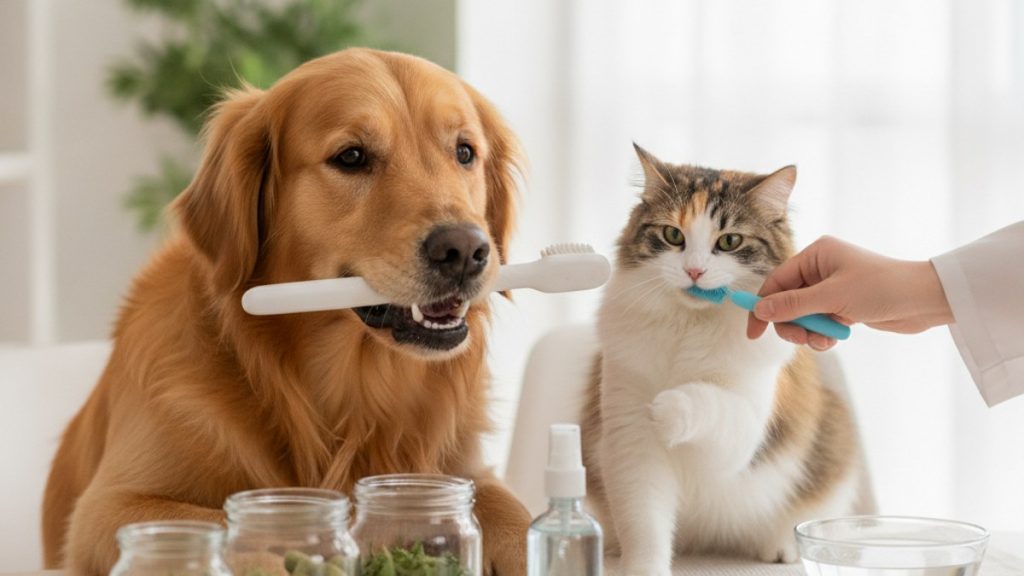
To combat periodontal disease, prevention is the most powerful tool, and the core of this prevention is daily tooth brushing.No other isolated measure is as effective at removing plaque before it mineralizes into tartar. The idea of brushing an animal's teeth may seem challenging at first, but with patience and the right tools, it is a fully feasible practice for most pets.
To start, use specific toothbrushes for pets, which can be finger or with small head and soft bristles. Never use human toothpaste, because it contains fluoride and other toxic ingredients if ingested. Opt for enzymatic pastes developed for dogs and cats, with attractive flavors such as chicken or meat. Start the process gradually, accustoming the animal to the touch in the mouth and the taste of the paste. First, offer a little of the paste to lick. Then use your finger to rub the gum and teeth for a few seconds. As the pet adapts, introduce the pet into the ideal plaque and often to be used.
Dry foods, formulated specifically for dental health, can help reduce plaque build-up through their special texture and shape, which promote a gentle mechanical scraping action during chewing. They do not replace brushing, but are a useful complement. Stay tuned for products that have the seal of approval of recognized veterinary organs, which attest to their proven effectiveness in clinical studies.The idea that dry“ cleans teeth by themselves is a dangerous myth; most diets lack this ability.
As for the snacks and dental toys, the selection should be judicious.There are chewable snacks that contain agents that help inhibit bacterial growth or have a texture that aids in plaque removal.But beware: many toys and hard bones (such as cooked natural bones, ox hooves, twigs or deer horns) can be dangerous, causing severe dental fractures that require painful and expensive veterinary intervention.A simple test is to try to indent the item with the nail; if you can't, it's probably too hard for your pet's teeth.
Solutions to add water to drinking or mouthwashes for pets can offer a secondary aid, but never replace the mechanical action of brushing. They usually contain substances that help reduce bacteria or neutralize odors, but their effectiveness is limited and varies between products. They are best suited for animals that do not really tolerate brushing, or as a supplement for pets that already have a good hygiene routine.
When Prevention Is Not Enough: The Role of Veterinary and Professional Procedures
Despite all the preventive efforts at home, the accumulation of tartar can become inevitable for many animals. When this happens, domestic brushing is no longer enough to remove it, and professional intervention becomes indispensable.
Routine veterinary consultations are important moments for an assessment of oral health. During the general physical examination, the veterinarian will inspect the mouth of your pet, looking for signs of gingivitis, tartar, fractured teeth, injuries or other abnormalities. He will be able to estimate the severity of the disease and recommend dental prophylaxis, popularly known as “tooth cleaning”.
Professional dental prophylaxis in dogs and cats is a procedure that requires general anesthesia. This is an innegotiable condition for several reasons.First, it allows the veterinarian and his team to perform a complete and detailed examination of each tooth and gum, including periodontal probing to check the depth of bags and dental radiographs to assess the health of the root and underlying bone, which would not be possible in an awake animal.Second, it ensures the safety of the animal and the team, avoiding sudden movements and stress.Third, it allows the use of ultrasound and manual instruments to remove the tartar from the over and under the gum line, followed by the over-line and painless adheses to the over the ging.
During the procedure, if severely compromised, fractured teeth are identified, with reabsorption injuries (common in cats) or infections, extraction may be necessary to relieve pain and eliminate the infectious focus. These procedures are performed with advanced surgical techniques and the pet receives pain medication and antibiotics when indicated. Prophylaxis is recommended for animals that already have some degree of tartar or gingivitis. In some cases, it can be done annually or every two years, depending on the predisposition of the animal and the effectiveness of domestic hygiene.
In Brazil, prophylaxis and dental surgeries are performed exclusively by the veterinary physician.These procedures should be performed in veterinary clinics and hospitals that have adequate infrastructure, including inhalational anesthesia equipment with full monitoring (pulsoximetry, capnography, blood pressure, electrocardiogram), dental ultrasound devices, and ideally dental radiography.It is crucial to choose an experienced professional and a clinic that prioritizes anesthesia safety, with mandatory pre-anesthetics to evaluate the overall health of the pet before the procedure.The quality of the treatment, therefore, the clinical costs offered and the conversion between the clinical and the protocol can be very different.
Myths, Truths, and Conscious Choices for Oral Health
The oral health of dogs and cats is a theme surrounded by myths that can lead to neglect and, consequently, unnecessary suffering for animals. One of the biggest misconceptions is to believe that the bad halite and “normal” for pets. As already explored, the bad halite is almost always a sign of periodontal disease or other underlying health problem, and should never be ignored.
Another common myth is that “dar bone or hard food cleans teeth automatically”. Although the mechanical action of chewing may remove some plaque, it is insufficient to prevent the formation of tartar effectively, especially below the gum line.In addition, as already mentioned, hard bones, nylon toys or other rigid materials pose a significant risk of painful dental fractures, which require immediate veterinary treatment.
The idea that “pets do not feel pain in the mouth” or “se hurts, it would not eat” is also dangerous. Animals are masters at hiding pain as a survival mechanism. They may continue to eat, but with difficulty, chewing only on one side, dropping food or swallowing large pieces.Small changes in behavior, such as irritability, reclusion, decreased appetite for toys or caresses on the face, may be subtle signs of oral pain.
The truth is that oral health is an essential component of general health and quality of life of dogs and cats. Commitment to oral hygiene is not a luxury, but a necessity. This means adopting a daily or near-daily toothbrushing routine, choosing snacks and dental toys with caution, investing in an appropriate diet, and fundamentally, performing regular veterinary check-ups that include the oral examination.For those seeking the best for their pet, prevention and professional care are investments in longevity and well-being.
Understand that periodontal disease is progressive and that, once established, requires professional and crucial treatment.Do not wait for the problem to get worse to seek help.Preventive and proactive action is the key to maintaining the smile and full health of your four-legged companion for many years.