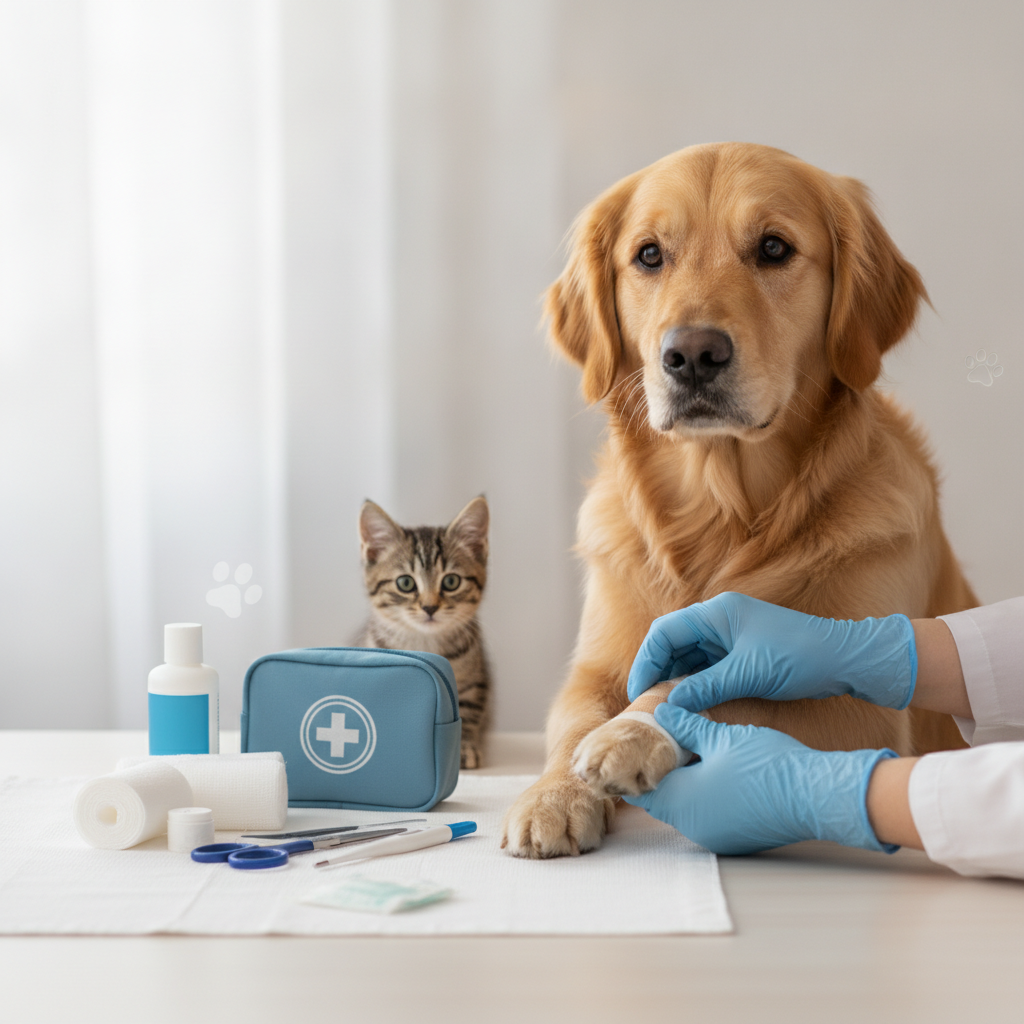
Essential First Aid Guide for Dogs
Accidents and medical emergencies can occur with your dog at any time, and the ability to act quickly and with knowledge can be decisive. At critical times, panic and uncertainty are enemies.This guide has been prepared by an experienced specialist to offer you, dedicated tutor, the tools and practical knowledge essential to provide first aid to your dog before reaching professional veterinary care. Our goal is to empower you to be the first vital link in the chain of care of your best friend.
The Importance of Preparation: Your Canine First Aid Pharmacy
Having a well-stocked and affordable first aid kit can save your dog precious time and potentially life. Keep it in an easy-to-reach place, whether at home, in the car or on the go. Check it regularly, replacing expired or used items.
Checklist: What to Include in Your Dog's Pharmacy
- Sterile gauze compresses: To cover wounds, absorb blood and apply pressure.
- Bandage rolls (bandage): To wrap wounds and keep compresses.Cohesive bandages are ideal, as they adhere to themselves, not to the hairs.
- Hypoallergenic adhesive: To secure dressings securely.
- Hydrophilic cotton: For cleaning and application of products.
- Gentle antiseptic solution (Diluted Chlorhexidine or Povidine): Avoid alcohol and hydrogen peroxide, which can irritate and delay healing.
- Physiological serum 0.9%: To wash wounds, eyes and mucous membranes, removing dirt and irritants.
- Disposable gloves: For your protection and to prevent contamination of wounds.
- Blunt-tipped scissors: To cut bandages and hair without hurting.
- Tweezers: To remove small spines, ticks or fragments.
- Digital rectal thermometer: Essential to check body temperature in cases of heatstroke or hypothermia.
- Clean towels or cloths: For cleaning, compression, or to help transport the animal.
- Emergency blanket (thermal blanket): To keep the animal warm in cases of shock or hypothermia, or to cool (humidified) in cases of heatstroke.
- Cloth or bandage muzzle: A dog in pain or fear may bite.Use with caution, ensuring that it does not obstruct breathing.
- An emergency phone number: From your primary veterinarian and a 24-hour veterinary clinic.
- Activated carbon (powder or liquid): ONLY UNDER VETERINARY GUIDANCE. It may be helpful in some poisonings, but it requires accurate dosing and referral from a professional.
Vital Dog Signs: What to Watch for and How to Evaluate
Knowing your dog's normal vital parameters is crucial to quickly identify any changes in an emergency.
Body Temperature
- How to check: Digital rectal thermometer, gently inserting 2-3 cm into the rectum.
- Normal values: 37,5°C to 39,2°C.
- What to observe: Fever (above 39.5°C) or hypothermia (below 37.5°C) are warning signs.
Heart Rate (Pulse)
- How to check: Feel the pulse in the femoral artery (inner thigh). Count beats for 15 seconds and multiply by 4.
- Normal values: Large dogs: 60-100 bpm; small dogs/pups: 100-160 bpm.
- What to observe: A very fast, very slow, weak, or irregular pulse may indicate pain, shock, or heart problems.
Respiratory Frequency
- How to check: Observe the movements of the chest or abdomen. Count an inspiration and an expiration as one movement. Count for 30 seconds and multiply by 2.
- Normal values: 10 To 30 breaths per minute (at rest).
- What to observe: Very fast breathing without physical exertion, breathing with exertion, unusual sounds (wheezing, gurgling) are warning signs.
Mucosas and Hair Fill Time (TPC)
- How to check: Lift your upper lip and watch the color of the gums. Press gently and see how long it takes for the normal color to return.
- Normal values: Pink and moist gums. TPC from 1 to 2 seconds.
- What to observe:
- Pale or white mucosae: Anemia, shock, internal bleeding.
- Bluish mucosae (cyanotic): Lack oxygen.
- Very red/purple mucosae: Insolation, high fever, sepsis.
- Prolonged PCT (> 2 seconds): Poor circulation, shock.
Common Emergencies and Essential First Actions
The following detailed actions are first aid measures, not definitive treatment.
Gagging (Asphyxiation)
- Signs: Panic, severe cough, difficulty breathing, paws in the mouth, bluish mucous membranes, loss of consciousness.
- Action:
- Try to view the object in the mouth with caution. If visible and removable safely (long forceps, without pushing), try to pull out.
- Adapted Heimlich maneuver:
- Small/medium dogs: Raise the dog by the hind legs (inverted) and give 3-5 firm strokes between the shoulder blades. If it does not work, do rapid abdominal compressions up and forward, just below the ribs.
- Big dogs: Behind the dog, hug him and do 3-5 quick, firm compressions up and forward on the soft part of the abdomen, below the ribs.
- Check your mouth after each series. Seek the veterinarian immediately.
Injuries and Bleeding
- Signs: Cuts, lacerations, punctures, visible bleeding.
- Action:
- Containment: If the dog is aggressive, use a muzzle of cloth (if there is no mouth injury or difficulty breathing).
- Direct Pressure: Apply firm, steady pressure on the wound with clean gauze or cloth for 5-10 minutes without lifting.
- Elevation: If on the paw, raise it above the level of the heart.
- Temporary dressing: Clean the area with saline.Cover with sterile gauze and bandage tightly, but without cutting off circulation.
- Any deep, large or persistent bleeding wound requires urgent veterinary care.
Intoxication
- Signs: Vomiting, diarrhoea, tremors, convulsions, lethargy, excessive salivation, behavioural changes.
- Action:
- Identify agent: Collect samples of the substance (packaging, plant, etc.) and note the amount and time since ingestion.
- Call the veterinarian IMMEDIATELY: It will provide specific guidance.
- DO NOT induce vomiting without veterinary guidance: Some substances can cause more damage upon returning.
- Transport the animal to the veterinarian as soon as possible with all the information.
Burnings
- Signs: Pain, redness, swelling, hair loss, dark and stiff skin (in severe cases).
- Action:
- Immediate cooling: Wash the area with cold running water (NOT cold) for 10-15 minutes.
- Do NOT apply ice, butter, oils or ointments.
- Protect area: Cover gently with a clean, damp cloth or sterile gauze.
- Seek veterinary care. Burns can become infected and have systemic consequences.
Allergic Reactions and Insect Stings
- Signs: Sudden swelling (face, muzzle, eyelids), severe itching, hives, vomiting, diarrhea, and, in severe cases, difficulty breathing.
- Action:
- Remove stinger: If it is a bee, try to scrape the stinger (avoid using tweezers to not release more poison).
- Cold compresses: Apply cold compresses to the swollen area.
- Monitor breathing.
- Antiallergic: ONLY administer human antiallergics if you have PRIOR advice from your veterinarian on product and dose.
- Seek veterinary attention, especially if there is facial swelling or difficulty breathing.
Convulsions
- Signs: Sudden loss of consciousness, uncontrollable tremors, muscle stiffness, excessive salivation, urination or involuntary defecation.
- Action:
- Maintain safety: Avoid dangerous objects, do not try to hold the animal or put your hand in its mouth.
- Monitor time: Write down the duration of the seizure.
- Create a calm environment: Decrease lights and sounds.
- After the seizure: The dog may become disoriented, keep him warm and calm.
- Medical emergency: A first seizure, seizures that last longer than 5 minutes, or multiple seizures require veterinary care.
Insolation (Hyperthermia)
- Signs: Excessive panting, dark red gums, abundant salivation, lethargy, vomiting, diarrhea, incoordination, convulsions, collapse.
- Action:
- Immediate and Gradual Cooling: Remove the dog to a cool place.Cool with water at room temperature (NEVER cold, to avoid shock). Wet paws, armpits, groin and belly. Use wet towels and change them.
- Ventilation: Use fan or air conditioning.
- Monitor temperature: Check rectal temperature every 5-10 minutes.Stop active cooling when reaching 39.5°C to prevent hypothermia.
- Offer water: If conscious, small amounts of fresh water.
- Heat stroke is a serious emergency and requires immediate veterinary care.
When to Seek Veterinary: Decision Criteria
First aid is a first step” Knowing when the situation requires immediate veterinary intervention is just as important as knowing what to do at home. Always seek a veterinarian in the following situations:
- Any loss of consciousness, fainting or collapse.
- Severe breathing difficulty, persistent choking.
- Bleeding that does not stop after 10-15 minutes of direct pressure.
- Deep, extensive, perforating, or exposing bone/organ injuries.
- Suspicion or confirmation of intoxication by any substance.
- Significant burns.
- Prolonged (> 5 minutes) or repetitive seizures.
- Signs of shock (pale gums, prolonged CPT, extreme lethargy).
- Sudden and severe change in behavior or level of consciousness.
- Suspected fractures (inability to support the paw, severe pain, deformity).
- Intense and persistent pain.
- Inability to urinate or defecate for more than 12-24 hours.
- Vomiting or bloody diarrhea, or persistent vomiting and diarrhea.
- Insolation or hypothermia.
- Sudden and painful abdominal distension.
- Any situation that makes you feel that your dog's life is at risk.
Common Mistakes and Honest Trade-offs
In the heat of emergency, it is easy to make mistakes.Being aware of them can prevent complications.
Common Mistakes to Avoid:
- Panic: It hinders clear reasoning and the execution of actions.
- Medicate on Your Own: Never administer human medicines without veterinary guidance.Many are toxic to dogs, and the doses are different.
- Inducing Vomiting without Knowledge: Without knowing the substance ingested, it can be dangerous.
- Overestimating your Skills: First aid is palliative.Finding that you can solve everything yourself and delaying the trip to the vet is a serious mistake.
- Not Having a Plan: Knowing which emergency clinic works 24 hours and how to get there quickly is part of the preparation.
Honest Trade-offs:
- Quick Action vs. Perfect Action: In severe emergencies (choking), rapid action, even if imperfect, is preferable to inaction. In others (inducing vomiting), professional guidance is critical.
- Animal Comfort vs. Need for Containment: Using a muzzle (safely, without impeding breathing) may be necessary for your safety and to help the dog.
- Financial Cost vs. Health: Delaying veterinary treatment out of concern for costs can lead to more serious conditions and more expensive treatments, or even the loss of the animal.
Being prepared for an emergency with your dog is an act of love and responsibility. This guide offers the tools so that you can act confidently when every second counts. Remember, first aid is a bridge to professional care.Do not hesitate to contact your veterinarian. They are your greatest allies in the health of your pet. Keep emergency numbers on hand, practice assessing your dog's vital signs and renew your kit regularly.