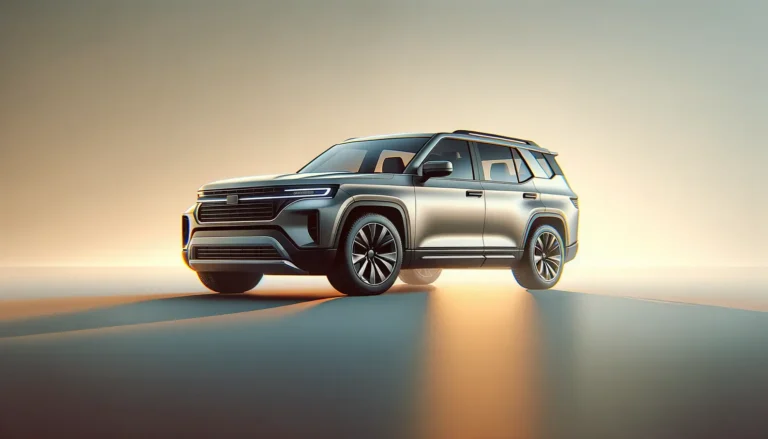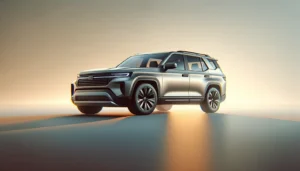
In a context of declining vehicle sales, the VW T-Cross maintains its absolute leadership in Brazil during January 2026.
Although the general market shows contraction, the success of the T-Cross stands out for its ability to adapt and capture demand for the compact SUV segment.
This performance reflects the strength of the Volkswagen brand and the continued preference for models that combine technology, design and functionality.
Analysis of the ranking of automobile sales in January 2026
In January 2026, the VW T-Cross leads sales with 2,300 units, despite a general drop that affects the entire Brazilian automotive market.
This situation reflects a strong seasonal decline, common in January, which negatively impacts daily sales volumes and is shared by other prominent models.
The market, although declining compared to December 2025, maintains a significant sales volume, showing resistance despite the unfavorable context.
Positions and units sold of the best-selling models in automobiles
The VW T-Cross takes first place with 2,300 units sold in January, followed by the VW Polo with 2,195 vehicles sold.
Completing the top five are the Hyundai Creta with 2,094 units, GM Tracker with 1,957 and the VW Tera with 1,955 vehicles sold in the same period.
These data show the preponderance of Volkswagen models and the strength of the SUV segment in the Brazilian market at the beginning of the year.
Comparison of percentage drops in sales compared to December 2025
The falls are pronounced: VW T-Cross registered a decrease of 54.9%, while VW Polo fell 55.8%, evidencing the contraction of the market.
Hyundai Creta fell 46.1%, GM Tracker 34.2% and VW Tera the biggest drop with 60.7%, reflecting a general trend of reduced sales.
These percentages show that, although everyone decreased their volumes, the VW T-Cross continues to maintain its leadership over the competition.
Context of the Brazilian automotive market at the beginning of 2026
In January 2026, the Brazilian automotive market suffers a usual seasonal decline, affecting vehicle sales. Despite this, the volume remains relevant.
This contraction responds to typical factors at the beginning of the year, where demand is reduced after December, a month of high commercial activity in cars and promotions.
Projections suggest that, although January shows decline, the market maintains a balance that will allow it to recover in the following months with new offers.
Seasonal retraction factors and projection of the total units sold in January
The decline in January is due to lower post-holiday purchases and reduction in commercial activities, an effect that is repeated annually in the automotive sector.
According to analysis, the total units sold adjust to this seasonality, with decreases compared to December, but still significant figures.
It is expected that after the January downturn, the market will pick up pace thanks to launches and campaigns that encourage purchases in the first quarter of the year.
Expected annual growth and production according to Anfavea data
Anfavea forecasts moderate growth for 2026, driven by increased local production and adjustments to the Brazilian automotive supply chain.
Factory production shows signs of improvement, with plans to increase manufacturing of SUV and electric models, in line with current market demands.
This encouraging annual growth points to a gradual recovery, supported by incentives, technological innovation and consolidation of key segments.
Trends and future prospects for the VW T-Cross and SUV market
The VW T-Cross is positioned to maintain its leadership thanks to the growing preference for SUVs in Brazil, which dominate sales in the local market.
The compact SUV segment continues to expand, serving urban consumers looking for technology, safety and design in their vehicles.
The outlook indicates that demand for SUVs will continue to rise, favoring models with innovations in efficiency and connectivity by 2026.
Upcoming releases of hybrid versions and their local production
Volkswagen plans to launch hybrid versions of the T-Cross, integrating technology that combines electric motors and combustion for greater efficiency.
Local production of these hybrid versions will help reduce costs and facilitate the Brazilian market's adaptation to recent environmental regulations.
These launches seek to position the T-Cross as a benchmark in sustainability within the compact SUV segment in Brazil.
Competition with Chinese models and adjustments in the compact SUV offering
The arrival of Chinese SUVs with aggressive prices pressures Volkswagen to adjust its offer, improving value and equipment in the T-Cross.
These competitors provide alternatives with modern technology and design, forcing local manufacturers to innovate and optimize costs.
The market responds with incentive strategies and constant updating, guaranteeing that the T-Cross maintains its attractiveness in the face of new options.
Impact analysis and factors that influence the leadership of the VW T-Cross
The VW T-Cross maintains its leadership by taking advantage of the strong demand for compact SUVs in Brazil, a segment that continues to grow dynamically.
Its position is strengthened thanks to consumer preference for technological, safe and well-designed models, key factors in the urban market.
Furthermore, innovations in efficiency and connectivity project the T-Cross as a vehicle aligned with current and future trends in the sector.
Competitive advantages of the T-Cross: price, dealer network and safety
The T-Cross stands out for its attractive price offer, which makes it accessible to the competition, without sacrificing quality or equipment.
Its extensive network of dealers in Brazil ensures availability and after-sales support, generating trust and facilitating the purchase for the customer.
High level of security is another strong point, with modern technologies and systems that meet the demands of the most rigorous consumers.
Market challenges: high interest rates and presence of new competitors
High interest rates in Brazil make access to credit difficult, representing a challenge to maintain high sales volumes in the sector.
The entry of Chinese competitors with SUVs at aggressive prices forces Volkswagen to be more competitive and adjust commercial strategies.
These factors demand constant innovation and improved cost-benefit to ensure that the T-Cross remains the preferred option.