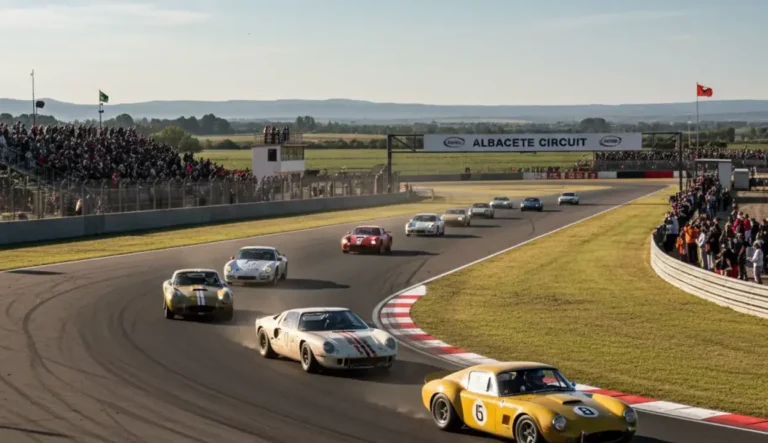
Historical importance of the Albacete Circuit in classic motorsports
The Albacete Circuit has outstanding historical importance in classic and modern motorsports in Spain, being key since its inauguration in 1990. It emerged to replace races on unsafe routes.
Since its opening, it has established itself as a prestigious international stage, hosting events such as the World Superbike Championship and European and national motor championships. Great figures have passed through its layout.
In recent years, it has revitalized its role with classic vehicle exhibitions, open days and events celebrating automotive tradition, becoming regional cultural and sporting heritage.
Inauguration and evolution of the circuit since 1990
The Albacete Circuit was inaugurated in 1990 to host the World Superbike Championship with a safe and professional layout, replacing old urban circuits. Since then, it has made way for numerous competitions.
Over the decades, the circuit has evolved in its infrastructure and services, maintaining a technical layout of 3,550 meters with 14 curves, suitable for high competition and adapting to international standards.
International events and championships held
It has hosted the World Superbike Championship (1990-1999), the World Endurance Championship (2003-2011), the European Motorcycle and Truck Championship, and the current FIM CEV Repsol motorcycle championship.
The circuit has had the presence of prominent motor drivers such as Michael Schumacher, Fernando Alonso, Valentino Rossi and Marc Márquez, consolidating its international prestige.
Relationship with the preservation and exhibition of classic vehicles
The Circuit organizes days with exhibitions of Formula Vintage cars and boats, classic cars from different eras and emblematic models such as the Seat 600, promoting classic automobile culture.
These activities bring together collectors, pilots and the public, contributing to the conservation and dissemination of classic automotive heritage in the Albacete region and promoting its public enjoyment.
Special events during the reopening of the Albacete Circuit
The reopening of the Albacete Circuit included open days and free runs for motorcycles on several days in November and December. Each round lasted 15 minutes per group, organized according to experience level.
These activities brought together more than 1,000 drivers and nearly 7,000 attendees, consolidating the return of the circuit as a space for sports tourism and competition. New rounds and competitions are announced for 2026.
The reopening also included safety and medical service improvements, with the intention of offering a professional and safe experience for all circuit participants and visitors.
Open days and free batches
Open days were held on November 29 and 30, and December 6 and 8, 2025, with free 15-minute runs for motorcycles. The activity was divided into four groups according to experience.
These activities sought to reactivate the use of the circuit after years of hiatus and generate interest for upcoming events, allowing the participation of both fans and federated drivers.
Exhibitions of classic vehicles and Vintage Formula
During the reopening, classic vehicle exhibitions were held over several days, with special attention to a Vintage Formula exhibition on December 7, highlighting the history of motorsport.
These exhibitions attracted fans and the general public, reaffirming the circuit's commitment to the preservation and dissemination of historical automotive heritage.
Participation of associations and emblematic models
Local motorcycle clubs participated in rides and activities during the reopening, recovering the associative tradition linked to motors in the province.
Likewise, emblematic models such as cars and classic cars were exhibited that evoked the historical and cultural roots of the Albacete Circuit.
Celebration of the 25th anniversary of the Automobile Club Mancha
The Automobile Club Mancha celebrated its 25th anniversary with a concentration of classic cars at the Albacete Circuit, followed by a march to the Pincho de la Feria, bringing together numerous fans.
The event was attended by Mayor Manuel Serrano and Deputy Mayor Francisco Navarro, who highlighted the importance of keeping the local automobile tradition alive for a quarter of a century.
Social and economic impact of the reopening of the Albacete Circuit
The reopening of the Albacete Circuit promotes sports tourism, attracting fans and visitors who boost the local economy. The event revitalizes the economic and cultural activity of the region.
More than 220 pilots participated in the reopening, reflecting the growing interest in the circuit, generating employment and commercial opportunities in sectors such as hospitality and services in Albacete.
The circuit promotes social cohesion by bringing together motor clubs and groups, reinforcing the automotive and cultural identity since 1990, strengthening the local community fabric.
Increase in tourism and estimated influx of public
After six years closed, the circuit has been reopened with open days that attract thousands of visitors, consolidating it as a destination for motor tourism in Castilla-La Mancha.
Exhibitions such as Formula Vintage and free rounds strengthen the calendar of events, increasing attendance and promoting specialized tourism in Albacete.
Local economic revitalization and generation of future events
The investment of close to two million euros for the renovation boosts the local economy, generating direct and indirect employment in commerce, hospitality and services around the circuit.
The stable programming of activities and competitions contributes to maintaining economic dynamism, supporting the continuity of sporting events with an impact throughout the region.
Strengthening the social and cultural fabric in Albacete
The reopening reactivates an emblematic social space that links fans, clubs and motor associations, reinforcing the tradition and cultural pride of the city and its surroundings.
Institutional commitment and collaboration with local groups strengthen automotive identity, contributing to social cohesion and the promotion of cultural and sports heritage.
Role of the 2025 Automobile Fair in the promotion of classic cars
The 2025 Automobile Fair, with events such as Retromóvil Madrid, is positioned as an epicenter for the exhibition and valorization of classic cars in Spain. These meetings attract collectors and fans from all over the country.
These types of fairs promote the conservation and restoration of historic vehicles, promoting automobile culture and the specialized market for classic cars. They are key events to preserve motor history.
In addition to the cultural impact, the Automobile Fair also contributes financially, facilitating the buying and selling and business related to vintage vehicles, accessories and services for collectors and professionals.
Exhibition and marketing of historic vehicles
Hundreds of historic vehicles are exhibited at the fair, from iconic models to unique pieces. The variety encompasses cars from different decades and styles, showing the evolution of the classic automobile.
Marketing is one of the pillars of the event, with in-person auctions and direct sales that allow collectors to acquire exclusive cars and original parts, stimulating the national market.
Activities, exhibitions and meetings for amateurs and professionals
The fair programs talks, colloquiums and workshops that enrich knowledge about restoration and maintenance of classic cars, bringing together experts and enthusiasts in a social and training environment.
Meetings and rallies are also organized that encourage networking between amateurs, car clubs and professionals, creating an active and dynamic community around the world of historic automobiles.
Improvements in the Albacete Circuit for modernization and security
The circuit has been remodeled with an investment of two million euros, improving barriers and expanding loopholes to guarantee the safety of drivers and the public.
The asphalt was renewed, curves were leveled, and the signage was modernized with new screens and a surveillance system with more than 20 control cameras.
The improvements include the renovation of the pitlane and service roads, adapting the circuit to current regulations and positioning it as a competitive and safe facility.