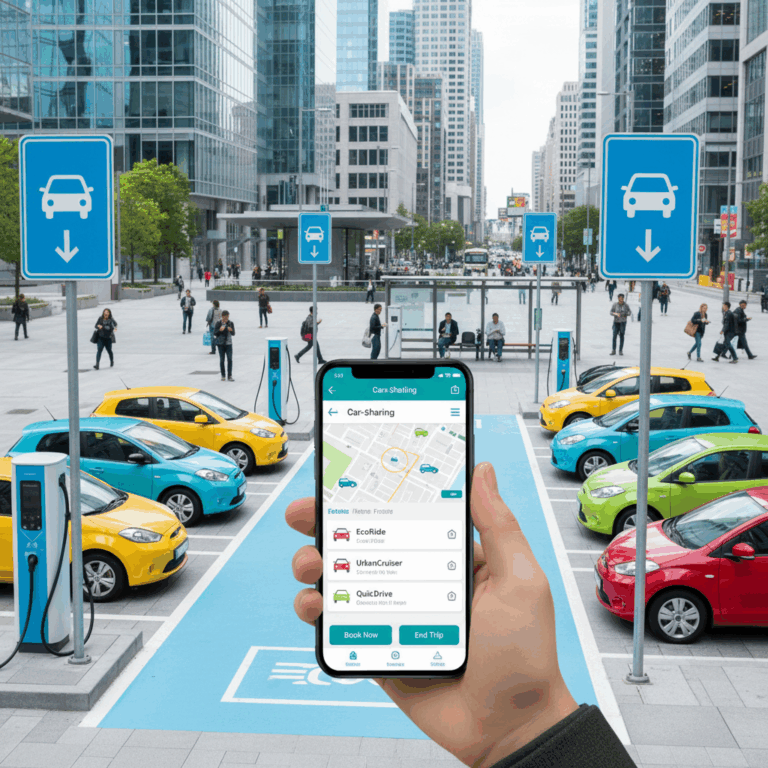
Evolution of the car sharing market
The market of carpool it has advanced rapidly thanks to digitalization and growing global ecological awareness. This transformation drives new forms of sustainable mobility.
With a value that exceeded 9.6 billion dollars in 2025, the sector continues to grow and reach new numbers of users who adopt car sharing as a regular mode of transportation.
Technological evolution has also facilitated the expansion of car sharing, which connects more and more people with flexible and environmentally friendly solutions.
Global growth and key figures
Worldwide, it is estimated that 10% of the population uses the carpool as the main means of transportation since 2025. This represents a significant advance in sustainable mobility.
The market exceeded $9.6 billion, highlighting exponential growth that reflects social acceptance and demand for alternatives to the traditional private vehicle.
These figures confirm that car sharing is a consolidated trend, with an impact on reducing emissions and urban optimization of automobile use.
Impact of artificial intelligence in the sector
The artificial intelligence revolutionize the sector, from fleet management to virtual assistants that facilitate the user experience in reservations and queries.
AI allows you to optimize routes and perform predictive analysis, reducing time, costs and improving efficiency for both car-sharing providers and users.
These technologies ensure smarter, more personalized and accessible mobility, strengthening the role of car sharing in the future of urban mobility.
Regulation and development of corporate carpooling in Spain
The Sustainable Mobility Law seeks to promote corporate carpooling to reduce emissions and encourage the efficient use of vehicles on work trips. This regulation promotes the implementation of digital platforms in companies.
In Spain, this regulation facilitates a cultural change towards collaborative mobility, benefiting both organizations and employees who share routes and reduce their environmental footprint.
The combination of legislation and technology is driving a corporate car sharing model that improves sustainability and optimizes resources in the workplace.
Sustainable Mobility Law and its influence
This law establishes the legal framework that encourages the use of carpooling in work environments, forcing companies to promote sustainable mobility practices.
In addition, the development of technological platforms that facilitate sharing routes is encouraged, optimizing times and costs for employees and reducing environmental impact.
Its influence is reflected in a growing increase in companies that adopt measures to meet these objectives, improving access to shared mobility solutions.
Corporate apps to share work paths
Applications like Joinup and Hoop Carpool have been key to connecting workers and making it easier carpooling in Spain. These apps manage trips and save costs.
These platforms ensure safety, offer features to coordinate schedules and routes, and encourage employee commitment to sustainable mobility.
Their use has grown significantly, becoming essential tools for companies seeking to offer practical and environmentally friendly mobility solutions.
Adoption and benefits in Spanish companies
Many Spanish companies have already adopted corporate carpooling, achieving cost reduction in travel and a significant reduction in CO2 emissions.
Carpooling improves the employment relationship by strengthening collaboration and caring for the environment, positioning itself as an efficient strategy for sustainable urban mobility.
This development also helps comply with the Sustainable Mobility Law and translates into economic and environmental benefits appreciated by employers and workers.
Applications and services for individual users
The carpooling applications they have transformed individual mobility, making it easier to share trips and reduce expenses. Security and experience continually improve.
On the other hand, the services of car sharing they offer flexibility to rent vehicles by the minute or hour, adapting to specific needs with great comfort and accessibility.
These solutions allow more efficient and sustainable mobility, simplifying access to vehicles and promoting collaborative transportation adapted to each user.
Carpooling platforms and their security improvements
Platforms such as BlaBlaCar and Amovens have boosted trust by introducing verified profiles and rating systems, improving security among users.
Default meeting points also help to better organize trips, reducing risks and facilitating coordination and punctuality between travelers.
These technological and protocol improvements increase peace of mind and encourage the increasing use of carpooling as an efficient and reliable option.
Car sharing services by minutes and hours
Car sharing adapts to users who need vehicles only for short periods, allowing cars to be rented by the minute or hour with intuitive applications.
Services like E-VAI offer multiple pick-up and delivery points in cities, promoting flexible and comfortable mobility without ties to long schedules or contracts.
This modality reduces the need to have your own vehicle, contributing to reducing urban congestion and environmental pollution.
Trends and impact on sustainable mobility
Car sharing contributes to one more sustainable mobility by reducing dependence on the private car. This trend responds to the need to reduce emissions and urban congestion.
Furthermore, digitalization allows the integration of different forms of transportation, promoting a collaborative and efficient system that benefits both the environment and society.
New technologies and platforms facilitate access to alternative options, promoting a cultural change towards shared and responsible mobility.
Reduction of dependence on private vehicles
The adoption of car sharing has proven to be an effective tool to reduce the need to own a private vehicle, especially in urban areas.
Users value that combining car sharing with public transport can reduce costs, emissions and improve flexibility, changing traditional mobility habits.
This change also implies less use of parking spaces and better air quality, fundamental pillars for healthier and more sustainable cities.
Future integration between public transport and car sharing
Increasing integration between public and private transport services is expected, with platforms connecting different modes for more fluid and accessible travel.
This interaction will facilitate unified planning and payment, optimizing routes and times, and making car sharing an ideal complement to mass transportation.
Key innovations in multimodal integration
The incorporation of real-time data and intelligent systems will allow schedules and availability to be coordinated, improving the user experience and confidence.
Likewise, interoperability between apps and public systems will favor the expansion of car sharing, aligning mobility with environmental sustainability objectives.