Transformation of the automotive industry
The automotive industry is experiencing a deep transformation thanks to electrification and artificial intelligence, driving a new era of innovation and competitiveness.
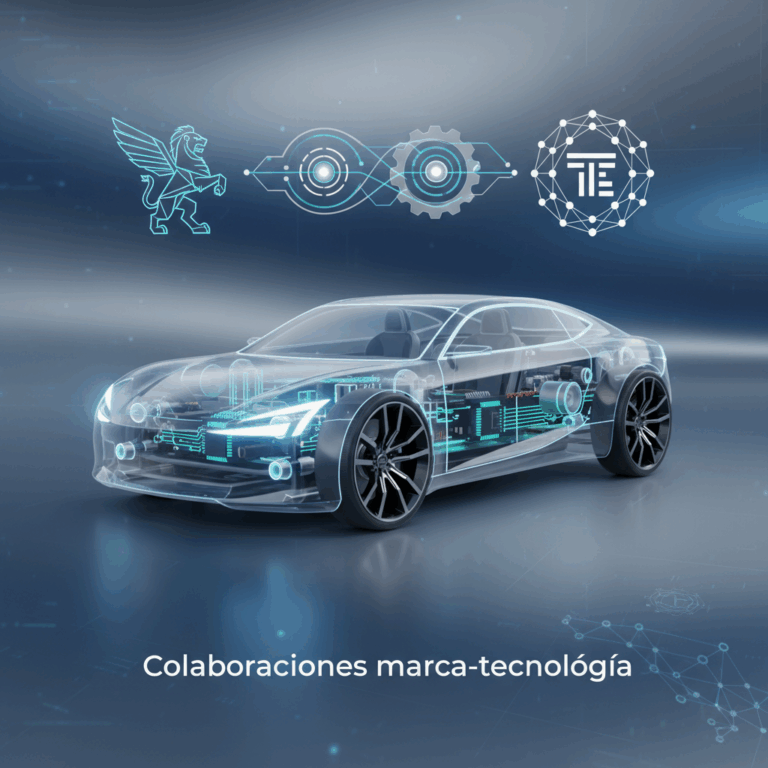
The strategic alliances between manufacturers and technology companies, they have emerged as a key to accelerating the development of more efficient, connected and sustainable vehicles.
This collaboration overcomes historic challenges and opens opportunities to integrate advanced technologies that respond to global demands in mobility and emissions reduction.
Key innovations: electrification and artificial intelligence
Electrification is the main driver of change, enabling cleaner and more efficient vehicles that aim for carbon neutrality in the coming decades.
For its part, artificial intelligence enhances autonomous driving and connectivity systems, improving safety and user experience.
Together, these innovations drive the development of common platforms that optimize components and software, accelerating the launch of new electric models.
Challenges and opportunities in brand-technology collaboration
One of the biggest barriers is the integration of complex technologies that require effective cooperation between different industries and corporate cultures.
However, these collaborations allow us to share development costs and face growing competition, especially from highly technological Chinese manufacturers.
The challenge is to maintain constant innovation while ensuring interoperability and security, something that is only possible with strong strategic alliances.
Strategic alliances between manufacturers and tech companies
The strategic alliances between automotive manufacturers and technology companies they are essential to accelerate innovation and maintain global competition.
These collaborations allow technologies to be shared, resources optimized and electric and smart vehicles to be developed more quickly and efficiently.
The joint push of traditional and technology companies redefines the industry, facing challenges and taking advantage of unique growth opportunities.
Collaboration between Nissan, Honda and Mitsubishi
In 2024, Nissan and Honda announced a memorandum to collaborate on electrification and smart technologies, seeking to accelerate carbon neutrality.
Mitsubishi joined later, bringing its expertise in plug-in hybrid systems to improve competitiveness and reduce development costs.
This alliance will facilitate the launch of new electric vehicles from 2026, strengthening its position against Chinese competition.
European initiatives led by Volkswagen, BMW and Mercedes-Benz
Volkswagen, BMW and Mercedes-Benz lead an alliance with eleven companies to develop an open source automotive software platform.
This project seeks to regain control over digital systems and facilitate the integration of advanced technologies for autonomous driving.
The platform will be available in 2026, with vehicles based on it expected by 2030, reducing costs and guaranteeing interoperability.
Innovation models in China with BYD
BYD integrates distributed artificial intelligence with hardware, software and sensors to deliver advanced technologies in accessible vehicles.
This approach drives technological democratization, making it accessible to more users and transforming the Chinese automotive market.
Thus, BYD contributes to a flexible innovation model, which combines efficiency, technology and affordability to lead the sector.
Technological and commercial impact
Collaboration between manufacturers and technology companies creates a significant impact on the automotive industry, promoting innovation and global competitiveness.
This synergy allows us to optimize resources and reduce costs, accelerating the development and launch of electric and intelligent vehicles.
Furthermore, these alliances favor the creation of common platforms that facilitate the integration of new advanced functions.
Competitive advantages and cost reduction
Strategic alliances provide manufacturers with competitive advantages by sharing technologies and knowledge, improving development efficiency.
Reducing costs is key: collaboration reduces expenses in research, manufacturing and testing, accelerating the arrival of products to the market.
Likewise, this cooperation strengthens the ability to compete against Asian rivals, which lead in innovation and price.
Together, these advantages allow us to offer more advanced vehicles without compromising profitability or quality.
Development of common and open source platforms
Creating common platforms facilitates interoperability, allowing different brands to share software and hardware more efficiently.
Open source projects enable rapid technological evolution and greater transparency, accelerating the integration of intelligent functions.
This European strategy seeks to regain control over digital systems in the face of the influence of large external technology companies.
A boost for collaborative innovation
Common platforms encourage collaboration between multiple actors, avoiding fragmentation and promoting open standards in the industry.
Thus, innovation is democratized and made accessible, creating a more dynamic and competitive ecosystem at a global level.
Future of the collaborative automotive industry
The future of the automotive industry is marked by one intensive collaboration between brands and technology, which drives the development of electric and connected vehicles.
These alliances encourage the integration of advanced software and intelligent systems that will transform mobility towards more sustainable and efficient models.
Technological convergence accelerates innovation, facilitating rapid adaptation to new consumer demands and environmental regulations.
Launch of electric and connected vehicles
The coming years are expected to bring a significant increase in the supply of electric vehicles, thanks to collaborations that optimize development and production.
The focus on connectivity enables vehicles integrated with intelligent systems that improve safety, user experience and energy efficiency.
The combination of electrification and connectivity establishes the basis for more sustainable and digitalized mobility, with models that will hit the market between 2026 and 2030.
Democratization and acceleration of innovation
Technological democratization facilitates access to previously exclusive innovations, promoting competition and diversity in the global automotive market.
The use of common and open source platforms allows development to be accelerated, reducing costs and promoting collaboration between multiple actors.
This trend promotes an unprecedented acceleration in innovation, making technological advances accessible to a broader consumer base.