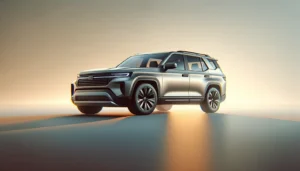
Innovations in driver assistance systems
Driver assistance systems (ADAS) have revolutionized driving, integrating technologies that improve safety and user experience.
The incorporation of artificial intelligence and connectivity allows these systems to anticipate and correct human errors, reducing accidents.
In 2025, advances in ADAS represent a significant change in safe and efficient mobility on modern roads.
Main functions of ADAS systems
ADAS include key features such as collision detection, adaptive speed control and lane departure alerts for safe driving.
These technologies work together to help the driver maintain control and avoid risky situations in real time.
In addition, assistance systems offer support in adverse conditions, increasing confidence and reducing stress behind the wheel.
Impact on reducing road accidents
ADAS have proven to be effective in reducing accidents, addressing the human factor that causes more than 90% of road accidents.
Thanks to these innovations, a significant decrease in collisions and material damage has been observed in vehicles equipped with advanced assistance.
The future promises continuous improvements that will make driving increasingly safer for all road users.
Outstanding technologies in smart vehicles 2025
In 2025, smart vehicles incorporate revolutionary technologies that transform driving, increasing autonomy and interaction with the driver.
Innovations in autonomous driving, augmented reality and artificial intelligence redefine the driving experience, improving safety and comfort.
Emblematic models such as Tesla Model S Plaid+ and Mercedes-Benz EQS SUV demonstrate technological advancement in the automotive sector.
Autonomous driving in Tesla Model S Plaid+
The Tesla Model S Plaid+ includes an advanced Full Self-Driving system that allows for virtually complete autonomous driving in various conditions.
This system uses artificial intelligence sensors and algorithms to analyze the environment and make decisions in real time, facilitating mobility.
The integration of updates via software ensures that the vehicle constantly improves, increasing safety and efficiency in its trips.
Augmented reality in Mercedes-Benz EQS SUV
The Mercedes-Benz EQS SUV improves the driver experience with its MBUX Hyperscreen system and augmented reality driving technology.
This visual interface projects crucial information about the environment directly onto the windshield, facilitating more intuitive and safer driving.
The immersive display offers touch control and gestures, improving vehicle interaction and customization for each user.
Fun fact
The MBUX Hyperscreen can automatically adapt to driving style, displaying only relevant information to optimize concentration.
Google AI advances with Gemini system
Google presents Gemini, an artificial intelligence system that transforms the interaction between driver and vehicle through fluid voice commands.
Gemini enables automatic contextual actions, simplifying tasks and improving safety by reducing distractions while driving.
This advance represents a step towards smarter vehicles, where AI not only assists but anticipates driver needs.
Safety and challenges in connected driving
Connected driving introduces new levels of safety by integrating advanced technologies into electric vehicles and intelligent systems.
However, this evolution also poses significant challenges, especially in terms of cybersecurity and protection against external attacks.
The balance between innovation and security will be crucial to the success and mass acceptance of these technologies in the near future.
Safety ranking in electric cars
Brands such as Hyundai, Volkswagen, Volvo, Toyota and Ford lead the safety ranking in electric cars thanks to their rigorous standards and impact tests.
These vehicles are characterized by offering high reliability and assistance systems that minimize accident risks in urban environments and roads.
Furthermore, the incorporation of cutting-edge technologies improves passive and active protection, increasing user confidence in this mobility.
Cybersecurity risks and challenges
Connected cars face threats such as unauthorized access, data theft and remote manipulation that compromise the safety of the vehicle and its occupants.
Vulnerabilities in connected systems demand robust solutions that include constant updates and advanced protection protocols.
Automotive cybersecurity is a growing challenge that requires collaboration between manufacturers, IT experts and regulators to mitigate risks.
Future and trends of intelligent driving
The future of smart driving focuses on improving the comfort and the security from the user through innovative technologies that transform the driving experience.
Trends point to greater integration of connected systems that not only assist in driving, but anticipate and adapt each function according to the driver.
The balance between innovation, ease of use and protection makes driving more accessible and safer for all driver profiles.
Focus on user comfort and safety
Comfort and safety are key priorities for the development of advanced systems that facilitate driving in all types of environments and conditions.
Intuitive and customizable interfaces are implemented that reduce stress and improve concentration, promoting more pleasant and safe trips.
Additionally, constant and adaptive assistance allows the vehicle to respond to changing situations, minimizing risks and increasing confidence.
Growing importance of automotive cybersecurity
With the increase in connectivity in smart vehicles, the cybersecurity it has become a crucial aspect of protecting data and driving systems.
Cyberattacks pose a real threat, which is why the industry invests in robust protocols and constant updates to safeguard vehicle integrity.
Ensuring cybersecurity is vital to maintaining user trust and the effectiveness of intelligent systems in the future.