Current state and dominant technologies
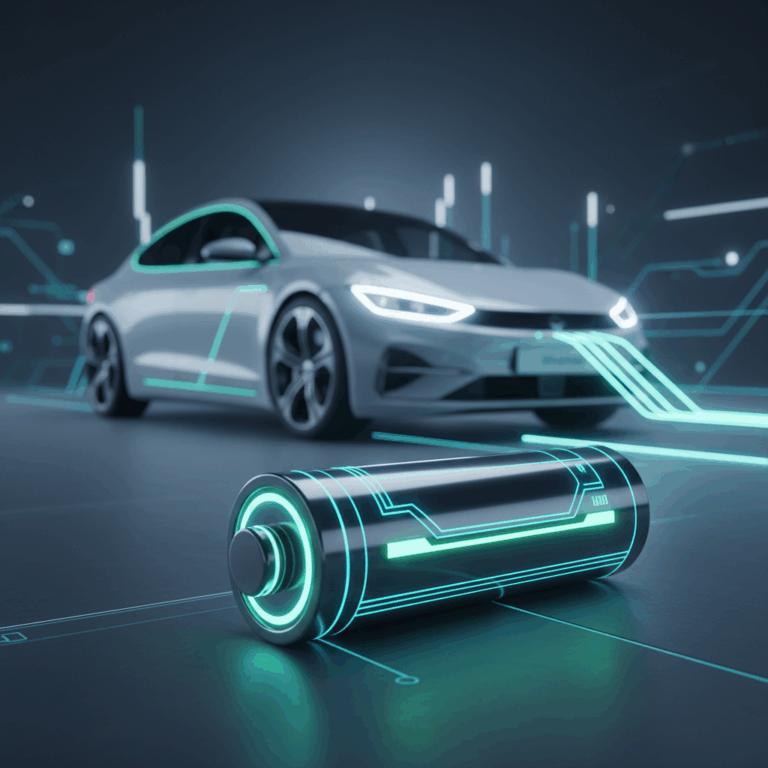
In 2025, innovation in batteries for electric cars is at a crucial point, with lithium-ion as the dominant technology. This type of battery still holds the majority of the market thanks to its efficiency and performance.
However, new technologies seek to overcome historical barriers such as autonomy, charging time and cost, promising a significant transformation in electric mobility within a few years.
Innovations not only improve energy capacity, but also increase the safety and sustainability of batteries, critical to the future of electric transportation.
Lithium-ion battery technology
Lithium-ion batteries continue to be the basis of the market due to their high energy density and reliability. They are the standard for most electric vehicles today.
These batteries store energy through the movement of lithium ions between the anode and cathode, offering good autonomy and adequate recharge times for the end user.
Although its technology presents constant advances, its potential is limited by factors such as the cost of materials and recycling challenges.
Historical limitations and challenges
Lithium-ion batteries face challenges such as the limited autonomy they offer, long recharge times and high production costs, making broader adoption difficult.
The use of liquid electrolytes poses safety risks, including flammability, which motivates the search for safer and more efficient alternatives.
Furthermore, dependence on scarce materials and the environmental impact associated with manufacturing and disposal hinder the long-term sustainability of this technology.
Key innovations in batteries for electric cars
Innovations in batteries for electric cars are transforming the industry, with new technologies that promise greater autonomy and safety. These solutions seek to overcome the current limitations of traditional batteries.
In 2025, advances such as solid-state batteries and sodium-ion chemistry stand out, offering a safer and more sustainable alternative to conventional lithium batteries. The innovation also extends to recycling and design.
These improvements drive electric mobility towards a future with more accessible vehicles, with very short charging times and less environmental impact, key to the global energy transition.
Solid state batteries
Solid-state batteries use solid electrolytes instead of liquids, increasing their energy density by up to 50% more than traditional batteries. This allows ranges of up to 800 km on a single charge.
Thanks to their lower internal resistance, these batteries allow ultra-fast recharges, reaching 80% charge in less than 10 minutes, in addition to improving safety by reducing fire risks.
Although still in the prototype and limited production phase, these batteries are expected to be launched commercially between 2026 and 2028, marking a decisive advance in electric mobility.
Sodium-ion chemistry
Sodium-ion chemistry takes advantage of the abundance and low cost of sodium, a more economical and sustainable alternative to lithium. These batteries do not yet match the energy density of lithium-ion, but are ideal for urban vehicles.
They are emerging as a promising option to democratize access to electric cars, reducing dependence on geopolitically problematic materials and opening up new possibilities in mobility.
Currently in testing, sodium-ion batteries could contribute significantly to a more accessible and green market in the coming years.
Silicon anodes and recycling
The use of silicon anodes increases storage capacity, since silicon can hold more lithium ions than traditional graphite, increasing the range of electric vehicles.
In addition, they combine advances in recycling that facilitate the recovery of valuable materials, reducing the environmental impact during the life cycle of batteries and promoting their sustainability.
This innovation represents a key step to improve the performance and ecological responsibility of batteries, aligning with global emissions reduction targets.
New battery pack designs
The designs evolve towards “cella-a-packet” and “cella-a-chassis” configurations, eliminating intermediate structures to reduce weight and cost, making the batteries more compact and efficient.
Integrating the cells directly into the vehicle body optimizes space and improves autonomy, in addition to facilitating the manufacturing and assembly of these energy systems.
These design innovations contribute to lighter, more accessible electric vehicles, accelerating mass adoption and improving the end-user experience.
Impact of innovation on the market and sustainability
Battery innovations are transforming the market, enabling more affordable electric cars with greater range and reduced recharge times. This drives the mass adoption of electric mobility.
Additionally, sustainability has become a key focus, with advances that minimize the environmental footprint throughout the life cycle of batteries, from manufacturing to recycling.
Improvements in autonomy, recharging and cost
Solid-state batteries offer up to 50% more energy density, extending range up to 800 km, reducing charging anxiety for users.
Recharging time is also drastically reduced, with loads of 80% in less than 10 minutes, equating the experience to refueling a conventional car.
In turn, new designs and chemicals such as sodium-ion contribute to reducing the cost of production, making electric vehicles more accessible and competitive on the market.
Reduction of environmental impact
The increasing use of silicon anodes and better recycling processes facilitate material recovery, reducing mining and waste associated with batteries.
Emerging technologies seek to reduce dependence on scarce and toxic metals, promoting more ecological and sustainable alternatives in the supply chain.
These advances not only meet regulatory requirements, but also improve public perception of the environmental responsibility of electric mobility.
Perspectives and future of batteries for electric cars
The future of batteries for electric vehicles is characterized by the coexistence of consolidated and emerging technologies, which together will drive global electrification.
While lithium-ion batteries maintain their dominance, new chemicals and designs are moving towards greater efficiency, safety and sustainability in the automotive market.
In this context, regulatory developments and the expansion of global adoption will be key factors in accelerating the transition towards cleaner and more accessible mobility.
Coexistence of consolidated and emerging technologies
Lithium-ion batteries will continue to be the basis of the market in the coming years thanks to their reliability and mature production. At the same time, technologies such as solid state and sodium-ion will gain space.
This coexistence will allow us to take advantage of diverse strengths: the experience and production capacity of lithium-ion together with the innovative advantages of new chemicals and designs.
Parallel development facilitates a gradual transition that will reduce risks and encourage technological adaptation in different applications and market segments.
Regulatory influences and global adoption
Environmental regulations, such as Europe's ban on combustion vehicles since 2035, drive innovation and mass adoption of electric cars and advanced batteries.
Government incentives and global climate commitments are accelerating demand, encouraging investments in research, production and recycling for a more sustainable market.
This regulatory and technological convergence creates an enabling environment for improved batteries to achieve greater autonomy, charging speed and lower environmental impact around the world.