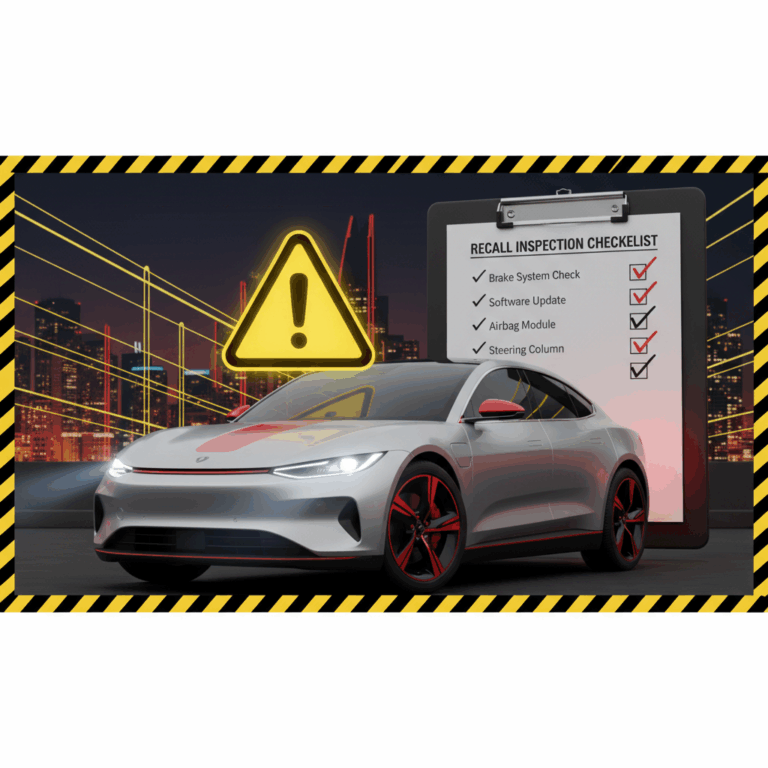
Definition and purpose of calls for review
The calls for review they are procedures that warn about defects in vehicles that can affect the safety of users and third parties.
These alerts allow owners to correct faults at no cost, ensuring vehicles meet basic road safety standards.
The main objective is to prevent risks, avoiding accidents and protecting the integrity of drivers, passengers and pedestrians through timely repairs.
What are calls for review
Revision calls are notifications issued by manufacturers or authorities when a defect is detected in a vehicle that may compromise its safety.
This process includes inviting owners to take their vehicles to authorized workshops for repair or replacement of the affected component.
Generally, this action is carried out at no cost to the user, seeking to minimize risks associated with the detected defect.
Main objective in road safety
The main purpose of recalls is avoid accidents caused by technical failures or deficiencies in vehicles.
They ensure that vehicles remain safe for all road users, including pedestrians and other drivers.
Additionally, they help preserve vehicle value and reduce the likelihood of incidents involving critical defective components.
Process and notification of calls for review
The process begins with the problem detection, which may arise from complaints, official inspections or internal analyzes of manufacturers.
Once the defect is identified, both the competent authorities and the affected owners are notified to guarantee road safety.
This communication is essential for users to take their vehicles to carry out the necessary repairs and avoid major risks.
Detection of the problem and origin
Problems can be detected through internal reviews, consumer reports, and regulatory evaluations that show security flaws.
The origin may be a manufacturing, design or material defect, which puts the safety of the vehicle and its occupants at risk.
This early detection allows us to act quickly to minimize the impact and avoid accidents or major damage.
Communication to authorities and owners
Upon confirming a defect, the manufacturer informs the authorities, who supervise and authorize the official issuance of the recall.
Simultaneously, owners receive direct notifications by mail, email or official means to take action.
This clear and timely communication is key so that users do not ignore the recommendation and go to authorized centers.
Solution and repair options
Solutions range from software updates, replacement of defective parts to mechanical repairs depending on the severity of the problem.
In extreme cases, the manufacturer may offer to repurchase the vehicle to avoid any persistent risk to the user.
These repairs are carried out at no cost to the owner and with a guarantee that the vehicle will meet safety requirements.
Importance of responding to calls for review
Serve one call for review it is essential to guarantee the safety of occupants and prevent possible accidents caused by technical defects.
Ignoring these alerts can increase the risk of serious vehicle failures, endangering not only the driver, but also third parties on the road.
Additionally, timely attention protects the owner's investment and ensures the vehicle maintains its resale value.
Risks of ignoring a review call
Ignoring a recall significantly increases the risk of accidents due to uncorrected failures in crucial vehicle systems.
Defects can affect brakes, steering or airbags, causing dangerous situations for the driver, passengers and other road users.
Additionally, a pending history of recalls can make it difficult to sell or transfer the vehicle, affecting its value and credibility.
Critical components involved
Revision calls often involve essential components such as airbags, brake systems, steering and powertrain, the failure of which can be fatal.
Electrical and electronic systems are also considered that, if they have defects, can compromise the safe functionality of the vehicle.
Immediate review and repair of these elements is vital to maintain structural integrity and occupant protection.
Technology and safety in modern vehicles
With technological advancement, modern vehicles integrate digital systems that require updated maintenance to preserve their security.
The software updates and security patches are essential to correct flaws and protect electronic systems from emerging vulnerabilities.
These measures ensure that the vehicle functions correctly and reduce risks linked to both mechanical problems and cyber attacks.
Software updates and security patches
The updates allow errors detected after vehicle manufacturing to be corrected, optimizing functions and improving the user experience.
In addition, they facilitate the inclusion of new functionalities and reinforce protection against threats that may compromise the integrity of the system.
Manufacturers ship these patches remotely or to authorized workshops as part of recall calls.
This makes digital maintenance as vital as physical maintenance to prevent failures and ensure road safety.
Cyber threat prevention
Connected vehicles are exposed to cyber risks, so it is crucial to implement barriers that block unauthorized access.
Revision calls incorporate security measures to update systems and mitigate vulnerabilities detected by manufacturers or experts.
This preventive approach protects both the integrity of the vehicle and the privacy and safety of users while driving.
Interesting fact about cybersecurity in cars
In 2023, multiple vulnerabilities were reported that allowed remote control of vehicles, which accelerated the development of emergency patches.
This demonstrates the importance of keeping systems up to date and responding quickly to recalls to prevent attacks.