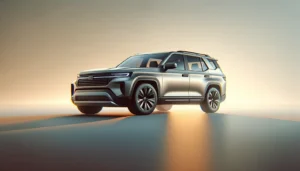
Current trends in hybrid cars
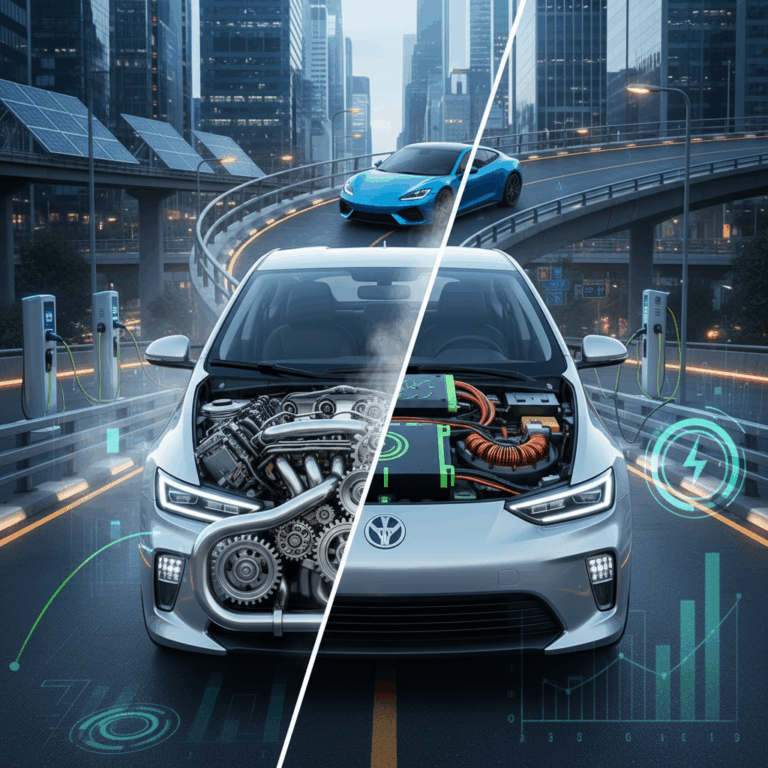
Hybrid cars are rapidly gaining popularity, driven by their ability to combine electric and internal combustion engines. This combination improves efficiency and reduces consumption.
By 2025, the preference for these vehicles is expected to increase significantly, especially in markets such as Spain, where they surpass gasoline and diesel models in purchase intention.
Growth and preference in the market towards 2025
More and more consumers are choosing hybrid cars for their balance between savings and performance. This trend is reflected in sales and purchase projections for the coming years.
The versatility of the models, from SUVs to sports cars, makes it easier for different audiences to benefit from this sustainable technology.
The market thus responds to a growing demand for options that respect the environment without sacrificing comfort or autonomy.
Technological innovations in efficiency and autonomy
New technologies allow hybrid cars to have greater autonomy and faster charging systems, improving their performance on a daily basis.
Innovations such as longer-lasting batteries and optimized motors contribute to more efficient use of fuel and lower emissions of polluting gases.
These improvements make hybrid cars an increasingly attractive option for those seeking to combine practical mobility with environmental responsibility.
Advantages and types of hybrid cars
Hybrid cars offer multiple advantages that make them an efficient and environmentally friendly option. Its technological combination provides versatility and savings.
In addition, there are different types of hybrids that adapt to the user's needs, from compact models to SUVs, each with specific benefits in consumption and emissions.
Variety of models and their versatility
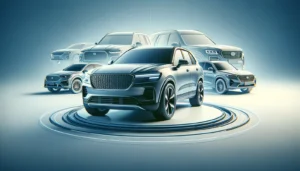
In today's market, hybrid cars feature a wide variety ranging from practical family vehicles to sports vehicles. This allows buyers to choose according to their lifestyle.
The versatility of these models allows efficient driving in urban and road environments, thanks to their systems that optimize the use of the electric and combustion engine.
Furthermore, this diversity ensures that there are options for different budgets and preferences, facilitating the transition towards more sustainable mobility.
Economic savings and energy efficiency
Hybrid cars contribute to significant fuel savings due to their ability to switch engines and minimize gasoline consumption, reducing daily costs.
Its superior energy efficiency allows it to travel greater distances with less fuel, favoring drivers who seek profitability and sustainability at the same time.
This efficiency also translates into lower maintenance costs, since hybrid technology reduces combustion engine wear.
Reduction of polluting emissions
One of the main environmental benefits of hybrid cars is the significant reduction in polluting gas emissions, helping to improve air quality in cities.
By using the electric motor for low demand phases, the carbon footprint is considerably reduced compared to traditional vehicles.
This lower environmental impact is key to meeting increasingly strict regulations and fostering a cleaner, healthier environment for all.
Comparison between hybrid cars and traditional trams
Hybrid cars and traditional trams represent two different solutions for urban mobility, each with its own advantages and limitations.
While hybrids offer individual mobility with great autonomy, trams operate on fixed routes and are ideal for large-scale public transport.
Autonomy and flexibility compared to fixed routes
Hybrid cars stand out for their autonomy and flexibility, since they do not depend on fixed infrastructure, allowing personalized trips. This facilitates daily mobility in urban and rural areas.
In contrast, trams are limited to established routes and require specific routes, making them less versatile for spontaneous trips or off-road travel.
The spatial independence of hybrid cars gives them an advantage for users who need to adapt to variable schedules and destinations, compared to the rigidity of the tram system.
Environmental impact and use of fuels
Trams are generally powered by electricity, which implies zero direct emissions and a lower environmental impact in urban areas, contributing to the reduction of local air pollution.
Instead, hybrid cars combine electric motors with gasoline, reducing consumption and emissions compared to conventional vehicles, but still relying on fossil fuels.
Both systems support sustainable mobility, although trams are cleaner in operation, while hybrids offer greater autonomy and adaptability for the individual user.
Contributions to sustainable mobility
Hybrid cars and traditional trams play complementary roles in sustainable mobility. Each brings unique benefits to a transition to cleaner cities.
While hybrids offer flexible and efficient personal mobility, trams facilitate public transportation with less environmental impact in dense urban areas.
Efficient personal mobility with hybrids
Hybrid cars combine electric and combustion engines, which improves efficiency and reduces fuel consumption on individual trips.
This technology allows adaptable and autonomous driving, without depending on fixed routes or special infrastructure, favoring daily mobility.
In addition, hybrids significantly reduce polluting emissions, contributing to a lower environmental impact on personal transportation.
Sustainable mass transportation with trams
Traditional trams, when powered by electricity, do not emit local pollutants during their operation, which improves air quality in cities.
Its operation on fixed routes facilitates efficient mass transportation, reducing traffic and decongesting urban roads during peak hours.
Although they require specific infrastructure, trams represent a key solution for sustainable, large-scale public transport.
Interesting fact
In many European cities, investment in trams has increased sustainable mobility and reduced the use of private vehicles, improving the urban experience.