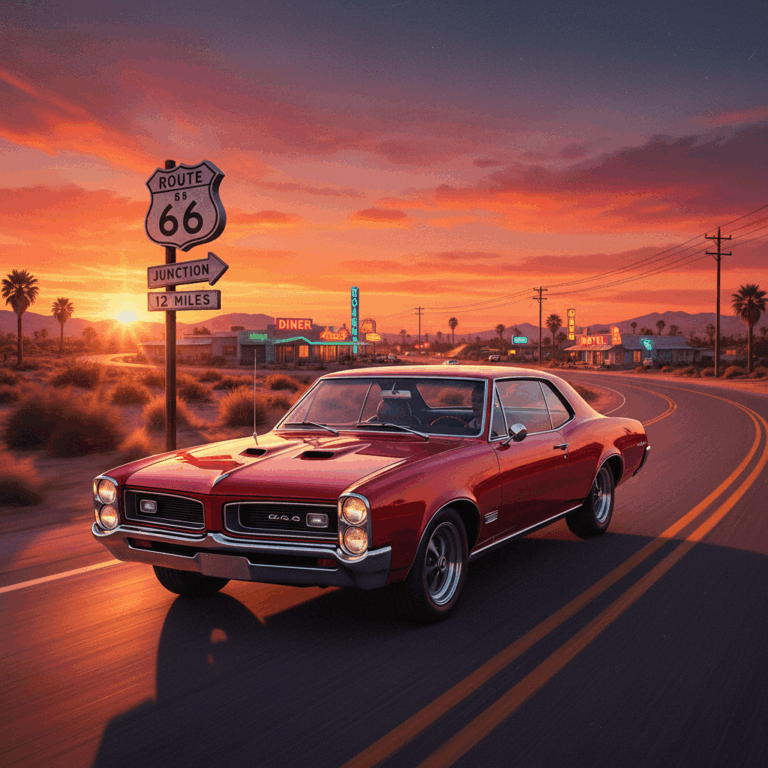
The origin of the Pontiac GTO
The Pontiac GTO was launched in 1964 and is considered the vehicle that marked the beginning of the era of muscle cars in United States. Its arrival revolutionized the automotive market by combining power and compact style.
This unique model combined an engine Powerful V8 with the body of the Pontiac Tempest, standing out for its performance and accessibility. Its development arose in a context of restrictions and legal challenges.
Historical context and development
In the 1960s, General Motors imposed power restrictions to avoid legal conflicts with the Department of Justice. Despite these limitations, an opportunity to innovate in the automotive market emerged.
The Pontiac GTO was born in response to these conditions, seeking to offer a high-performance vehicle without sacrificing the practicality or attractive design that the public demanded at that time.
The vision of John DeLorean
John DeLorean, Pontiac's chief engineer, challenged General Motors standards when conceiving the GTO. His vision was to create a model that combined a powerful V8 engine with a lightweight, compact body.
Thanks to his audacity and commitment, DeLorean managed to design a car that quickly became a success, laying the foundations for the golden era of American muscle cars.
Features of the Pontiac GTO
The Pontiac GTO stood out for its unique combination of a powerful engine and a compact design, which made it accessible and highly desired. Its innovation marked a before and after in the automotive industry.
These features were key to setting a new standard for muscle cars, influencing the design and engineering of future American sports models.
Engine and performance
The GTO was equipped with a large displacement V8 engine, which offered outstanding power for the time. Its performance on the road was superior, providing excellent acceleration.
This engine allowed the vehicle to reach high speeds and agile response, making it ideal for those looking for a powerful and fast car in its segment.
Its performance was one of the most valued aspects, as it balanced power and control, achieving safe and exciting performance at the same time.
Design and bodywork
The design of the Pontiac GTO combined a compact body inspired by the Pontiac Tempest with sporty elements that gave it an aggressive and modern look.
Its robust and aerodynamic aesthetics contributed to its success, conveying an image of power and style that attracted a wide variety of buyers.
This design created a new category that balanced practicality with sportiness, clearly differentiating itself from other vehicles of its time.
Innovation in the automotive market
The Pontiac GTO pioneered an affordable vehicle with high performance, revolutionizing the American automotive market and creating a new trend.
Its success encouraged other manufacturers to develop similar models, consolidating the muscle car category and stimulating technological advances in engines and design.
This innovation allowed the GTO to not only be a car, but a cultural symbol that marked an era of creativity and engineering in the sector.
Impact on the automotive industry
The Pontiac GTO had a significant impact on the automotive industry, ushering in the golden era of muscle cars in the United States. Its success fueled new competition between manufacturers.
This vehicle revolutionized the way sports cars were conceived, inspiring the development of powerful and affordable models that combined style and performance.
Influence on other muscle cars
The design and performance of the Pontiac GTO directly influenced the creation of numerous later muscle cars. Iconic models such as the Ford Mustang and Dodge Charger were a product of this trend.
The combination of a powerful engine with a compact body became the base formula for many manufacturers who sought to replicate the success of the GTO in the 1960s and 1970s.
This phenomenon generated rapid innovation in the industry, consolidating the muscle car category as a symbol of power and style for an entire generation.
Legal conditions and restrictions
The Pontiac GTO was born in a context of strict internal and external regulations. General Motors imposed limitations to avoid legal problems with the Department of Justice, which monitored monopolistic practices and security.
John DeLorean challenged these restrictions by designing a powerful vehicle within legal parameters, demonstrating the possibility of innovating while respecting current standards.
However, this legal dynamic influenced the evolution of muscle cars, restricting maximum power and causing changes in regulations throughout the 1970s.
Legacy and evolution of muscle cars
The muscle car era was a special time in American automotive history, characterized by powerful cars and iconic designs that marked an entire generation.
The Pontiac GTO, as a pioneer of this trend, laid the foundation for other manufacturers to compete and advance in performance and style for more than a decade.
Duration and peak of the muscle car era
The golden age of muscle cars mainly spanned from the 60s to the mid-70s, a period where power and speed were symbols of status.
The Pontiac GTO remained in production until 1974, standing out throughout that time for its exceptional performance and its role in defining the category.
This peak culminated in the arrival of environmental regulations and the energy crisis, which affected the manufacture of such powerful engines and restricted their production.
The Pontiac GTO as a cultural icon
More than a car, the Pontiac GTO is considered a cultural symbol that represents the passion for power, freedom and rebellion of an era in the United States.
His image has been kept alive in film, music and popular culture, reflecting a lifestyle and spirit that still inspires fans and collectors.
Curious facts about his legacy
The GTO was one of the first cars to be called the ÚMuscle car, a term that now defines an entire category of powerful American sports vehicles.
Its success helped boost competitiveness among manufacturers, accelerating technical advances in engines and design, consolidating a legacy that endures over time.