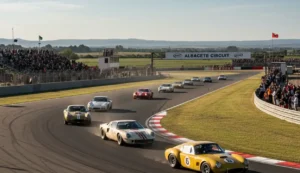
History and Origins of the Ford GT40
The Ford GT40 he is an icon of motorsports, born from the intense rivalry between two giants: Ford and Ferrari. Its story begins with a failed business attempt between Henry Ford II and Enzo Ferrari.
After Ferrari refused to sell its company to Ford in 1963, Ford decided to create a car that would surpass Ferrari in endurance racing, especially in the legendary one 24 Hours of Le Mans. This is how the GT40 project was born.
This car not only symbolizes the struggle and challenge between two brands, but also the ambition and innovation that led Ford to conquer one of the most prestigious stages in motor sport.
Rivalry between Ford and Ferrari
The rivalry began when Ford tried to buy Ferrari to dominate motorsport. When the negotiation failed, Henry Ford II decided to beat Ferrari on his own ground: endurance racing.
Ferrari was the undisputed leader at Le Mans, and Ford sought to change history with a car specially developed to defeat its Italian rival. This feud fueled the development of the GT40.
The result was fierce competition that led to technological advances and racing strategies that transformed the history of motorsport racing in the 1960s.
The role of Henry Ford II and Carroll Shelby
Henry Ford II was the engine behind the GT40 project, intensifying investment and pressure to overtake Ferrari. His vision was clear: Ford had to dominate Le Mans.
Carroll Shelby, former driver and expert designer, took over leadership of the racing program in 1965. His experience was crucial in transforming the prototypes into a competitive and winning car.
Together, they designed a winning strategy that combined advanced engineering and racing tactics, culminating in Ford's historic victory at Le Mans in 1966.
Victories and Dominion at Le Mans during the 60s
The Ford GT40 marked an era of dominance in the 24 Hours of Le Mans, ending Ferrari's reign and establishing Ford as a benchmark in endurance motorsport.
Thanks to technical innovations and a bold strategy, the GT40 achieved multiple consecutive victories, showcasing American power in one of the most prestigious events in the motor world.
Historic triumph of 1966 and the initial streak
In 1966, the Ford GT40 Mk II achieved a historic feat by conquering the top three positions at Le Mans, an unprecedented feat for an American manufacturer.
This achievement was the result of a major development effort, led by Carroll Shelby, which positioned Ford as Ferrari's undisputed rival in automotive endurance racing.
The 1966 victory not only changed the history of the competition, but also inspired Ford to maintain and strengthen its dominance in subsequent years.
The American design of the GT40 Mk IV in 1967
The GT40 Mk IV, introduced in 1967, was the only car designed and built entirely in the United States to win Le Mans, symbolizing national technical progress.
This model had an improved chassis and aerodynamics that provided greater speed and stability, reaffirming Ford's supremacy in European competition.
The success of the Mk IV showed how American engineering could compete and surpass the best European teams on its field.
Adaptation to the rules and victories in 1968 and 1969
Despite new regulations limiting engine displacement to 3.0 liters, the GT40 Mk I found a legal hole to maintain more powerful engines, ensuring its competitiveness.
In 1968 and 1969, the GT40 won two more victories, supported by private teams such as Gulf Oil, whose blue and orange colors became emblematic on the track.
The skills of drivers like Jacky Ickx and Jackie Oliver were instrumental in maintaining Ford's dominance in these crucial years of endurance.
Impact and Legacy of the Ford GT40
The Ford GT40 not only revolutionized the 24 Hours of Le Mans, but also established Ford as one dominant force in world motorsports.
Its success highlighted the American ability to innovate and compete with the best European manufacturers in endurance racing.
Furthermore, the GT40 inspired a new generation of engineers and engine lovers, marking a before and after in the history of racing.
Ford as a dominant force in motorsports
The victory of the GT40 at Le Mans consolidated Ford as a benchmark in endurance motorsport, evidently displacing European dominance.
This success was the result of an innovative approach to design, engineering and strategy, which allowed Ford to compete and win against established rivals such as Ferrari.
With the GT40, Ford not only won races, but also strengthened its overall image, demonstrating its ambition and capabilities in motorsport.
Featured Teams and Pilots
The legacy of the Ford GT40 is closely linked to teams and drivers who marked an era. Among them, the Gulf Oil team stood out for its iconic design and racing success.
Additionally, talented drivers such as Jacky Ickx and Jackie Oliver were key to decisive victories, showing skill and determination in the most demanding competitions.
These protagonists not only competed, but also elevated the GT40 legend through memorable performances and an exceptional commitment to motorsport.
The Gulf Oil team and its iconic colors
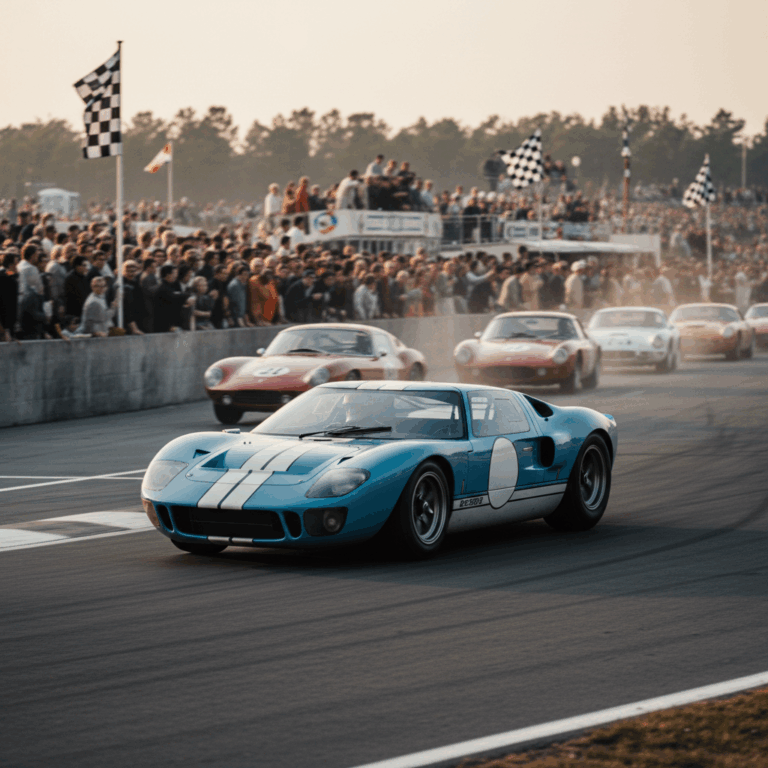
The Gulf Oil team is famous for its cars painted in blue and orange, a combination that became synonymous with success and style at Le Mans.
Gulf Oil not only provided financial support, but also contributed to the management and technical preparation of the GT40, allowing the team to compete at the highest level.
This collaboration between Ford and Gulf represented a visual and competitive icon that continues to be admired by enthusiasts and collectors around the world.
The image of the Ford GT40 in Gulf colors is one of the most recognized and evocative of endurance motorsports of the 60s.
Drivers like Jacky Ickx and Jackie Oliver
Jacky Ickx is remembered as one of the most skilled and strategic drivers of the Ford GT40, winning the 1969 Le Mans edition with great skill and speed.
Jackie Oliver, Ickx's teammate in that race, brought experience and confidence that were vital to Ford's historic victory.
Both drivers demonstrated a perfect balance between aggressiveness and control, allowing them to dominate in a competition with multiple technical and physical challenges.
His legacy remains valid, inspiring future generations to understand the importance of skill and teamwork in endurance racing.