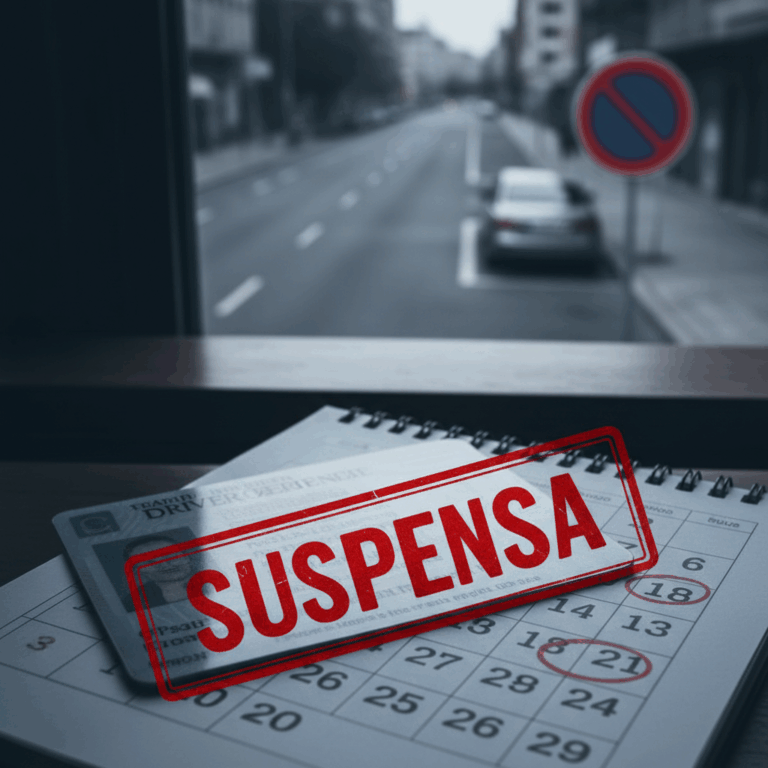
Definition and causes of suspended license
The license suspended it is the temporary withdrawal of the driving license by a legal authority. During this time, it is not permitted to drive motor vehicles under any circumstances.
This suspension responds to various legal causes related to serious driving offenses or administrative breaches, which affect the driver's history and road safety.
The main objective is to ensure that those who represent a risk do not operate vehicles until they meet the requirements for permit recovery.
What it means to have your license suspended
Having a suspended license means that the driver loses the temporary right to drive due to an official order. This means that driving without a permit is illegal and may lead to penalties.
During suspension, the permit is not automatically renewed; It is necessary to meet certain requirements and carry out specific procedures for its reinstallation.
This measure directly affects the freedom to drive, restricting mobility until the conditions imposed by the competent authority are met.
Common reasons for suspension
The most common reasons include serious traffic violations and accumulation of points in driving history that reflect dangerous or irresponsible driving behavior.
Additionally, legal breaches such as failure to pay child support or driving under the influence of alcohol or drugs also result in suspension.
These causes seek to promote responsibility and accident prevention, guaranteeing road safety and respect for the law among drivers.
Process to recover the suspended license
Recovering a suspended license requires compliance with certain legal and administrative steps to ensure that the driver is fit to drive again. It is not an automatic process.
It is essential to respect the waiting time established by the authority and meet all the requirements to avoid major sanctions and legally return to the wheel.
This process may vary depending on the reason for the suspension and jurisdiction, but generally includes payments, paperwork, and possible required courses or programs.
Basic requirements and waiting times
First, the imposed suspension period must be completed, which varies depending on the violation and local legislation. You cannot drive while this time lasts.
Additionally, you must meet any additional conditions, such as attending road safety or rehabilitation courses, and presenting evidence of compliance to the DMV or court.
These requirements ensure that the driver has corrected risky behavior and is prepared to resume driving responsibly.
Payments and necessary administrative procedures
Once the suspension period has expired, the driver must make fee payments for reinstallation of the license, which may vary depending on the state or the offense committed.
It is mandatory to go in person to the DMV to request the reactivation of the license, presenting the required documentation, such as identification and proof of payment.
In some cases, valid auto insurance, such as SR-22 insurance, must also be presented to demonstrate financial capability in the event of accidents.
Additional programs and conditions
Depending on the cause of suspension, the authority may require educational programs, rehabilitation, or use of special devices such as ignition interlocks.
These programs seek to modify risky behaviors and promote safe and responsible driving to prevent future violations.
Importance of complying with these conditions
Failure to comply with programs or conditions can extend the suspension and generate additional fines, making license recovery difficult and affecting the driver's history.
Legal consequences of driving with a suspended license
Drive with one license suspended it is an illegal act that has serious consequences. The authorities apply sanctions to deter this behavior and protect road safety.
These legal consequences include heavy fines and, in some cases, criminal penalties that may vary depending on the severity and jurisdiction in which the violation occurs.
Additionally, these penalties negatively impact the driver's history and can affect the cost and availability of vehicle insurance.
Fines and criminal sanctions
Driving with a suspended license carries considerable financial fines that can increase if the offense is repeated. These fines seek to discourage illegal driving.
In certain cases, this violation can lead to criminal penalties, including arrest or imprisonment, especially if it is linked to other offenses such as driving under the influence of substances.
Criminal sanctions can aggravate the driver's legal situation, increasing suspension time or even generating a criminal record.
Impact on driving history and insurance
Driving during suspension deteriorates your driving record, which can affect future clearances and raise auto insurance premiums significantly.
Insurers consider this violation a high risk, which may result in policy cancellation or difficulty obtaining coverage in the future.
A negative history can also limit driving-related job opportunities and restrict long-term driving privileges.
Special options during suspension
During the suspension period, there are limited options that may allow some mobility under specific conditions. These options are designed to balance road safety with important personal needs.
Understanding these alternatives helps drivers comply with the law while maintaining essential activities, always under strict conditions and legal authorizations.
However, they do not apply to everyone and must be formally requested according to the regulations in force in each jurisdiction.
Restricted license in specific cases
In some cases, such as California, after an initial 30-day suspension period, you can apply for a restricted driver's license with limitations.
This license allows driving only for specific purposes, such as commuting, attending school, or complying with mandatory suspension-related programs.
The application must be processed with the DMV, and the driver must meet additional requirements, such as demonstrating need and keeping insurance up to date.
These licenses are temporary and revocable at any time if the conditions imposed by the authority are not met.
Legal obligations to avoid additional sanctions
It is essential to respect all restrictions during suspension to avoid incurring additional crimes that aggravate the driver's legal situation.
Driving without authorization, even with a restricted license, can lead to higher fines, extension of the suspension period or even prison sentences.
In addition, complying with financial obligations and administrative procedures helps avoid legal conflicts and accelerates the recovery of the permit.
Important advice
Always consult with the DMV or legal counsel before driving during suspension to ensure you have proper clearance and avoid negative consequences.
Complying with obligations prevents sanctions and allows the prompt reinstatement of the permit to be managed safely and legally.