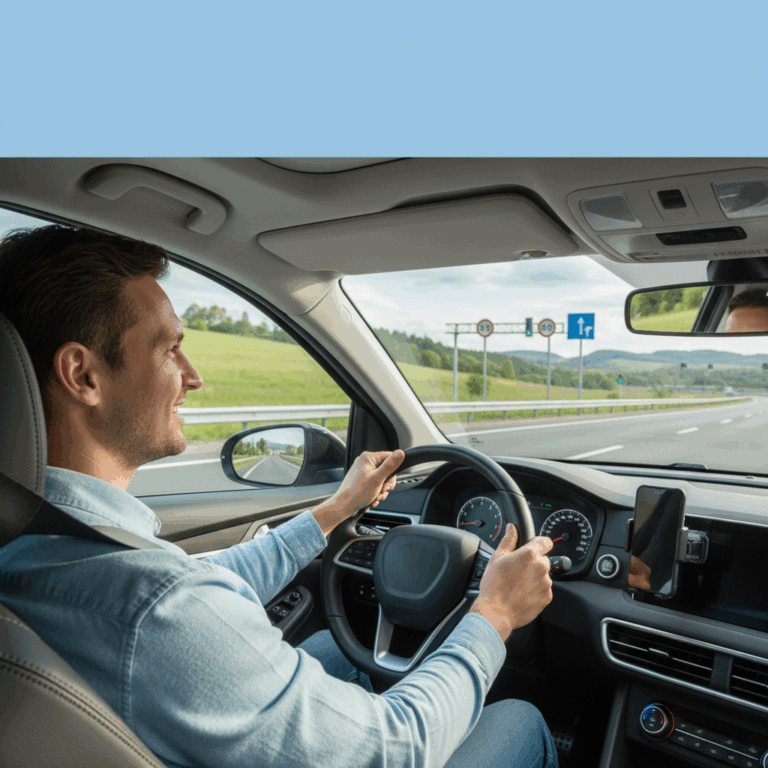
Principles of safe driving
The safe driving start with essential habits that protect life and avoid sanctions. Adopting these practices guarantees greater control and prevention of accidents.
Among the basic principles are the constant use of seat belts and respect for speed limits. These actions reduce risks and facilitate responsible driving.
Use of seat belt
The seat belt it is the main ally to protect the driver and passengers. Its constant use reduces serious injuries in the event of an accident.
Driving without a seat belt is not only life-threatening, but can also result in fines and legal penalties. It is an obligation that protects and complies with standards.
Placing the belt correctly, adjusting it well, guarantees its effectiveness. It should never be ignored, even on short trips within the city.
Respect for speed limits and safe distance
Respect the speed limits established is essential to control the vehicle and react to unforeseen events. Excessive speed significantly increases the risk.
Keep one safe distance with other vehicles it allows time to brake or maneuver without causing collisions. It is an essential habit to avoid accidents.
Both behaviors contribute to more orderly and safer circulation, protecting all road users and avoiding fines for violations.
Behaviors to avoid sanctions
Adopting responsible behavior is key to avoiding sanctions and guaranteeing safety on the road. These habits prevent accidents and fines for violations.
Constant attention and respect for traffic rules are part of conscious driving that protects the driver and third parties at all times.
Avoid distractions while driving
It's essential maintain full attention while driving to react in time to any unexpected situation. Distractions increase the risk of accidents.
Using your cell phone for messages or calls, eating or handling objects while driving reduces concentration and is prohibited by traffic regulations.
Avoiding distractions is an act of responsibility that helps preserve lives and avoids fines for reckless behavior on the road.
Do not drive under influence
Driving under the influence of alcohol, drugs or while tired negatively affects reflexes and judgment, increasing the probability of accidents.
These practices are strictly prohibited and are a frequent reason for penalties and loss of driving license.
To avoid penalties, it is always advisable to plan safe routes and refrain from driving if you are not in optimal conditions.
Proper signage and use of mirrors
Use them correctly turn signal lights to indicate lane changes or turns, inform other drivers and reduce the risk of crashes.
Frequently checking the rearview and side mirrors allows vehicles to be detected in blind spots before performing maneuvers.
Proper signage, along with constant surveillance, is essential for safe driving and avoiding fines for non-compliance with regulations.
Vehicle maintenance
The correct one vehicle maintenance it is essential for safe driving and to avoid penalties. A car in good condition reduces risks and ensures regulatory compliance.
Performing regular checks ensures that vital systems such as brakes, lights and tires function properly, contributing to the safety of both the driver and third parties.
Periodic check-ups and mechanical care
The periodic reviews they allow mechanical failures to be detected in time, avoiding accidents that can lead to sanctions. Prevention is key to keeping your license.
It is essential to monitor the condition of brakes, lights, tires and other components, since their malfunction can cause fines or endanger road safety.
Constant mechanical care also involves regular oil changes and checks of electrical and suspension systems. This extends the life of the vehicle and prevents setbacks.
Importance of preventive maintenance
Taking a preventive approach avoids costly repairs and reduces road risks. A well-maintained vehicle responds better in emergency situations.
In addition, good mechanical condition contributes to fuel savings and more efficient and economical driving, benefiting the driver and the environment.
Attitude and ethics in driving
A respectful attitude and driving ethics promotes a safe and harmonious coexistence on public roads. This behavior reduces conflicts between drivers.
The kindness when driving it involves giving way, avoiding attacks and maintaining patience in traffic situations, which contributes to road safety.
Respect and kindness on the road
Demonstrate respect towards other road users, such as pedestrians and cyclists, it is essential to avoid accidents and promote a safe environment.
The kindness it is reflected in gestures such as giving preference and not making sudden maneuvers. This generates trust and collaboration between everyone in traffic.
Practicing road courtesy also reduces stress and tension, facilitating more fluid and peaceful circulation on streets and highways.
Conscious compliance with standards
Observe traffic rules not only for fear of sanctions, but for one ethical conviction, contributes to responsible and safe driving.
Conscious compliance with the rules guarantees protection for the driver himself and others, avoiding risks and dangerous situations on the road.
This attitude fosters a positive example for other drivers and promotes a road culture based on responsibility and mutual respect.