Restrictions depending on the type of driver's license
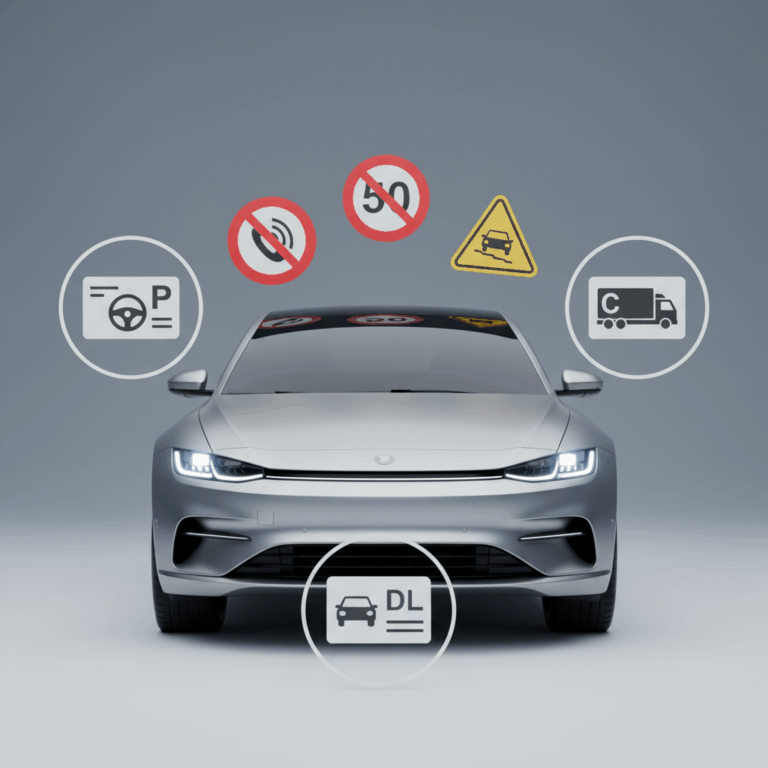
The restrictions they vary depending on the category of the driver's license, which determines the vehicles the driver is authorized to drive. This classification is adapted to the driver's abilities and type of transportation.
In many countries, such as Brazil, categories range from light to heavy vehicles. These differentiations seek to guarantee the road safety, adapting the permit to the characteristics of each vehicle.
License categories and vehicles allowed
The type A license is intended for motorcycles and tricycles, allowing agile handling and smaller size. This category requires specific knowledge to handle two or three wheels in various conditions.
The type B license authorizes the driving of cars and small utility vehicles. It is the most common category and allows the driving of private cars, adapting to the majority of users.
Categories C, D and E enable you to drive heavy or specialized vehicles. For example, trucks, buses and cargo or passenger transport vehicles, which requires greater experience and stricter controls.
Medical requirements and associated limitations
To obtain certain licenses, they must be met medical requirements that ensure the physical and mental fitness of the driver. This ensures that he or she can drive safely and respond to traffic situations.
Limitations may include mandatory use of corrective lenses or restrictions on night driving. These requirements vary depending on the medical condition and the type of license requested.
Some tests evaluate vision, hearing and reflexes to prevent risks. Depending on the result, they are applied specific measures such as more frequent renovations or operational limitations.
Restrictions based on the age of the driver
The rules for young drivers they seek to increase road safety through specific limitations. These restrictions consider the lack of experience and the greater propensity for risks in this group.
Younger drivers often face limitations on schedules, passengers, and device use. These measures seek to avoid high-risk situations during initial stages of driving.
Rules for young drivers
Young drivers often must follow special rules, such as limits on passenger numbers and night driving restrictions. This helps reduce accidents caused by inexperience.
In some countries, such as the United States, minors should always wear seat belts and avoid using phones while driving. These measures reinforce responsibility behind the wheel.
These rules are complemented by road safety education, which improves road behavior and encourages safe driving habits from an early age.
Graduate licensing programs
The graduate licensing programs they implement a phased process for young drivers, facilitating the gradual acquisition of independence and skills.
They generally include phases such as learner's permit, provisional license, and full license, each with progressively smaller restrictions. This reduces risks at critical stages.
In places like Maryland, these programs also require constant supervision and limits in traffic conditions, promoting responsible development of driving skills.
Importance of graduated license
Studies have shown that graduated leave significantly reduces juvenile accidents by combining supervised experience with limitations adapted to their level.
Restrictions on hours and use of devices
Time restrictions limit overnight driving for young drivers, reducing exposure to more dangerous conditions and fatigue.
Additionally, the use of mobile devices is generally prohibited or restricted to avoid distractions that increase the risk of accidents in novice drivers.
These measures seek to ensure a safer driving environment, especially for those who are still in the process of gaining complete experience and skills.
Administrative and legal restrictions
The administrative restrictions they affect the transfer and circulation of vehicles, preventing their use or change of owner when there are legal or administrative pending issues.
These measures seek to guarantee compliance with tax, legal and security obligations, avoiding fraud or irregularities in the automotive market.
Blockages in vehicle transfer and circulation
Blockades are legal instruments that prevent the transfer of a vehicle until outstanding debts or procedures, such as fines or back taxes, are resolved.
This restriction can also prevent the vehicle from circulating, forcing the owner to regularize the situation before using or selling it legally.
For example, if a car has unpaid fines, the authority can place a block on its registration, protecting the rights and resources of the State.
Limitations for local violations or regulations
Traffic violations can cause temporary restrictions such as license suspension, limitation of vehicle use or financial fines that affect the driver.
Local regulations also impose specific rules, such as restricted traffic zones, limited hours, or conditions for the use of certain vehicles.
These measures seek to maintain public order, reduce congestion and promote responsible and safe driving in each jurisdiction.
International variations in restrictions
The restrictions driver's licenses and regulations vary greatly between countries, reflecting cultural, legal and road infrastructure differences. These distinctions adapt local rules to the needs of each society.
In addition to license types, restrictions may include age limits, regulations on medical examinations, or specific conditions for certain vehicles. This contributes to traffic safety and control in very diverse contexts.
Differences in regulations by country
In each country there are unique systems for classifying licenses and establishing restrictions. Some require rigorous medical examinations, others impose mandatory apprenticeship programs or schedule limitations for young drivers.
For example, where roads are more dangerous, there are stricter rules for novice drivers and greater controls on vehicle transfers. This reflects adaptation to specific risks in the road environment.
These differences also include conditions for the use of electronic devices when driving or cargo and passenger limits, always seeking to reconcile safe and efficient mobility in accordance with local reality.
Specific examples: Brazil, United States
In Brazil, the CNH licensing system is well defined by categories A to E, where each allows driving certain types of vehicles. In addition, medical examinations are required to obtain and renew permits.
The United States has variations by state. For example, Florida applies restrictions for those under 21 years of age on schedules and device use, while Maryland implements a graduated licensing program with supervised phases.
These examples demonstrate how constraints respond to local factors, such as the level of road development, behavioral culture, and government traffic and safety policies.