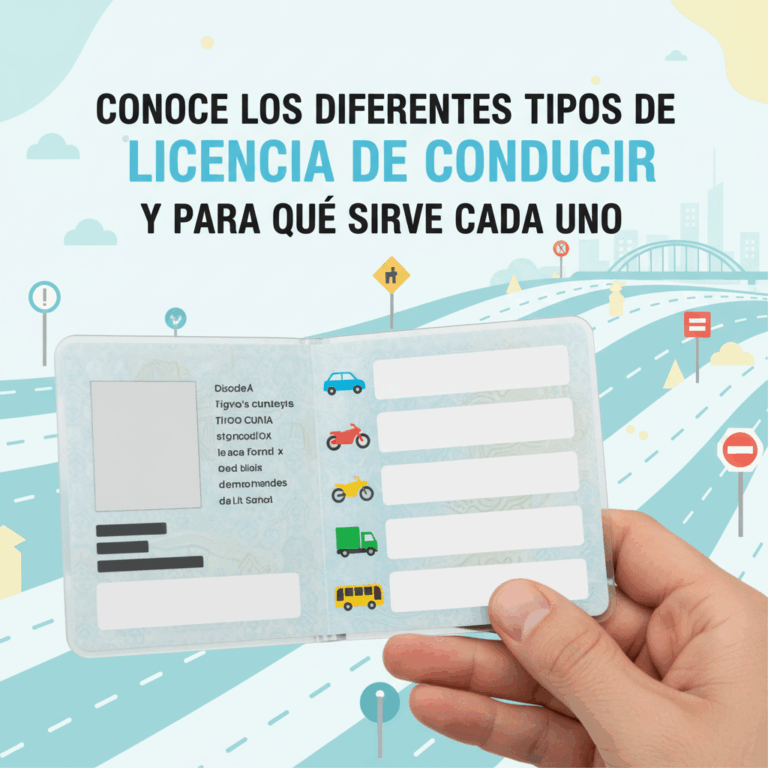
General classification of driver's licenses in the US.
In the United States, driver's licenses are classified according to the type of vehicle that can be operated and its weight. This ensures that drivers have the appropriate training for each category.
This classification includes licenses for light, heavy, commercial vehicles and motorcycles. Each type of license meets specific requirements to ensure road safety.
Licenses according to vehicle type and weight
The licenses are divided into classes A, B, C, D and M, each intended for different vehicles depending on their weight and use. Class A allows heavy combined vehicles to be driven.
Class B authorizes large single-set vehicles and Class C for lighter personal vehicles. Class D is the most common for cars and trucks.
The M-Class is designed for motorcycles and two-wheeled vehicles. In addition, there is the CDL commercial license for specific uses in heavy transportation and hazardous materials.
Common requirements to obtain licenses
To obtain any type of license, it is required to pass written and practical exams, as well as eye evaluations. These requirements guarantee the driver's competence.
Interim licenses require additional restrictions for novice drivers, such as supervised driving. Requirements may vary by state but maintain a uniform safety standard.
Main types of licenses and their characteristics
Class A, B and C licenses
The Class A license allows you to drive combination vehicles with a gross weight greater than 26,001 pounds and heavy trailers. It is essential for drivers of large trucks and recreational vehicles.
Class B allows the driving of heavy vehicles in a single set or with trailers up to 10,000 pounds, ideal for buses and large commercial vehicles.
Class C is for non-commercial vehicles under £26,001, common on cars and small trucks. Requires passing written, practical and vision exams.
Class D and M licenses
The Class D license is the most common and allows you to drive any vehicle with a gross weight of less than 26,001 pounds, including cars, trucks and SUVs. Includes test drives, vision and written exam.
Class M authorizes driving motorcycles, mopeds and two-wheeled vehicles. In some states it includes tricycles. Drivers must be at least 16 years old and pass specific tests.
CDL Commercial Licenses
The CDL license is required to operate trucks, trailers, buses and vehicles that transport hazardous materials or passengers. Includes classes A, B and C with specific safety requirements.
These licenses ensure that drivers have adequate training to drive large commercial vehicles and comply with federal and state regulations.
Provisional Licenses
Provisional licenses are for novice drivers and have restrictions such as driving with an adult supervising. These conditions seek to minimize risks during the driver's initial experience.
They generally include limits on schedules and passengers, promoting safety and gradual adaptation to independent driving on public roads.
Special licenses for identification and restrictions
Special licenses fulfill functions that go beyond driving, also serving as official identification documents. This is crucial for legal procedures and internal travel.
Additionally, some licenses include specific restrictions to ensure safety, especially for novice drivers or in particular situations.
Real ID licenses and their use
Real ID licenses meet federal identification standards, facilitating access to federal facilities and domestic flights. They function as an official document and have advanced security measures.
This type of license requires additional documentation for issuance, such as proof of identity and residency, and is accepted as a valid identification throughout the country.
Its implementation responds to federal regulations designed to strengthen national security through rigorous verification of the identity of the owners.
Provisional license restrictions
Provisional licenses apply to beginner drivers and include limitations such as the obligation to drive accompanied by a responsible adult. This seeks to reduce risks during learning.
Additionally, they limit the number of passengers and the schedules allowed to drive, avoiding high-risk situations that could compromise the safety of the novice driver.
These restrictions are designed to promote gradual and safe driving, making it easier to gain experience before obtaining a full license.
Importance and purpose of each type of license
Driver's licenses play a crucial role in the road safety, ensuring that each driver possesses the skills necessary to operate a specific vehicle.
These licenses also regulate and facilitate order on the roads, establishing clear rules about who can drive what type of vehicle based on their experience and ability.
Road safety and regulation
Road safety depends on drivers being trained and authorized to drive certain vehicles, avoiding accidents and guaranteeing orderly traffic.
Licenses allow skills to be evaluated and certified through written and practical exams and vision tests, reinforcing the responsibility of drivers.
Furthermore, establishing different classes facilitates regulation by authorities, limiting the circulation of heavy or commercial vehicles to qualified personnel.
Adaptation to different drivers and vehicles
Each type of license is tailored to the specific needs of the driver and vehicle, from private cars to large trucks or motorcycles.
Interim licenses support novice drivers with restrictions designed to protect them during their learning and offer a progressive experience.
Commercial and specialized licenses allow professionals to operate vehicles that require advanced skills and strict regulatory compliance.